
Fuel receipts kept rising while public charger screens barely budged, and that divergence quietly tipped the balance of per‑mile costs in favor of electric driving for many UK journeys, challenging long‑held assumptions about everyday affordability. The shift landed not because public charging became dramatically cheaper, but because liquid fuel surged on geopolitical tensions while network tariffs stayed comparatively steady.
This research examined whether public EV miles now undercut petrol and diesel on cost, and why that mattered for drivers, fleets, and the wider transition. Beyond headline prices, the analysis weighed how charger types, usage mixes, and policy‑driven costs shape real‑world outcomes. The stakes were clear: lower running costs could speed EV uptake, strengthen energy security, and support climate goals, yet the advantage would remain fragile without structural reform.
Methodology and Data
The study drew on RAC Fuel Watch for petrol and diesel trends, Zapmap for typical public charging tariffs, and ChargeUK syntheses to align sources. To make an apples‑to‑apples comparison, energy prices were converted to pence per mile using representative EV efficiency and mainstream petrol/diesel mpg ranges. This grounded the assessment in everyday usage rather than lab figures.
Scenarios covered three patterns: all standard public charging, an 80/20 blend of standard and rapid sessions, and exclusive ultra‑rapid use. Results were tracked month to month and quarter to quarter to spot inflection points rather than one‑off anomalies. Controls included average rates around 54 p/kWh for standard charging and realistic EV efficiency bands to reflect mixed urban‑motorway driving.
Findings and Evidence
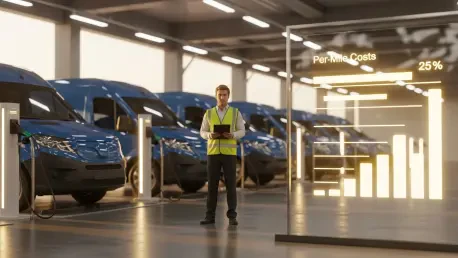
The cost crossover emerged at the standard tier: about 15p per mile for public EV charging versus roughly 17p for petrol and 17.5p for diesel. Even with an 80/20 standard‑to‑rapid mix, EV mileage held around 16p per mile, still below liquid fuels. Only drivers relying almost entirely on ultra‑rapid chargers faced higher per‑mile costs than petrol or diesel.
However, the underlying structure told a more complex story. Average public charging prices rose about 38% over recent years, driven by high standing charges and a 20% VAT on public charging compared with 5% at home. Industry voices converged on a common view: today’s edge reflected external oil shocks, not sustained declines in charging costs. Meanwhile, many drivers splitting home and public charging saw their best savings since late spring, and with discounts and grants, several new EVs undercut petrol counterparts on purchase price—tilting total cost of ownership further toward electric.
Implications and Next Steps
For practical decisions, the guidance was straightforward: favor standard chargers and balanced mixes to lock in lower per‑mile costs. For policy, aligning public charging VAT with home electricity and rethinking standing charges could turn a temporary benefit into a durable one, especially for those without driveways who depend on public networks.
Stable, transparent tariffs would also encourage investment and competition, spurring innovation in pricing models such as time‑of‑use and clearer roaming fees. Yet the risk remained: if oil prices eased, the gap could narrow or flip again unless structural charging costs fell. Tracking UK prices against European peers offered a path to identify best practices and keep pressure on avoidable cost drivers.
Conclusion
This research found that public EV miles had become cheaper than petrol and diesel primarily because fuel prices spiked while charging tariffs held steadier. Evidence showed clear savings at standard chargers and in mixed use, with ultra‑rapid‑only patterns still costlier. The analysis also showed that elevated standing charges and a 20% VAT on public charging kept UK prices high by continental standards.
Actionable next steps centered on VAT parity for public charging, standing charge reform, and tariff transparency to secure lasting affordability, particularly for drivers without home access. Future work was best aimed at modeling policy impacts, testing pricing designs, improving network efficiency through renewable PPAs and smart charging, and benchmarking against Europe to sustain a robust, equitable path toward lower‑cost electric miles.