
The global race to decarbonize heavy industry has transformed the humble wood chip into one of the most scrutinized commodities in the modern renewable energy portfolio. Biomass combustion technologies remain at the forefront of this shift, offering a renewable alternative to coal that utilizes existing infrastructure while addressing waste management issues. However, sustainability is not a monolithic attribute but a spectrum influenced by thermal efficiency, flue gas composition, and the feedstock supply chain. The search for the most sustainable method requires a granular analysis of how different systems handle the physical and chemical complexities of organic matter. From small-scale decentralized heating to massive industrial utility plants, the choice of technology dictates not only the carbon footprint but also the long-term economic viability. As stakeholders from 2026 to 2028 prioritize carbon-negative outcomes, understanding the nuances of combustion dynamics is essential for ensuring that bioenergy serves as a bridge to a cleaner future rather than a temporary fix.
Comparing Grate Systems and Fluidized-Bed Dynamics: A Technical Evaluation
Fixed-bed combustion, specifically via moving or vibrating grate systems, represents the most traditional and widely deployed method for converting solid biomass into thermal energy. These systems excel at processing heterogeneous fuels with varying moisture contents and particle sizes, making them the primary choice for agricultural waste and forestry residues that have undergone minimal pretreatment. The combustion process occurs in distinct stages—drying, devolatilization, and char burnout—as the fuel travels across the grate, supported by primary air coming from beneath. While the mechanical simplicity of grate boilers ensures lower operational costs, the inherent variability in fuel quality can lead to fluctuations in temperature. Consequently, achieving a perfectly stable combustion environment is difficult, requiring sophisticated sensors to maintain high efficiency levels. For localized industries, utilizing nearby waste streams with this tech effectively reduces the carbon costs associated with long-distance transportation and helps manage local fuel supplies.
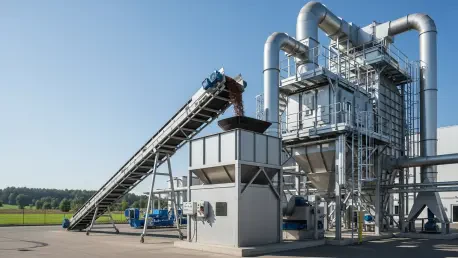
Fluidized-bed combustion has emerged as a superior alternative for large-scale energy production due to its exceptional heat transfer properties and fuel flexibility. By suspending fuel particles in a hot bed of inert material, such as sand or limestone, using upward-blowing air, the system creates a turbulent environment that facilitates near-complete combustion at relatively low temperatures. This low-temperature operation, typically ranging from eight hundred to nine hundred degrees Celsius, is a fundamental sustainability advantage because it significantly reduces the formation of thermal nitrogen oxides. In circulating fluidized-bed systems, the bed material and unburned fuel are captured and returned to the furnace, maximizing carbon burnout and thermal efficiency. The high thermal mass of the bed allows the system to absorb fluctuations in fuel quality without significant drops in output. This stability is vital for utility-scale plants that must provide a reliable load to the grid while utilizing diverse residues from 2026 to 2028.
The ultimate sustainability of biomass combustion was determined by how effectively these systems transitioned from simple carbon neutrality to proactive carbon removal. It became clear that while grate systems served decentralized needs and fluidized beds provided industrial versatility, the integration of advanced filtration and carbon scrubbing was non-negotiable for all scales. Research conducted from 2026 to 2028 highlighted that the most sustainable technology was not a single hardware configuration but a holistic system that prioritized local fuel sourcing and total carbon lifecycle management. Engineers moved away from viewing biomass as a direct coal replacement and instead treated it as a specialized feedstock for high-efficiency, low-emission plants. These facilities successfully demonstrated that with the right combination of fluidized-bed dynamics and post-combustion capture, bioenergy could provide a stabilizing force for renewable grids. The industry shifted toward a model where every thermal unit produced also accounted for permanent gas sequestration.