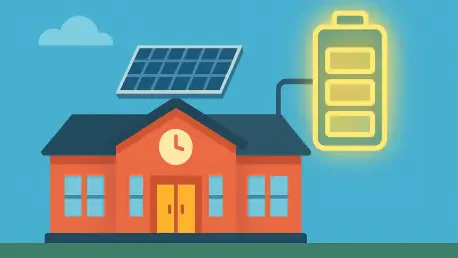

Traditional emergency shelters often rely on diesel generators that are prone to fuel shortages and produce localized pollution, making the switch to solar-battery systems a public health priority. This realization has sparked a major shift in Roanoke City, where the public school system is now leading the state in integrating clean energy into disaster preparedness. By transitioning away from antiquated backup methods, the district is transforming its schools into autonomous energy islands that can withstand severe ice storms and heat waves. This initiative reflects a growing trend in Virginia where educational facilities are no longer just places for instruction but are also being fortified as the primary defense for the local population during grid failures. The installation of solar panels paired with large-scale battery storage ensures that critical services remain active when the traditional electrical infrastructure collapses under environmental stress. This proactive strategy highlights a fundamental change in how city planners view communal assets.
Technical Evolution: The Hybrid Backup Cycle
The innovative core of the Roanoke project lies in the development of a hybrid backup cycle that provides unprecedented levels of reliability compared to legacy systems. During a standard power outage, the microgrid automatically switches the facility to battery power, utilizing electricity harvested from rooftop solar arrays. If an outage persists and the battery reserves are depleted, a secondary diesel generator provides a bridge, but only until the next sunrise. Once daylight returns, the solar panels prioritize recharging the battery storage, effectively creating a self-sustaining loop that minimizes the need for external fuel deliveries. This technical synergy allows schools to operate indefinitely during prolonged disasters, supporting medical equipment and climate control systems that are vital for the elderly and vulnerable residents. By utilizing the sun as a primary fuel source, the district has effectively reduced the logistical burden of emergency fuel management while simultaneously improving air quality.
Beyond the technical specifications, the initiative underscores the evolving role of schools as essential civic anchors and designated relief centers. Currently, schools account for nearly 60% of all FEMA-designated emergency shelters in Virginia, making their operational integrity a cornerstone of regional security. Despite this heavy reliance, many of these facilities historically lacked the sophisticated energy storage needed to handle long-term grid instability. Organizations like Generation180 have highlighted this gap, advocating for the wider adoption of solar-plus-storage to ensure that these buildings can fulfill their roles as community lifelines. By installing microgrids at major high schools, the district is providing a safe haven where citizens can congregate, access clean water, and charge communication devices during crises. This transformation solidifies the school building as a reliable sanctuary, moving beyond its daytime educational purpose to become a permanent pillar of stability for the neighborhood regardless of the season or weather conditions.
Fiscal Responsibility: Maximizing Resources and Grid Autonomy
The financial argument for solar integration is just as compelling as the safety narrative, with the district now managing nearly 9.4 megawatts of solar capacity across 29 different sites. This aggressive pursuit of renewable energy is not merely a symbolic environmental gesture but a calculated move toward long-term fiscal health. Conservative estimates suggest that the shift to solar will save the school system more than $22 million in electricity costs over the next 35 years. These savings are redirected back into the classroom, proving that modernizing energy infrastructure can directly support educational outcomes by freeing up general fund resources. As utility rates continue to fluctuate, the fixed cost of solar energy provides a hedge against inflation and market volatility, allowing for more predictable budgeting. This economic model demonstrates that sustainable technology is a powerful tool for municipal risk management, turning a recurring utility expense into a permanent asset that generates value for several decades.
The successful deployment of microgrids in Virginia schools established a clear path forward for other regions seeking to enhance their electrical resilience. By moving away from centralized, vulnerable power structures, local leaders provided a tangible solution that prioritized both immediate public safety and long-term fiscal responsibility. The initiative demonstrated that the most effective way to protect a community was to decentralize energy production, making every neighborhood school a potential power station. Future considerations for municipalities involved the expansion of these systems to include vehicle-to-grid technology, where electric school buses could serve as mobile battery units during peak demand or emergencies. Planners began to see that investing in renewable infrastructure was not just an environmental choice but a foundational requirement for modern governance. Every district looking for similar results needed to prioritize multi-sector partnerships and grant-funded energy audits as the first actionable steps.