
The global aviation industry currently navigates a precarious crossroads where the escalating demand for high-speed connectivity clashes with the non-negotiable imperative to eliminate atmospheric carbon emissions. Sustainable Aviation Fuel (SAF) technology represents a significant advancement in the global energy and aerospace sectors, offering a bridge to a cleaner future. This review explores the evolution of the technology, its technical performance, and its impact on modern industrial applications. The purpose of this review is to provide a thorough understanding of the technology, its current capabilities, and its potential development.
Overview of Sustainable Aviation Fuel Technology
SAF functions as a drop-in solution, meaning it requires no modification to existing turbine architectures or airport fueling systems. This technical compatibility is the cornerstone of its adoption, allowing for a seamless transition from petroleum-based kerosene. The evolution from first-generation biofuels to second-generation biomass processing marks a critical shift away from feedstocks that compete with global food supplies. This transition is vital for net-zero aviation and broader industrial decarbonization efforts, providing a scalable pathway for heavy transport.
Key Technical Components of Modern SAF Production
Advanced Feedstock Processing: Second-Generation Biomass
Modern production focuses on the utilization of forestry and agricultural residues to create high-grade fuel. By focusing on non-food crops, producers avoid the ecological pitfalls associated with traditional biofuels, such as land-use change and water scarcity. This technical shift ensures that energy production does not threaten food security. Bypassing the food chain is essential for scaling supply chains to meet global demand while maintaining a significantly reduced ecological footprint compared to fossil fuels.
Integration of Carbon Capture and Storage (CCS) Networks
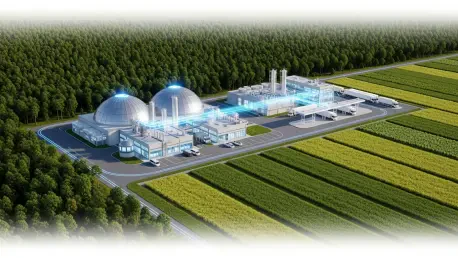
Integration with Carbon Capture and Storage (CCS) networks enables the production of fuels that are effectively carbon-negative. By capturing greenhouse gas emissions during the refining process, the technology can achieve a 200% lifecycle reduction in emissions. This performance metric elevates SAF beyond simple carbon neutrality, making it a powerful tool for reversing atmospheric damage. This unique implementation allows industrial facilities to act as carbon sinks, fundamentally changing the environmental math of flight.
Latest Developments in the Sustainable Fuel Sector
Recent milestones in Front-End Engineering Design (FEED) and technology licensing indicate a maturing sector ready for commercialization. Infrastructure investment has surged globally, leading to the first new refinery constructions in several decades. The rise of localized “green clusters,” such as the Teesside network in the United Kingdom, reflects a strategic shift toward integrated industrial ecosystems. These clusters optimize feedstock logistics and carbon storage, creating highly efficient hubs that accelerate the global energy transition.
Real-World Applications and Industrial Scaling
SAF is now being deployed to meet strict national fuel mandates that require a minimum renewable content for all departing flights. The Lighthouse Green Fuels project serves as a benchmark for this industrial scaling, with targets to produce 180 million liters annually. Additionally, the production of renewable naphtha as a byproduct provides sustainable raw materials for the broader chemical industry. These applications demonstrate how SAF technology strengthens domestic fuel security while decarbonizing multiple sectors simultaneously.
Technical Hurdles and Regulatory Obstacles
Complexities in obtaining environmental approvals and navigating Development Consent Orders remain significant technical hurdles for new facilities. Securing massive capital before the final investment decision requires immense financial confidence and long-term policy certainty. Additionally, the logistical challenge of sourcing and transporting biomass at a massive scale tests the limits of current infrastructure. Continuous engineering improvements are necessary to optimize refinery efficiency and ensure that these projects remain commercially viable without permanent subsidies.
Future Outlook and Long-Term Industry Impact
Projections suggest that full-scale commercial production will achieve significant global market penetration by 2031. Future breakthroughs in carbon-negative technologies will likely redefine the societal impact of long-haul travel, making it compatible with climate goals. By revitalizing industrial regions and fostering specialized job growth, the SAF industry positions itself as a cornerstone of the future green economy. This development ensures long-term industrial resilience while fostering innovation in aerospace and chemical engineering.
Summary and Strategic Assessment
The critical role of second-generation biomass and CCS integration serves as the technical foundation for the future of flight. These components offer a viable pathway to net-zero aviation that respects ecological boundaries and food security. The review evaluated the current readiness of the infrastructure and determined that the technical foundation was robust enough to support large-scale deployment. It was clear that the shift toward advanced fuels represented a fundamental transformation, providing a decisive solution for the aviation carbon footprint. This technology proved to be a necessary catalyst for global industrial decarbonization.