
South Korea’s rugged coastline has transformed into a global laboratory for the next generation of renewable energy as the nation aggressively pursues a target of 14.3 gigawatts of offshore wind capacity by the end of the decade. This ambitious pivot away from fossil fuel dependency leverages world-class maritime engineering and shipbuilding sectors to solve the complex logistical challenges inherent in deep-water energy extraction. Unlike earlier projects that relied heavily on fixed-bottom foundations, recent developments focus on the deployment of massive floating turbines that can access the consistent and powerful winds found farther from the shore. The integration of advanced sensor arrays and AI-driven maintenance systems ensures these structures can withstand the volatile weather conditions of the East Sea. By prioritizing domestic manufacturing, the government aims to establish a reliable supply chain that serves local demand and positions the country as a premier exporter of wind technology across the Asia-Pacific.
Engineering the Deep: The Shift to Floating Platforms
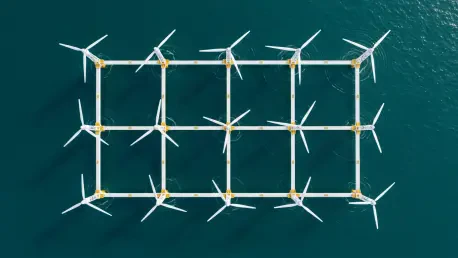
The industrial hub of Ulsan serves as the epicenter for this maritime revolution, hosting several of the world’s largest floating offshore wind projects currently under construction. Engineers have developed semi-submersible and tension-leg platforms that minimize the environmental footprint on the seabed while providing the stability required for 15-megawatt turbines. These floating designs are crucial for South Korea because the continental shelf drops off rapidly, making traditional fixed-bottom structures economically unviable in high-wind areas. By moving turbines over sixty kilometers offshore, developers also mitigate the common problem of visual pollution and local opposition from fishing communities. Modern floating units utilize sophisticated mooring systems that can be adjusted in real-time to compensate for tidal surges and rogue waves. This technological leap represents a fundamental shift in how marine energy is harvested, moving from static structures to dynamic systems that mimic the resilience of deep-sea vessels while providing steady power.
Heavy industrial giants such as Hyundai Heavy Industries and Hanwha Ocean have pivoted their massive dry docks from traditional oil tankers to the mass production of wind turbine components. This industrial transition allows for significant economies of scale, reducing the levelized cost of energy for offshore wind projects to levels that compete directly with liquefied natural gas. The shipyard-based manufacturing model enables the assembly of entire turbine units in a controlled environment before they are towed to their final destination at sea. Such a strategy reduces the risks associated with offshore construction and speeds up the deployment timeline for multi-gigawatt clusters. Furthermore, the development of specialized installation vessels, equipped with high-capacity cranes and dynamic positioning systems, has addressed one of the primary bottlenecks in the global supply chain. By capitalizing on existing shipbuilding expertise, these companies have successfully bridged the gap between heavy industry and sustainable energy production, ensuring long-term economic growth.
Strategic Policy: Building a Sustainable Maritime Economy
To maintain the momentum of these technical achievements, the government recently implemented the Special Act on Promotion of Wind Power, which serves as a one-stop-shop for permitting. Previously, developers had to navigate a labyrinthine bureaucracy involving multiple ministries, leading to significant delays and increased project costs. The new legislation centralizes the approval process, allowing for faster environmental impact assessments and more efficient maritime zoning. This regulatory clarity has encouraged a surge in private investment, as developers now have a predictable timeline for project completion and grid connection. Additionally, the government has established a structured framework for community benefit-sharing, ensuring that coastal residents receive a portion of the revenue generated by offshore assets. This proactive approach to social licensing has drastically reduced the number of legal disputes and public protests that historically hampered renewable energy projects. Clearer rules have turned the administrative burden into a competitive advantage for the region.
The strategic deployment of floating wind technology successfully turned a geographic challenge into a significant economic opportunity for the entire region. By aligning industrial policy with environmental goals, the administration demonstrated that a rapid transition to renewable energy was achievable through large-scale collaboration and engineering excellence. The focus shifted toward the creation of massive energy islands that served as centralized hubs for power distribution and hydrogen conversion. This transition provided a clear roadmap for other nations seeking to de-carbonize their heavy industrial sectors. Leaders prioritized the creation of a transparent regulatory environment, which encouraged international investment and fostered a competitive domestic market for green technology. This proactive stance ensured that the infrastructure built would serve as the backbone of a sustainable economy. Ultimately, the commitment to innovation and scale proved that offshore wind was a central pillar of national energy security. The lessons learned offered a blueprint for global efforts to mitigate climate change effectively.