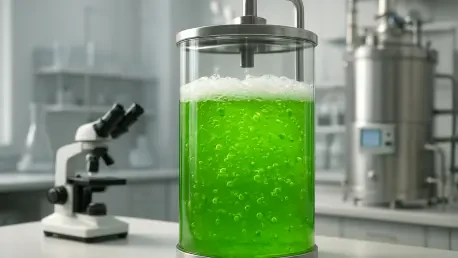

The integration of high-salt environments into the final stage of algal cultivation has demonstrated a 77 percent increase in the lipids required for sustainable biofuel production. This breakthrough, emerging from the dedicated research of a student named Rory Hu, challenges long-standing industrial assumptions regarding the limitations of organic fuel extraction. While professional laboratories have spent years attempting to optimize the growth cycles of Chlorella vulgaris, this novel approach focuses on the strategic application of osmotic stress during the final growth phase. By precisely adjusting the salinity of the aquatic environment just before harvest, the research revealed a significant metabolic shift that forces the cells to accumulate fatty acids at an unprecedented rate. This discovery arrives at a critical juncture as the energy sector seeks carbon-neutral alternatives to petroleum, proving that simple adjustments to cultivation protocols can lead to massive gains in renewable efficiency.
The Mechanics: Algal Lipid Enhancement
Biological Stress: A Catalyst for Fuel
Microscopic algae typically function as efficient solar energy converters, storing energy as carbohydrates under normal conditions. However, when these organisms encounter environmental stressors, their metabolic pathways undergo a dramatic transformation, prioritizing the creation of lipids, which serve as high-density energy reserves. The recent experiment conducted by Hu utilized sodium chloride as a primary stressor to trigger this specific response. Unlike traditional nutrient starvation methods, which often involve removing nitrogen or phosphorus from the growth medium, adding salt is a faster and more manageable intervention for large-scale operations. The research demonstrated that the sudden presence of salt disrupts the osmotic balance of the cell, prompting a reaction where the algae rapidly synthesize triacylglycerols. These oils are the foundational component for creating biodiesel, making production efficiency the most vital metric in the energy supply chain.
Comparative Analysis: Extraction Techniques
To validate these findings, the experiment compared the high-salt method against various other environmental variables, including light intensity and nutrient density. While increasing light exposure has historically been a popular way to boost growth, it often requires expensive lighting systems that consume a significant portion of the energy the algae eventually produce. In contrast, the salt-induction method achieved a lipid yield of nearly 80 percent higher than the control group without requiring additional electrical input. This suggests a more favorable energy-return-on-investment ratio, which is a major hurdle for the biofuel industry as it moves from 2026 toward 2030. Furthermore, the study noted that the timing of the salt introduction is as important as the concentration itself. Applying the stress during the late exponential growth phase maximizes both the volume of the algae and the fat content, providing a clear roadmap for commercial bioreactors.
Industrial Scalability: Economic Impact
Economic Viability: Commercial Biofuel
The primary obstacle for algae-based fuels has always been the high cost of production relative to the market price of traditional crude oil. By increasing the lipid yield by 77 percent, the cost per gallon of biofuel could potentially drop into a range that is competitive with fossil fuels. Commercial enterprises are already looking at how to implement these findings into existing saltwater ponds and closed-loop photobioreactors. Since many algae species are already adapted to brackish or marine environments, the addition of concentrated salt solutions is a relatively low-cost modification to the harvest cycle. This development is particularly relevant for the aviation and shipping industries, which require high-energy-density liquid fuels that batteries cannot currently provide. As the industry continues to refine these techniques from 2026 to 2029, the focus will shift toward automating salinity sensors to ensure the stress response is triggered at the peak moment.
Environmental Impact: Future Strategies
Researchers and energy analysts recognized that the successful integration of hyper-saline stressors into the biofuel lifecycle represented a turning point for sustainable engineering. The study effectively demonstrated that understanding the fundamental biological triggers of simple organisms could yield results that complex chemical engineering had struggled to achieve for a decade. Moving forward, the focus shifted toward testing these salinity parameters across different strains of resilient algae to identify which species offered the most robust response to osmotic changes. Stakeholders in the renewable sector initiated plans to build pilot facilities that utilized wastewater and seawater to minimize the reliance on freshwater resources during the cultivation process. These efforts aimed to ensure that the production of green energy did not compete with agricultural needs. Ultimately, the emphasis was placed on creating a circular economy where the salt used in the stress phase was recovered.