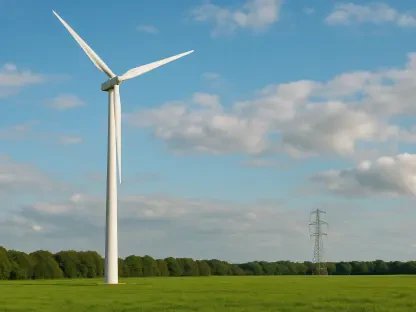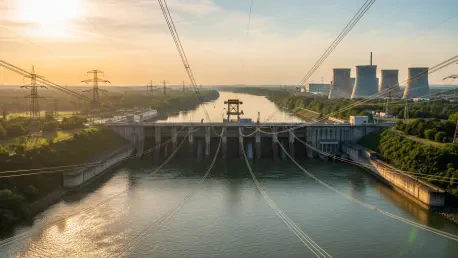

The rhythmic flow of the Danube River has long dictated the heartbeat of Romania’s economy, yet this once-predictable pulse is now being challenged by an increasingly volatile climate. As environmental shifts reshape the continent, the traditional boundaries between water management and energy security are dissolving, forcing a fundamental rethink of national infrastructure. Romania finds itself at a crossroads where the stability of the power grid depends entirely on the health of its hydraulic systems. This synergy is most visible along the Danube, where the river serves as the primary artery for cooling nuclear reactors and spinning hydroelectric turbines.
A failure to recognize the fragility of this connection could lead to systemic economic disruptions. Severe droughts and receding water levels have already signaled that the legacy systems of the past are no longer sufficient to meet the demands of a modern, climate-sensitive economy. Moving toward a more resilient model requires an integrated approach that prioritizes resource efficiency as a pillar of national security.
Navigating the Intersection of Hydro-Resources and Energy Security
The interdependence of the Danube River and Romania’s power grid represents one of the most critical logistical relationships in Eastern Europe. Water is not merely a natural resource here; it is the fundamental coolant for the Cernavodă Nuclear Power Plant and the driving force behind the Iron Gates hydroelectric complex. When river levels drop, the threat to energy production becomes immediate, potentially destabilizing the entire regional grid and forcing a reliance on more expensive or carbon-intensive alternatives.
Beyond the energy sector, water-energy stability underpins the nation’s agricultural productivity and its capacity for cross-border transportation. The Danube serves as a vital corridor for freight, and any reduction in depth creates bottlenecks that ripple through the European supply chain. Evaluating the current scope of infrastructure reveals a system that was built for a different environmental era, making it highly sensitive to the volatility seen in recent seasonal patterns.
Shifting Paradigms in Resource Management and Infrastructure Performance
Emergence of Integrated Water-Energy Models and Digital Innovations
Transitioning from separate policy silos toward a cohesive climate-resilience strategy has become a national priority. By merging water and energy planning, authorities are better equipped to handle the dual challenges of scarcity and demand. The adoption of precision irrigation and real-time digital monitoring allows for the optimization of agricultural water use, ensuring that every drop contributes to food security without wasting the energy needed to transport it.
Technological advancements in smart pumping systems are further reducing the energy footprint of water distribution. These systems adjust in real-time to demand, preventing the over-pressurization that often leads to leaks and energy waste. Moreover, there is a visible shift toward landscape-based water retention strategies. These nature-based solutions help mitigate the impact of flash floods by slowing water movement, which simultaneously recharges groundwater and protects downstream energy assets.
Market Projections and Performance Indicators for a Resilient Economy
Data on historical water levels show a direct correlation between river volume and the energy output at the Cernavodă plant. During periods of extreme heat, the risk of operational curtailment increases, driving the need for diversified cooling technologies. Consequently, growth forecasts for investment in modernized irrigation and large-scale energy storage solutions have surged. Investors are increasingly looking at infrastructure that can bridge the gap during periods of low hydraulic potential.
Performance metrics regarding the reliability of navigation routes remain a key indicator of economic health. River-based logistics are essential for the movement of heavy goods, and current assessments suggest that future infrastructure funding will be heavily weighted toward dredging and riverbed stabilization. National and regional recovery programs are expected to provide the necessary capital to ensure that these transportation veins remain open despite environmental fluctuations.
Addressing the Vulnerabilities of Interdependent Resource Infrastructure
The threat of operational shutdowns in nuclear and thermal power plants during extreme drought is a reality that planners must confront. When temperatures rise and water levels fall, the thermal efficiency of cooling systems drops, which can lead to emergency shutdowns to prevent equipment damage. This creates a high-stakes balancing act where industrial energy needs must be weighed against the requirements of crop irrigation and ecological conservation.
Managing these conflicting needs requires sophisticated trade-off models to prevent one sector from starving another. Receding river beds also create logistical bottlenecks in the navigation sector, which can stall the delivery of essential fuels and raw materials. Upgrading legacy infrastructure is no longer an optional project; it is a necessity for surviving the increasingly frequent climate extremes that characterize the current decade.
Policy Frameworks and Regulatory Alignment within the European Union
Ensuring compliance with the EU Common Agricultural Policy and high environmental standards is a central pillar of Romania’s strategy. National security regulations are being updated to provide better protection for critical energy and water assets, recognizing them as vulnerable points of failure. By implementing standardized water management protocols, the country is also facilitating better regional cooperation with neighboring Danube nations.
Regulatory incentives are now being used to encourage a transition to proactive, technology-driven resource efficiency. These policies aim to lower the barriers for companies adopting green technologies and smart water systems. Aligning national goals with broader European objectives ensures that Romania remains a competitive and stable participant in the internal market while securing its own resource independence.
The Future Landscape of Resilient Infrastructure and Proactive Adaptation
Scaling up investments in resilient energy systems that minimize natural resource consumption will define the next phase of development. New energy projects are increasingly evaluated on their water footprint, favoring technologies that can operate with minimal liquid intake. Simultaneously, the role of decentralized water management is expanding, allowing local communities to maintain stability without relying solely on centralized, vulnerable networks.
Emerging opportunities in the modernization of the national power grid support these climate adaptation efforts. By integrating more renewable sources and improving grid flexibility, the system becomes less dependent on a single river’s flow. Anticipating global economic shifts is also vital, as these changes influence how Romania positions its long-term resource strategy in a world where water and energy are the ultimate currencies.
Path Forward: Strengthening National Stability Through Holistic Management
The analysis confirmed that the critical link between ecological health and economic security was absolute. It showed that the transition from reactive crisis management toward proactive efficiency offered the most viable path for the nation. Decision-makers identified that modernizing utilities and investing in sustainable agriculture provided the necessary foundation for enduring stability. The shift toward integrated management helped insulate the domestic market from external shocks and environmental volatility.
Stakeholders successfully recognized that infrastructure resilience was a prerequisite for long-term investment. The strategies implemented focused on local adaptation and digital oversight, which allowed for a more flexible response to shifting river dynamics. Ultimately, the country established a framework that served as a regional model for climate resilience, demonstrating that resource scarcity could be managed through innovation and policy alignment. This approach ensured that the national grid and water systems remained robust in the face of a changing world.