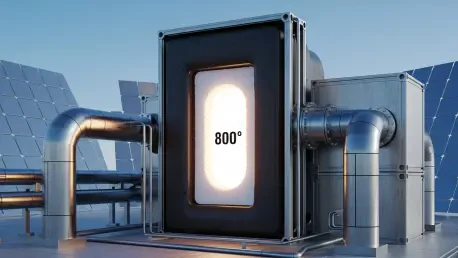

Achieving temperatures of eight hundred degrees Celsius using solar concentration technologies represents a monumental breakthrough for heavy industries that previously relied exclusively on fossil fuels to generate high-grade thermal energy. For sectors such as cement, steel, and glass manufacturing, the requirement for intense heat has always been the primary obstacle to decarbonization, as traditional renewable sources like wind and standard photovoltaics simply cannot provide the necessary thermal density. However, a specialized Oxford-based startup recently changed this narrative by demonstrating a concentrated solar thermal system that effectively captures and focuses sunlight to reach the 800-degree threshold. This milestone proves that solar energy can transition from being a supplementary power source to a primary driver of heavy industrial processes. By achieving these extreme temperatures, the technology offers a viable path for manufacturers to eliminate their dependence on natural gas and coal while maintaining the high throughput and precision required for global supply chains in 2026.
Engineering High-Temperature Solar Concentration
Precision Optics and Heliostat Control Systems
Concentrating solar energy to the point of melting metals or calcining limestone requires an unprecedented level of optical precision and automated control. The system utilizes an array of heliostats, which are highly reflective mirrors equipped with dual-axis tracking systems that follow the movement of the sun with sub-millimeter accuracy throughout the day. These mirrors are programmed with advanced computer vision algorithms that adjust their orientation in real-time, ensuring that every reflected ray of sunlight converges on a single, compact receiver. This concentration of flux creates a localized heat zone that would be impossible with traditional flat-plate collectors or even parabolic troughs. The engineering behind these heliostats focuses on durability and responsiveness, allowing the system to maintain peak thermal output even during variable weather conditions. This level of precision is the cornerstone of the system’s ability to reach 800 degrees, as even a minor misalignment would result in significant thermal loss and reduced efficiency.
Thermal Receiver Design and Material Innovation
The receiver, which serves as the destination for the concentrated solar flux, is a marvel of material science designed to withstand extreme thermal stress without degrading over time. Constructed from advanced ceramic materials and specialized alloys, the receiver is capable of absorbing intense radiation and converting it into usable thermal energy with minimal reflection. Inside the receiver, a heat-transfer medium—often consisting of ceramic particles or specialized molten salts—circulates to capture the energy and transport it to the industrial process or into a thermal storage unit. This design solves the critical problem of thermal shock, which frequently plagues high-temperature systems when solar intensity fluctuates. By using materials with high heat capacity and low thermal expansion, the team ensured that the system remains stable over thousands of cycles. This robustness is essential for industrial integration, as facilities like cement kilns or blast furnaces operate continuously and cannot afford downtime caused by equipment failure.
Industrial Integration and Market Scalability
Sector-Specific Applications in Hard-to-Abate Industries
Integrating 800-degree solar heat into existing industrial infrastructure presents a transformative opportunity for the global cement and steel sectors, which are responsible for a significant portion of industrial carbon emissions. In the cement industry, the calcination process requires temperatures around 900 degrees, meaning this solar technology is now within striking distance of powering the core chemical reaction of the sector. By pre-heating materials or directly firing kilns with concentrated solar energy, manufacturers can drastically reduce their fuel consumption and carbon footprint simultaneously. In steel production, this high-grade heat can be used for ore drying, coking, and even assisting in the electric arc furnace process by providing a thermal baseline that reduces the total electrical load required. The scalability of the mirror arrays means that solar thermal plants can be sized to match the specific energy demands of a particular facility, providing a modular solution that fits within the footprint of existing industrial parks.
Validation of Operational Success: Strategic Next Steps
The successful demonstration of the 800-degree solar array provided a definitive validation of the startup’s core engineering principles and cleared the path for large-scale commercial deployments. The research team established that the system consistently maintained the target temperature under varied atmospheric conditions, which mitigated concerns regarding the reliability of solar thermal for 24-hour industrial operations. Following the pilot success, the strategic focus shifted toward the development of integrated thermal storage solutions that allowed for the preservation of excess solar energy for use during nighttime production cycles. This step proved crucial for ensuring that heavy industry could maintain a continuous workflow without reverting to fossil fuel backups when the sun set. Furthermore, the partnership models established during this phase facilitated collaborations with major engineering firms to integrate the solar receiver technology directly into existing kiln and furnace designs. These advancements confirmed that high-temperature solar heat was a market-ready solution.