
The global challenge of managing municipal solid waste has long been a hurdle for cities aiming to transition toward truly circular economic models where every piece of refuse is viewed as a resource rather than a liability. Mitsubishi Heavy Industries addressed this critical issue head-on by securing a pivotal technology verification report from the Japan Environmental Sanitation Center for its advanced AdBio system in mid-2026. This certification marks a definitive moment for the industry, as it validates the technical maturity and operational efficiency of a platform designed to extract high-value organic materials from mixed waste streams. By focusing on the recovery of biodegradable components that are typically lost in traditional disposal methods, the system provides a tangible pathway for municipalities to minimize landfill reliance while maximizing energy independence. This technological leap essentially redefines the boundary between waste management and renewable energy production in modern cities.
Engineering Efficiency: The Mechanics of the AdBio Platform
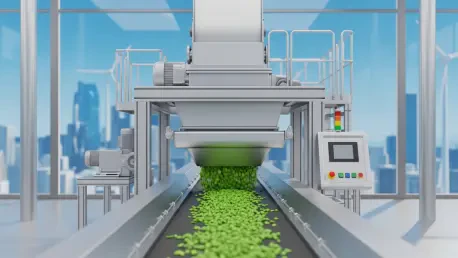
The core innovation of the AdBio system, which stands for Biomass High-Efficiency Recovery and Recycling System, lies in its sophisticated approach to sorting what was once considered inseparable municipal refuse. For decades, the presence of plastic, metal, and glass mixed with food scraps created a contaminated slurry that was largely unsuitable for efficient biological processing. AdBio utilizes high-precision mechanical sorting tools that effectively isolate organic fractions from the general waste stream with unprecedented accuracy. This process ensures that the resulting biomass is remarkably clean and concentrated, which is a prerequisite for high-performance methane fermentation. By removing the physical barriers to organic recovery at the front end of the process, the system allows facilities to treat waste not as a homogeneous mass to be burned, but as a complex feedstock reservoir. This shift in processing logic is essential for achieving high recovery rates in contemporary urban centers.
Once the organic materials have been meticulously separated and prepared, they undergo a transformation process that turns discarded food into vital energy assets like green electricity, heat, and fuel. Traditional methane fermentation facilities often struggle with the inconsistency of their input materials, leading to fluctuations in gas production and potential mechanical failures. The AdBio system mitigates these risks by providing a stabilized and high-quality feedstock that optimizes the biological activity within the digesters. Moreover, the integration of this system into existing waste management infrastructure allows for a more streamlined approach to energy recovery. Instead of maintaining separate collection routes for different types of organic waste, which is often logistically complex and expensive, the system enables the high-efficiency extraction of biomass from a single, mixed stream. This significantly lowers the operational barriers for urban centers to adopt greener and more sustainable policies.
Enhancing Energy Output: Achieving a Forty Percent Increase
Perhaps the most striking data point emerging from the recent verification is the ability of the AdBio system to increase biogas production by approximately 40 percent compared to conventional methods. This massive gain in energy efficiency is primarily attributed to the system’s superior ability to recover a higher volume of biomass that would otherwise remain trapped in the residual waste stream. Standard crushing and sorting techniques often fail to capture smaller organic particles or fibrous materials, but the AdBio technology ensures that almost every bit of biodegradable material is funneled toward fermentation. Furthermore, the system excels at breaking down paper products, which are notoriously difficult for standard anaerobic digestion systems to handle effectively due to their complex structural integrity. By converting these tough fibers into a more degradable format, the system unlocks a significant energy reservoir that previously went untapped, thus driving the 40 percent surge in yield.
The verification provided by the Japan Environmental Sanitation Center served as a vital endorsement that lowered the perceived risks for stakeholders interested in large-scale deployments. As an objective third party, the center scrutinized the technical performance and reliability of the system, offering the necessary oversight that cities and contractors required before committing to major infrastructure upgrades. This recognition facilitated a broader adoption of the technology, ensuring that waste was no longer viewed as the end of a product’s lifecycle but rather as the start of a productive energy cycle. Leaders in the energy and waste sectors utilized these insights to overhaul their facilities, transforming societal burdens into valuable assets for a carbon-neutral world. In light of these results, urban planners adopted a strategy that favored decentralized biomass recovery, effectively turning every municipal facility into a self-sustaining power hub.