
Christopher Hailstone is a seasoned veteran in the global energy sector, specializing in the intricate balance between grid reliability and the integration of renewable technologies. With a career defined by optimizing electricity delivery and spearheading sustainable energy management, he currently serves as a leading expert in utility infrastructure. As India accelerates its transition toward a greener economy, Christopher provides a critical perspective on how Swedish engineering and localized manufacturing can revolutionize the way the world’s most populous nation stores and transports clean energy.
Transitioning from European design to local manufacturing involves navigating complex logistical and industrial landscapes. What specific qualities are you looking for in Indian partners to localize Type 4 cylinder production, and how will these collaborations accelerate the “Make in India” initiative for green energy?
To truly realize the “Make in India” vision for high-tech storage, we are seeking partners who possess a sophisticated blend of industrial scale and technical agility. We look for collaborators who have an established footprint in manufacturing or energy infrastructure, particularly those who understand the nuances of working with advanced materials like glass fiber. Our strategy follows a precise four-stage roadmap: first, we identify partners with existing industrial hubs to minimize lead times; second, we initiate a comprehensive technology transfer to bridge the gap between Swedish design and local execution; third, we co-develop a localized supply chain to source raw materials within India; and finally, we scale production to meet the specific demands of the domestic market. This collaborative approach ensures that the technology isn’t just imported, but becomes an intrinsic part of India’s industrial DNA, fostering local jobs and specialized expertise.
Traditional steel cylinders pose significant challenges due to their weight and susceptibility to corrosion during gas transport. Since glass fiber composite technology is approximately 75% lighter, how does this weight reduction specifically lower operational costs for heavy-duty trucking, and what are the primary technical requirements for maritime applications?
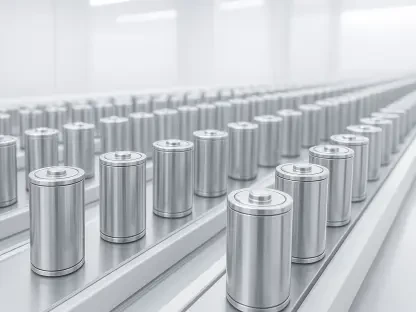
The shift from steel to Type 4 composite cylinders is a game-changer for heavy-duty logistics because every kilogram saved in equipment weight is a kilogram gained in payload capacity or fuel efficiency. By being 75% lighter, our cylinders allow a standard heavy-duty truck to transport significantly more Compressed Bio-Gas or Hydrogen per trip, which directly slashes the cost per ton-kilometer and reduces the number of vehicles needed on the road. In the maritime sector, the requirements are even more stringent; we focus on total corrosion resistance to withstand harsh saline environments where steel would inevitably fail. These maritime solutions must also handle high-pressure cycles while maintaining structural integrity, ensuring that green fuel can be safely transported across oceans without the constant threat of rust or material fatigue.
The upcoming India-EU Free Trade Agreement is expected to serve as a major catalyst for technology transfers in the sustainability sector. How is this evolving trade landscape influencing your market entry strategy, and what specific advantages does Swedish engineering bring to India’s expanding Bio-Gas and Green Hydrogen infrastructure?
The India-EU Free Trade Agreement is the bedrock of our current strategy, as it creates a stable economic corridor that de-risks the transfer of intellectual property and high-value engineering. We are positioning ourselves to be first-movers in this new era, utilizing the FTA to streamline the movement of specialized machinery and expert personnel between Stockholm and New Delhi. Swedish engineering brings a legacy of precision and “circular thinking” to India, offering storage solutions that are not just efficient but designed for a decades-long lifecycle in demanding climates. This reliability is vital for India’s National Green Hydrogen Mission, where the infrastructure must be robust enough to handle the massive scale-up required to meet national decarbonization targets.
Modernizing a national logistics sector can potentially reduce its carbon footprint by up to 70% through efficient storage solutions. What metrics are most critical when measuring the decarbonization efficiency of lightweight cylinders in transit bus fleets, and can you share an anecdote regarding the challenges of scaling such technology?
When we look at transit bus fleets, the most critical metric is the “ton-CO2 reduction per passenger kilometer,” which highlights how much more efficiently a bus can operate when it isn’t hauling thousands of kilograms of dead weight in steel tanks. We also track the “fuel-to-weight ratio,” which demonstrates that our 75% lighter cylinders allow for longer routes and fewer refueling stops, further lowering the carbon intensity of public transport. I recall an instance in the early stages of scaling where we had to convince a skeptical fleet operator that a “plastic and glass” tank could be safer than heavy steel; it took rigorous impact testing and real-world demonstrations to prove that our technology could survive the toughest road conditions. That experience taught us that scaling isn’t just about the hardware; it’s about winning the hearts and minds of the engineers who have used traditional methods for half a century.
Localizing the production of advanced storage solutions requires a robust supply chain and a specialized workforce. What specific manufacturing hurdles do you anticipate when establishing production lines in India’s industrial hubs, and how do you plan to integrate Swedish quality standards into the local manufacturing ecosystem?
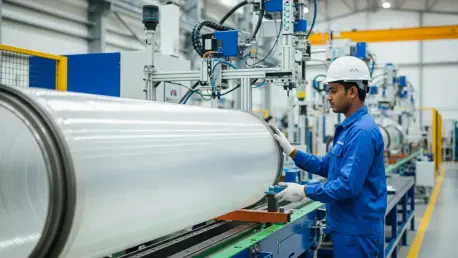
The primary hurdle in localizing Type 4 production is the “precision gap”—the transition from general manufacturing to the highly specialized winding processes required for glass fiber composites. We anticipate challenges in sourcing high-grade resins and consistent glass fibers that meet our global specifications, which is why we are working closely with local suppliers to elevate their quality control processes. To maintain Swedish standards, we intend to implement a “digital twin” system where Indian production lines are monitored alongside our European facilities, ensuring real-time quality audits and data sharing. Furthermore, we are investing in specialized training programs for the local workforce to master the automated liner blowing and filament winding techniques that are the hallmark of our technology.
With India aiming for 20% ethanol blending and a massive scale-up in green hydrogen, the demand for safe, cost-effective storage is soaring. How do you plan to balance the high demand with the need for rigorous safety testing, and what role will joint ventures play in meeting these urgent national targets?
Balancing speed with safety is a non-negotiable priority, especially as India pushes for 20% ethanol blending and ambitious hydrogen targets. We address this by building safety testing directly into the production line through automated non-destructive testing, ensuring that every cylinder is validated without slowing down the manufacturing flow. Joint ventures are the primary engine for meeting these urgent targets; by partnering with Indian energy PSUs and private automotive giants, we can leverage their existing distribution networks and market presence to deploy our technology at a scale no single company could achieve alone. These partnerships allow us to move from intent to action rapidly, providing the safe, durable, and cost-effective storage the Indian market so desperately needs.
What is your forecast for India’s green energy transition over the next decade?
I predict that over the next ten years, India will transition from being a technology adopter to a global powerhouse in green energy exports, particularly in the realm of Green Hydrogen. With the logistics sector potentially reducing its carbon footprint by up to 70% through lightweight storage and smarter distribution, we will see a dramatic shift where bio-gas and hydrogen become as ubiquitous as diesel is today. As manufacturing hubs across the country embrace “Make in India” for advanced composites, the cost of clean energy will plummet, making India the primary case study for how a rapidly developing nation can leapfrog traditional fossil fuel dependence to lead the global net-zero movement.