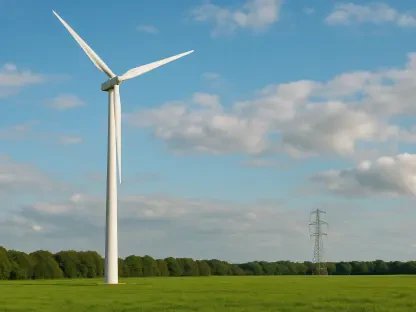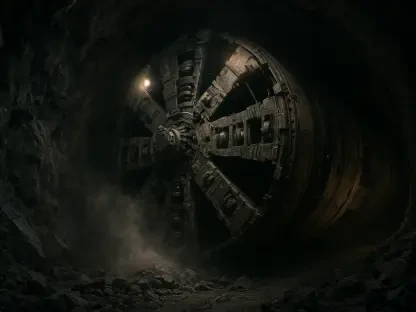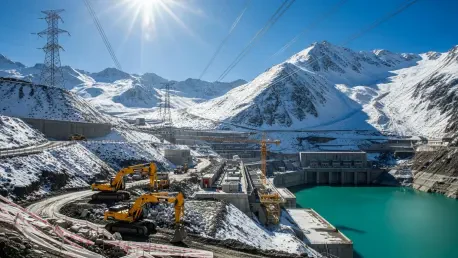

In the rugged highlands of Sichuan Province, China is currently constructing a monumental engineering marvel that redefines the boundaries of renewable energy storage at extreme altitudes. Situated at a staggering elevation of roughly 14,100 feet above sea level, the Daofu pumped-storage hydropower station serves as a critical pivot point in the nation’s transition toward a more resilient and flexible electrical grid. While traditional hydroelectric dams rely on the consistent natural flow of river water to generate power, this specific facility is designed to function as a colossal “water battery” that stores energy for later use. This innovative approach addresses one of the most persistent challenges in modern power management: the mismatch between the time energy is produced by wind or solar farms and the time it is actually needed by consumers. By capturing surplus electricity and converting it into gravitational potential energy, the project ensures that green power remains a reliable asset rather than a fleeting resource during peak demand cycles.
Harnessing Gravitational Energy at Peak Altitudes
The Mechanics of Large-Scale Energy Storage
The operational logic of the Daofu project is centered on a sophisticated dual-reservoir system that leverages the physics of gravity to manage energy fluctuations. During the middle of the day, when regional solar arrays and wind farms are operating at their maximum capacity, they often generate more electricity than the local population can immediately consume. To prevent this clean energy from going to waste, the facility utilizes the surplus power to drive massive pumps that move water from a lower reservoir to an upper one. This process effectively “charges” the battery by storing energy in the form of water held at a high elevation. This method of storage is far more durable than chemical batteries, as it does not suffer from significant degradation over time and can be maintained for decades with proper mechanical care. The system serves as a giant physical buffer that absorbs the volatility inherent in renewable sources, creating a more stable and predictable energy environment.
When the sun sets or wind speeds drop, the facility transitions into its generation phase to meet the sudden rise in evening energy consumption. Operators release the stored water from the upper reservoir, allowing it to plummet through high-capacity intake tunnels and strike the blades of powerful turbines located deep within the mountain. As the water flows back into the lower reservoir, the turbines spin at high speeds to convert that stored gravitational potential energy back into electricity for the provincial grid. This rapid-response capability allows the station to go from a state of storage to a state of full production in a matter of minutes, which is essential for preventing blackouts during sudden spikes in demand. By smoothing out the peaks and valleys of energy availability, the pumped-storage model provides the necessary consistency for a modern economy to run almost exclusively on renewable power without the constant fear of sudden supply shortfalls.
Technical Infrastructure and Financial Investment
The sheer scale of the Daofu station is reflected in its massive $2.11 billion price tag and its impressive 2.1-gigawatt installed capacity. This infrastructure is not merely a surface-level installation but a complex subterranean industrial complex that includes six reversible units, each rated at 350 megawatts. These units are housed within an expansive underground powerhouse that was carefully carved into the rocky interior of the mountain to protect sensitive equipment from the harsh high-altitude elements. The facility is designed to deliver an annual generation capability of roughly 3 billion kilowatt-hours, making it one of the most productive energy assets in the region. Since the project moved into its active construction phase following the finalization of land-use approvals in late 2025, engineering crews have focused on the Herculean task of boring the water tunnels and establishing the structural foundations for the upper reservoir, ensuring the site meets rigorous seismic safety standards.
Moving through the mid-2020s, the progress on the site has shifted from preliminary excavation to the installation of heavy mechanical components and electrical switchgear. The project represents a significant long-term capital commitment that is expected to yield dividends for over fifty years of operational life. Beyond the core turbines and reservoirs, the facility requires a specialized surface switchyard to manage the high-voltage output and direct it into the regional transmission network. The financial and technical resources poured into this mountain range highlight a strategic shift toward massive, centralized storage projects that can anchor regional energy markets. This investment is viewed as a necessary prerequisite for the decommissioning of older coal-fired plants, as it provides the rotational inertia and frequency regulation that the grid once received from fossil fuel combustion. The project now stands as a physical testament to the specialized expertise required to build heavy industry in the most remote corners of the planet.
Navigating the Physical and Geographic Impact
Quantifying Power Output and Regional Benefits
To understand the immense impact of the Daofu station, it is helpful to compare its projected output to the needs of large urban and industrial centers across the globe. Analysts have noted that the facility’s annual energy production is equivalent to more than one-fourth of the total electricity demand for an entire industrial hub like Antioquia, Colombia. On a more local level, the daily storage capacity of approximately 12.6 million kilowatt-hours is sufficient to power roughly 2 million individual households within Sichuan Province. This massive energy reservoir acts as a safety net that protects residential consumers from the variability of the weather, ensuring that even during the coldest winter nights, there is a steady flow of clean power available. While household usage is a significant metric, the station also provides the heavy-duty power required to keep local factories, hospitals, and public transportation systems running without interruption, even when local wind speeds are insufficient.
The project also offers significant economic benefits to the surrounding Daofu County by creating specialized jobs and stimulating the local service economy during the intensive construction period. Once fully operational, the station will contribute to the regional tax base and provide a steady stream of clean electricity that can attract high-tech industries looking for a reliable, carbon-free energy source. This regional benefit extends beyond simple power consumption, as the project helps to regulate local water resources and can be integrated into broader water management strategies for the Yalong River basin. By providing a massive, predictable source of energy, the station reduces the region’s reliance on imported fuels and enhances energy independence. The ability to store energy locally also reduces the stress on long-distance transmission lines, as the power can be released precisely when the local grid is under the most pressure, thereby improving the overall efficiency of the provincial distribution network.
Engineering Obstacles in a Thin-Air Environment
Executing a high-tech construction project at an altitude of 14,100 feet introduces a series of physical challenges that are rarely encountered in traditional civil engineering. At this elevation, the oxygen levels are significantly lower than at sea level, which drastically reduces the performance of internal combustion engines used in heavy machinery and limits the physical stamina of the labor force. Engineers have had to adapt by utilizing specialized equipment designed for low-pressure environments and implementing strict health protocols to protect workers from altitude sickness and extreme fatigue. The environmental conditions are further complicated by a climate characterized by intense ultraviolet radiation, bone-chilling temperatures, and unpredictable snowstorms that can halt work without warning. These factors combine to create very narrow windows of time during which sensitive outdoor tasks, such as concrete pouring or reservoir lining, can be completed safely and effectively.
Logistical planning for the Daofu project is equally daunting, as the transportation of massive turbine components and heavy building materials requires traversing narrow, winding mountain passes. Each reversible unit is a marvel of precision engineering that must be moved with extreme care to avoid any structural damage that could compromise the station’s efficiency. Project directors have described the endeavor as “highly exploratory,” because there is very little global precedent for building pumped-storage facilities of this magnitude at such extreme heights. The team must constantly innovate, developing new methods for stabilizing the mountain slopes and ensuring that the underground tunnels can withstand the immense pressure of the water without leaking into the surrounding rock. This project is pushing the boundaries of what is possible in hydraulic engineering, serving as a real-world laboratory for high-altitude construction techniques that will likely be used in other mountainous regions across the world.
Strengthening the National Renewable Energy Grid
The Daofu station functions as a cornerstone of the Yalong River basin’s integrated energy strategy, which seeks to blend hydropower, wind, and solar into a single, unified system. This facility is specifically tasked with supporting the development of 6 gigawatts of additional wind and solar capacity in the surrounding mountains. Without the storage capacity provided by the “water battery,” much of the energy generated by these intermittent sources would be lost because it would be produced during times when the grid is already saturated. By providing a place to “park” this energy, the Daofu project maximizes the efficiency of the entire renewable energy ecosystem. This integration allows for a more sophisticated dispatch strategy, where managers can alternate between different energy sources based on weather patterns and demand forecasts, ensuring that the transition to a carbon-neutral grid does not come at the expense of reliability.
Furthermore, the project’s success is intrinsically linked to the expansion of ultra-high-voltage transmission channels that connect the remote Sichuan mountains to the high-demand urban centers of Chengdu. A dedicated 500-kilovolt transmission project and a 1,000-kilovolt channel were developed to transport the stored clean energy over hundreds of miles with minimal loss. This infrastructure underscores the fact that generating and storing power is only one part of the equation; the ability to move that power to where it is needed most is what truly transforms a regional project into a national asset. By bridging the gap between the resource-rich but sparsely populated highlands and the energy-hungry coastal and inland cities, the Daofu project serves as a model for how nations can harness their most difficult terrains to power their future. This holistic approach ensures that the “water battery” is not just a localized utility but a vital artery in the country’s broader strategy for energy security.
The completion of the Daofu pumped-storage facility marked a turning point in the global approach to large-scale energy storage in extreme environments. Engineers successfully overcame the atmospheric and logistical hurdles of the high-altitude site, proving that the most inhospitable terrains could be transformed into pillars of a modern, renewable-heavy electrical grid. The project effectively demonstrated that the integration of massive “water batteries” provided the necessary stability to retire older, carbon-intensive power sources without compromising the reliability of the energy supply. Moving forward, the focus shifted toward optimizing the synchronization between the storage facility and the surrounding wind and solar farms to maximize carbon displacement. The lessons learned during the construction of this record-breaking facility provided a blueprint for other nations seeking to utilize mountainous geography for sustainable energy goals. Ultimately, the Daofu project stood as a functional bridge between the intermittent nature of natural elements and the constant demands of a high-tech society.