
The unprecedented expansion of global subsea power networks has pushed offshore wind capacity to a tipping point where traditional risk management strategies no longer match the reality of industrialized energy production. While the transition to renewable energy accelerates, the infrastructure supporting this shift is increasingly vulnerable to a specific type of systemic failure that traditional insurance policies were never designed to cover. The current state of the industry is marked by a rapid move away from the bespoke engineering of the oil and gas era toward a model of mass production and repetitive installation. As projects grow in scale, the financial stakes associated with subsea cabling have transformed from a minor technical concern into a primary threat to project bankability and long-term operational stability.
Modern offshore wind farms are no longer experimental clusters; they are industrial power plants situated in some of the most hostile environments on earth. This massive scaling has led to a structural mismatch where multibillion-dollar assets are being insured using legacy frameworks that treat each component as a unique, isolated risk. However, the contemporary reality involves the deployment of hundreds of identical turbines and thousands of miles of identical cabling, all installed by the same specialized vessels. This industrialization has successfully lowered the cost of energy but has simultaneously concentrated risk, as any single design flaw or installation error now has the potential to manifest across an entire fleet of assets.
The Industrialization of the Sea: Navigating the Offshore Wind Boom
The shift toward the mass repetition of turbine deployment has revolutionized the economics of the sea, yet it has also introduced a vulnerability that the insurance sector is struggling to quantify. In the earlier stages of offshore energy, projects were characterized by bespoke engineering solutions where each platform was a singular achievement of design. Today, the focus has shifted toward speed and volume, with contractors striving to install dozens of foundations and cable inter-arrays in a single weather window. This repetitive nature is the hallmark of modern efficiency, but it creates a scenario where a single systemic error in cable tensioning or a minor defect in a batch of protection systems can result in a catastrophic loss across an entire project.
This evolution has fundamentally changed the role of subsea cabling, which now acts as the central nervous system for national energy grids. As nations depend more heavily on offshore wind for their base-load power, the economic significance of these cables extends far beyond the individual project owners to affect national energy security. The insurance industry now finds itself caught between providing affordable coverage and managing the looming threat of “serial losses”—failures that occur repeatedly due to the same underlying cause. Without a modernized framework that accounts for this repetition, the gap between the technical reality of offshore wind and the financial protection available to it will only continue to widen.
The Economic Paradox of Subsea Cable Reliability
Critical Trends in Risk and Infrastructure Damage
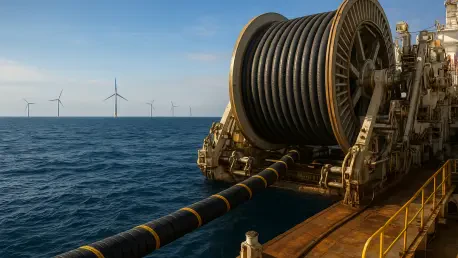
There is a striking economic paradox at the heart of offshore wind development: while subsea cables represent only a small fraction of the total capital investment, they are responsible for the vast majority of insurance payouts. Currently, subsea cabling typically accounts for less than 10% of total project capital expenditure, yet it consistently generates nearly 80% of all insurance claims by value. This disconnect is largely driven by the sheer complexity and cost of marine repairs. Unlike an onshore facility where a technician can drive to a fault location, a subsea cable failure requires the mobilization of specialized repair vessels, which are in extremely high demand and carry exorbitant daily rates.
Furthermore, the rising severity of these claims is exacerbated by the logistical difficulty of operating in volatile marine environments. Even a minor cable fault can lead to months of downtime if a repair vessel is unavailable or if weather conditions prevent safe operations. This has led to a shift in consumer and investor behavior, with stakeholders now demanding higher operational uptime and more robust monitoring solutions. Emerging technologies, such as distributed fiber optic sensing and real-time tension monitoring, are beginning to influence early fault detection, but they also create a new layer of data that insurers must learn to interpret to differentiate between a one-off accident and a serial failure.
Market Data and the Financial Forecast for Serial Losses
The financial forecast for the offshore wind insurance market from 2026 to 2030 suggests a period of intense adjustment as claim frequency for subsea assets continues to rise. Statistical breakdowns show that while turbine failures are more frequent, cable failures are significantly more severe in terms of total indemnity. As mega-projects move further offshore into deeper waters, the length and complexity of export cables increase, further inflating the average claim cost. This trend is threatening the long-term bankability of large-scale arrays, as lenders become increasingly wary of the potential for serial defects to wipe out projected revenue streams over the life of a project.
Forward-looking performance indicators suggest that specialized “wind-only” underwriters are beginning to move away from generalized energy portfolios in favor of more granular risk assessments. Between 2026 and 2028, the market is expected to see a tightening of terms as insurers seek to limit their exposure to systemic workmanship and design flaws. This data-driven approach is necessary to ensure that the insurance sector remains solvent in the face of mega-claims, but it also means that developers must provide higher levels of proof regarding their cable protection systems and installation protocols to secure favorable premiums.
The Legal and Technical Obstacles of Serial Defect Claims
One of the most complex legal hurdles in modern offshore insurance is the “defective part” dilemma, which centers on whether an entire cable array or a single component constitutes a part. When a serial failure occurs, the interpretation of London Engineering Group (LEG) clauses becomes a battleground for determining indemnity. If a tribunal views a hundred individual cable connections as a single integrated system, the insured may find themselves facing a massive deductible that consumes the entire claim. Conversely, if each connection is seen as a discrete part, the insurer may be liable for a series of losses that far exceed the expected payout for a single occurrence.
Navigating these ambiguities requires a deep understanding of both engineering logic and the nuances of business interruption coverage. Determining what constitutes a single “occurrence” is particularly challenging when failures happen over several months but stem from a single design choice. The delay in discovering a serial defect means that by the time the first cable fails, dozens of others may already be compromised. This creates a nightmare scenario for managing downtime, as the time required to investigate and fix a systemic issue across multiple turbines can lead to years of lost revenue that standard business interruption policies are often not structured to handle.
Evolving Standards and the Regulatory Landscape
The transition from legacy oil and gas insurance forms to purpose-built wind frameworks is a critical step toward stabilizing the market. For many years, the industry relied on modified WELCAR forms that were never intended for repetitive, high-volume asset classes. In contrast, the Nordic Offshore Wind Insurance Conditions (NOWIC) represent a more modern approach, specifically designed to address the unique risks of the wind sector. These conditions shift the default coverage in a way that provides more clarity on design errors and workmanship, helping to reduce the legal friction that often follows a major cable loss.
Compliance with international maritime standards and rigorous installation data monitoring has also become a prerequisite for coverage in the 2026 market. Insurers are now demanding verified data on burial depths and cable tensioning during the initial lay to ensure that workmanship meets the required safety margins. This regulatory evolution is forcing developers to adopt more transparent practices, as the lack of high-quality data during the installation phase is often the primary reason why claims are denied or reduced. As standards tighten, the industry is moving toward a environment where insurance liability is directly linked to the real-time digital record of the construction process.
The Future of Risk Transfer in a Repetitive Asset Environment
Looking ahead, the role of technological disruptors such as artificial intelligence and digital twins will be central to predicting and preventing serial failure modes. By creating a digital replica of the subsea cable network, operators can simulate the impact of environmental stress and identify potential failure points before they manifest in the physical world. This predictive capability is expected to become a standard requirement for risk transfer by 2027, as it allows underwriters to price risk based on the actual health of the asset rather than historical averages. Specialized secondary insurance markets are also emerging to provide additional layers of protection specifically for serial defect scenarios.
The global economic climate and persistent vessel shortages are expected to dictate repair timelines and premium levels well into 2029. As the demand for heavy-lift and cable-lay vessels outstrips supply, the cost of responding to a serial failure will remain a volatile variable in project planning. To mitigate this, some developers are forming alliances to share repair resources and specialized equipment. This collaborative approach to risk management, combined with the rise of multidisciplinary tribunals that integrate marine operational expertise with legal oversight, will be essential for maintaining the stability of the offshore wind sector during its next phase of global growth.
Strengthening the Foundation of Offshore Wind Stability
The industry reached a consensus that the existing frameworks for subsea risk were insufficient for the challenges posed by serial failures and repetitive asset models. Major stakeholders identified that the “identical thinking” inherent in legacy insurance wordings failed to account for the unique installation and operational pressures of the offshore wind environment. As a result, the report highlighted the necessity of moving toward engineering-based identification of defective components rather than relying on arbitrary valuation schedules. The findings suggested that a more granular approach to data would lead to more equitable resolutions for both insurers and the insured during complex disputes.
To move forward, the industry adopted a strategy of evidence-based aggregation to resolve long-standing disputes over deductibles and limits. This shift meant that the origin of each failure, whether it was a single design flaw or a series of installation mishaps, was analyzed with greater technical precision. The report concluded that the establishment of multidisciplinary tribunals was the most effective way to address the marine-specific nature of cable claims. These actions fostered a “built-for-purpose” legal environment that better supported the global energy transition by ensuring that risk transfer mechanisms were as robust and innovative as the technology they were meant to protect.