
Christopher Hailstone brings a wealth of expertise to the table, with a deep background in energy management, grid reliability, and the practicalities of renewable electricity delivery. As a utilities expert, he has spent years navigating the complexities of infrastructure development, making him a crucial voice in the conversation regarding India’s shifting energy landscape. Today, he joins us to discuss how a new joint venture is utilizing factory-manufactured modular technology to bypass the traditional hurdles of biogas production. By focusing on rapid deployment and high feedstock efficiency, this approach promises to reshape how decentralized energy is viewed and implemented in rural and industrial sectors.
How does the transition from traditional, lengthy construction timelines to the rapid deployment of modular plug-flow technology fundamentally change the feasibility of biogas projects?
Conventional facilities often face a grueling development cycle that can stretch between 12 to 18 months, which frequently leads to investor fatigue and logistical delays. By shifting the bulk of the work to a controlled factory setting, these modular units can be manufactured and then operational on-site within just four to five months. This drastic reduction in the time-to-market allows developers to see a return on investment much faster, creating a sense of urgency and momentum that traditional builds lack. It turns what used to be a massive civil engineering project into a streamlined installation, making clean energy access more predictable and scalable for small-scale projects.
In what ways do the technical advantages of dry anaerobic digestion and reduced feedstock requirements influence the overall operational sustainability of these modular plants?
The technical efficiency of these systems is a significant leap forward, as they are designed to consume roughly 30% less feedstock compared to older, less efficient models. This reduction is vital because it lowers the logistical burden and cost of transporting biomass, which is often the most expensive part of the operation. Furthermore, the dry anaerobic digestion process is a major win for water conservation, requiring significantly less water to operate, which is a critical factor in many arid regions. When you combine lower energy consumption with reduced raw material needs, the operating costs drop, making the entire business model far more resilient against market fluctuations.
With the ability to process over 100 different types of feedstock, how does this flexibility address the diverse waste management challenges found in different regions?
The sheer versatility of this technology is impressive, as it can effectively process everything from paddy straw and cotton residue to poultry litter and municipal solid waste. In a country where agricultural outputs vary wildly by state, being able to switch between materials like Napier grass or fruit waste ensures the plant never has to sit idle during a specific harvest’s off-season. This adaptability solves a major pain point for developers who previously feared “feedstock starvation” if a single crop failed or was unavailable. It essentially transforms any local organic waste into a reliable energy asset, providing a consistent supply for the long-term 15-year offtake arrangements.
The upcoming ₹50 crore pilot project in Gujarat includes solar power and organic manure production; how does this integrated approach enhance the local circular economy?
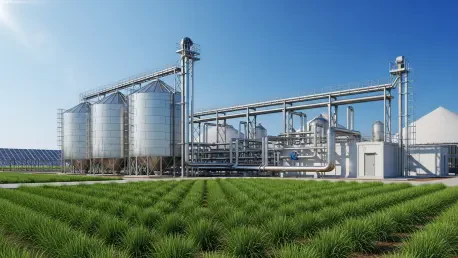
The pilot project in Gandhinagar is a stellar example of a closed-loop system, where the plant isn’t just a gas producer but a hub for regional sustainability. By using captive solar power to run the facility and cultivating Napier grass as a primary feedstock, the project minimizes its external carbon footprint while maximizing output. The production of organic manure as a by-product adds another layer of value, allowing farmers to enrich their soil and reduce their dependence on chemical fertilizers. This integrated model creates multiple revenue streams, which provides the financial stability needed to support large-scale infrastructure over a decade and a half.
What is your forecast for the adoption of modular biogas systems in India over the next five years?
I expect a massive surge in the adoption of these systems, with a clear trajectory toward deploying at least 150 modular units across the country to meet rising demand. Government initiatives like SATAT and GOBARdhan are creating the perfect regulatory environment for these factory-built, 3-tonne-per-day plants to become a staple of rural energy infrastructure. As these units prove their efficiency and speed, we will see a shift away from massive, centralized plants toward a more resilient, decentralized network of bioenergy hubs. This transition will not only strengthen India’s domestic fuel production but also provide a blueprint for how other nations can utilize modular technology to solve complex waste-to-energy puzzles.