
Christopher Hailstone joins us to discuss the groundbreaking Maharashtra Compressed Biogas Policy 2026 and its implications for the regional energy landscape. With his deep background in utility management and grid security, he offers a unique perspective on how this policy transforms organic waste into a strategic energy asset. Throughout our conversation, we explore the logistical framework for waste collection, the financial mechanisms designed to spur private investment, and the integration of agricultural residues into the broader energy grid to foster a sustainable circular economy.
The Urban Development Department is currently leading the transition to convert municipal and agricultural waste into renewable gas. How will this agency coordinate with rural districts to ensure a steady supply of feedstock, and what specific steps are needed to integrate these diverse waste streams into a single production facility?
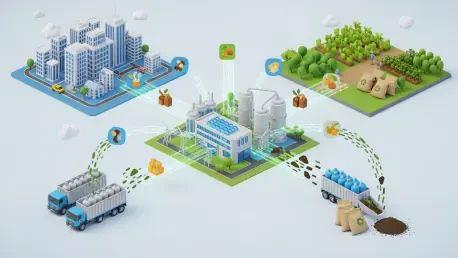
The coordination starts with the Urban Development Department acting as the central nodal authority to bridge the gap between urban waste generation and rural biomass potential. By establishing district-level facilitation cells, they create a direct line of communication with local bodies to ensure that municipal solid waste, livestock manure, and agro-industrial by-products flow seamlessly toward the production hubs. This isn’t just about moving trash; it is about creating a sophisticated logistics network that treats every ton of organic matter as a high-value energy precursor. To integrate these streams, facilities must implement rigorous segregation and pre-processing protocols to handle the varying moisture levels and chemical compositions of different feedstocks. Seeing these diverse materials—from city food scraps to farm residues—combine into a single, clean energy stream is a powerful testament to the circular economy in action.
Financial support now includes viability gap funding of up to ₹75 lakh per ton of daily capacity, capped at ₹15 crore per project. What financial metrics should developers prioritize to secure this funding, and how will the dedicated ₹500 crore budget impact the speed of project commissions?
Developers need to look beyond simple profit margins and focus on the technical efficiency metrics that prove their project can sustain itself over the long term. With a substantial ₹500 crore budget allocated for the 2026–27 fiscal year, there is a tangible sense of urgency and financial security that was previously missing in the bioenergy sector. Investors will be scrutinizing the 2.5% SGST reimbursement post-commissioning as a key indicator of government commitment to project viability and long-term success. This infusion of capital is designed to break the initial inertia, allowing developers to scale up quickly without the paralyzing fear of early-stage cash flow shortages. It is an exhilarating time because this funding acts as a direct catalyst, transforming theoretical plans into steel-and-concrete infrastructure across the state.
Land for these energy projects is being offered at 0.7% of the market rate, provided the plant is operational within two years. What logistical hurdles do developers face when meeting this tight deadline, and how does “priority infrastructure” status help resolve common delays in securing water and electricity?
The two-year window is a high-stakes race against the clock that requires precision engineering and flawless project management from the very first day. Developers often struggle with the sheer scale of land preparation, as the policy allows for a minimum of 1 acre up to a maximum of 20 acres, depending on the project’s specific daily capacity. Fortunately, the “priority infrastructure” designation acts like a golden key, unlocking immediate access to essential utilities that typically take months of bureaucratic waiting to secure. Instead of getting bogged down in red tape for water and electricity connections, projects are moved to the front of the line, which is vital for maintaining the 0.7% concessional land rate. You can almost feel the momentum building when these projects are fast-tracked, turning vacant plots into buzzing hubs of renewable energy production within such a short timeframe.
The current framework encourages one waste aggregator per Panchayat Samiti to stabilize the supply chain. How can Farmer Producer Organizations effectively manage the collection of agro-industrial residues, and what role do long-term supply agreements play in making these projects attractive to private investors and banks?
Farmer Producer Organizations (FPOs) serve as the essential connective tissue between the individual farmer and the massive industrial demand of a compressed biogas plant. By acting as waste aggregators at the Panchayat Samiti level, these organizations provide the logistical muscle needed to gather, bale, and transport residues that would otherwise be burned in the open fields. Long-term supply agreements are the bedrock of this relationship, providing the “bankability” and financial predictability that lenders demand before releasing millions in capital. These contracts offer a sense of stability, ensuring a steady stream of income for rural communities while guaranteeing the plant never runs dry of feedstock. It is deeply rewarding to see how this structure turns agricultural “waste” into a reliable, monthly paycheck for thousands of rural families.
Public-private partnerships are now selecting developers based on the processing fees they charge local government bodies. How does this competitive bidding structure drive technological innovation, and what specific key performance indicators should be used to measure the success of waste-to-energy conversion and carbon reduction?
The competitive bidding process forces developers to sharpen their pencils and find the most efficient ways to process waste at the lowest possible cost to the taxpayer. When the selection criteria hinge on the processing fee per ton of segregated waste, it naturally incentivizes the adoption of cutting-edge anaerobic digestion technologies that maximize gas yields. Success is no longer a vague goal; it is measured through hard Key Performance Indicators (KPIs) like net carbon emission reduction and project-specific efficiency ratings. We are looking for high gas production rates that prove the technology can handle the rigors of municipal waste without breaking down or losing efficiency. This competitive spirit ensures that only the most robust and innovative solutions win out, creating a high-performance bioenergy ecosystem across Maharashtra.
Bio-fertilizer produced as a byproduct is being prioritized for distribution through registered agricultural centers. How can the government ensure these fertilizers are consistently high-quality for farmers, and what strategies are necessary to build a secondary market that successfully complements the revenue generated from gas sales?
To ensure farmers trust this new product, the government is leveraging registered sale centers under the Agriculture Department to maintain strict quality control and nutrient standards. This byproduct is not just a secondary thought; it is a nutrient-rich organic fertilizer that can significantly improve soil health and long-term crop yields. Building a secondary market requires a shift in mindset, treating the solid and liquid digestate with the same commercial rigor and marketing effort as the biogas itself. By prioritizing these fertilizers in state-run distribution channels, the policy creates a built-in customer base and a reliable revenue stream that bolsters the plant’s overall financial health. It is incredibly satisfying to see the loop close, where the waste from the farm goes to the plant and returns to the soil as life-giving nutrients.
What is your forecast for the compressed biogas sector?
My forecast for the compressed biogas sector is one of explosive growth driven by the convergence of environmental necessity and aggressive policy support like we see in the 2026 roadmap. Over the next decade, we will see these biogas clusters becoming the heartbeat of rural economies, providing clean fuel for transportation while simultaneously solving the urban landfill crisis. The integration with national schemes like SATAT and GOBAR-Dhan will create a unified market that attracts massive private investment and domestic manufacturing of specialized equipment. We are standing on the precipice of a bioenergy revolution where “waste” is no longer a liability to be managed, but a precious resource that powers our vehicles and nourishes our land. The scent of fresh compost and the hum of high-pressure gas compressors will soon be the hallmark of a new, sustainable industrial era.