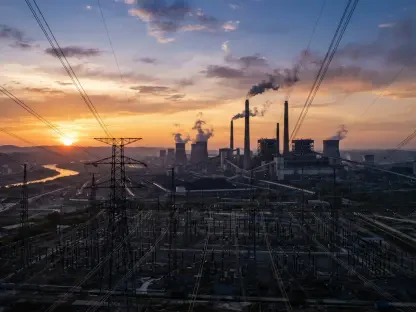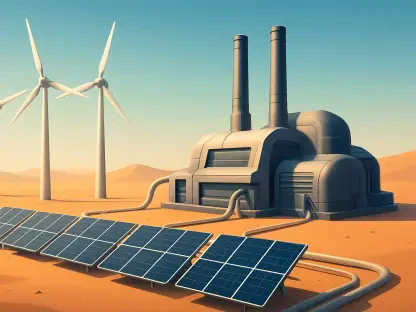

The mechanical noise from wind turbines in Bahia has displaced native wildlife like the caititu, forcing these animals into local farms and destroying subsistence crops. This environmental shift is merely the visible surface of a much deeper transformation occurring in Gentio do Ouro, a municipality of roughly 11,000 residents that was once defined by its history of gold mining but has now become the epicenter of a modern energy revolution. Over the past fifteen years, the rolling hills of northern Bahia have been populated by sprawling wind farms that dominate the horizon, fundamentally altering the geography of the Caatinga biome. While the transition to renewable energy is globally celebrated, the local reality is far more complex, as the promise of regional prosperity remains largely unfulfilled. Instead, the area is evolving into a critical, yet largely unregulated, node for the global tech industry, specifically as a landing site for massive data center clusters designed to fuel the hunger of artificial intelligence. This shift represents a new era of industrialization where “green” credentials often mask the lack of comprehensive oversight, turning remote landscapes into high-speed processing hubs that operate under the radar of traditional environmental scrutiny.
The Economic Driver of Energy Surplus
Understanding the Curtailment Crisis: A Structural Bottleneck
Brazil’s Northeast region has successfully established itself as a global powerhouse for wind energy production, generating a surplus of electricity that far exceeds the consumption capacity of the local population. However, this remarkable achievement has inadvertently created a significant technical and economic bottleneck known within the industry as “curtailment.” This phenomenon occurs when the national transmission grid is unable to transport the sheer volume of electricity produced in remote areas to major industrial centers in the south, or when the overall supply on the national grid simply exceeds current demand. To maintain the delicate stability of the electrical system, the National Electric System Operator frequently orders wind farm operators to shut down their turbines or reduce output significantly. This forced idleness is not merely a technical annoyance; it represents a massive financial drain on the energy sector. By the first half of 2026, industry reports indicated that the energy sector had already lost billions of reais due to this wasted potential, as companies are unable to sell the power they are fully capable of generating. Consequently, finding an immediate, localized way to monetize this “stranded” electricity has become the highest priority for energy firms looking to protect their profit margins and validate their capital-intensive investments.
The persistence of curtailment has forced a radical rethink of how energy is distributed and consumed within the Brazilian interior. For years, the strategy was to build more transmission lines, but the pace of wind farm construction has consistently outstripped the expansion of the high-voltage grid. This has created a secondary market for energy-intensive industries that can locate themselves directly at the source of production, bypassing the national grid’s limitations entirely. In this context, the energy surplus is not just a waste product but a magnet for a new breed of industrial consumer that values low-cost, abundant power above all else. The economic pressure to utilize this excess power is so great that it has begun to override concerns about the long-term ecological and social costs of localized industrialization. Energy producers are now aggressively courting sectors that can function as “energy sinks,” turning a systemic failure of the transmission infrastructure into a lucrative opportunity for private enterprise. This dynamic is particularly evident in Bahia, where the sheer volume of untapped wind power is now the primary catalyst for a digital infrastructure boom that was largely unforeseen a decade ago.
Data Centers as Energy Sinks: Powering the Digital Frontier
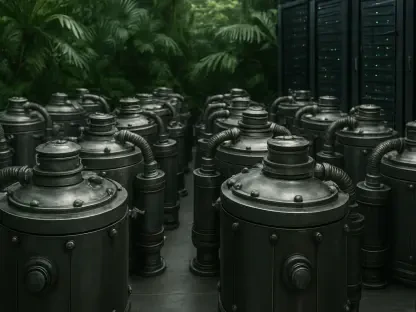
Data centers have emerged as the ideal solution to the curtailment problem because they are essentially voracious, always-on consumers of electricity. By placing these facilities directly adjacent to wind farms, technology and energy companies can create a closed-loop system where energy is consumed the moment it is generated, removing the need for long-distance transmission. This model is being heavily promoted by state investment agencies as a way to stabilize the renewable energy sector and attract high-tech investment to rural areas. These facilities are no longer just storage units for websites; they are the high-performance engines required to train and run complex artificial intelligence models. The demand for processing power is so relentless that it has created a perfect synergy with the stranded wind energy of the Northeast. For a tech company, the ability to claim their AI is “powered by 100% local wind energy” provides a valuable marketing edge, even if the regulatory framework governing the placement and operation of these centers remains largely experimental and underdeveloped.
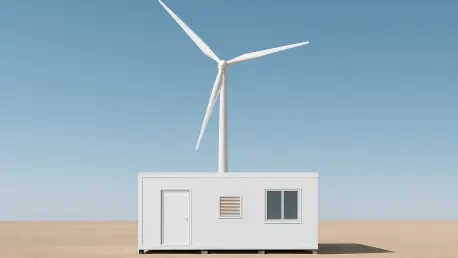
The energy firm Serena, which was previously known as Omega Energia, has taken a leading role in this specific market transition. The company has filed a series of requests to connect modular data centers to its existing energy infrastructure in Gentio do Ouro, signaling a shift from being a pure energy provider to an integrated digital infrastructure host. These modular units are designed for rapid deployment, allowing companies to scale up their processing capacity in direct response to the global AI gold rush. While each individual unit might appear modest compared to a massive urban data center, their collective industrial capacity in a concentrated area like Gentio do Ouro matches the energy consumption of major manufacturing plants. This decentralized approach allows developers to bypass some of the traditional hurdles associated with large-scale industrial construction, but it also raises questions about the cumulative impact on the local environment. As more of these “energy sinks” are plugged into the Bahia wind corridor, the region is being tethered to a global digital economy that operates at a speed and scale that local governance structures are currently ill-equipped to manage.
Regulatory Loopholes and Expansion Cycles
Exploiting Gray Areas: The Licensing Void
One of the most significant factors driving the rapid and largely unregulated growth of data centers in Brazil’s rural interior is the absence of a specific environmental licensing category for these facilities. Historically, environmental regulations in Brazil have been categorized by industry types, such as mining, agriculture, or heavy manufacturing, each with its own set of rigorous Impact Assessments. Data centers, however, fall into a regulatory gray area where they are often treated as simple commercial buildings rather than high-impact industrial facilities. This lack of a dedicated framework allows developers to move through the permitting process with remarkable speed, often bypassing the deep ecological studies that would be mandatory for any other project of similar energy and resource consumption. The result is a system where the total environmental footprint of a data center—including its water usage, heat dissipation, and noise pollution—is rarely evaluated in a holistic manner before construction begins.
To further complicate the oversight process, many companies utilize a strategy of project fragmentation to navigate the existing regulatory landscape. By splitting what is essentially a single large-scale industrial complex into several smaller, modular units, developers can stay below the specific thresholds that would trigger an intensive environmental review or a public hearing. This allows them to obtain simplified municipal permits that typically only cover basic land clearing and construction safety, rather than the long-term industrial impact on the surrounding biome. This “salami-slicing” of projects effectively blinds regulators to the cumulative effect of having dozens of these units clustered in a single sensitive area. In Gentio do Ouro, this tactic has allowed the digital infrastructure to expand faster than the state’s ability to monitor it, creating a precedent where technological progress is prioritized over the precautionary principle that is supposed to guide Brazilian environmental law. The speed of AI development has essentially outrun the pace of legislative reform, leaving local ecosystems vulnerable to an industrial surge that is “clean” only in terms of its power source.
The Feedback Loop: Energy Demand and Ecosystem Pressure
While data centers are frequently marketed as a clever way to utilize existing surplus energy, they are actually beginning to stimulate a new cycle of industrial construction. The voracious demand for power from the global AI sector is so high that it is driving the development of even more wind turbines to ensure a consistent and redundant power supply for the data hubs. This creates a feedback loop where the presence of the data center justifies more turbines, and more turbines attract more data centers. Experts warn that this cycle is becoming increasingly unsustainable, as it places immense pressure on protected lands and traditional territories that were never intended for such high-density industrial use. The Caatinga biome, which is already one of the most threatened and least protected ecosystems in Brazil, is being squeezed between the hardware of the energy transition and the hardware of the digital economy. This expansion is not just about land use; it is about the total transformation of a biological corridor into an industrial zone.
This relentless expansion has brought industrial activity directly to the doorstep of the Pacheco Quilombo, a community composed of descendants of enslaved people who have lived on and worked this land for generations. The community is currently engaged in a tense struggle to protect its ancestral territory from being engulfed by the expanding energy and tech infrastructure. Despite significant pressure from corporations to lease their land for new turbine installations, local leaders have largely resisted these overtures. They point to unfair contract terms that offer minimal long-term compensation while effectively stripping the community of its ability to use the land for traditional agriculture. The conflict at Pacheco Quilombo highlights the human cost of the energy surplus; while the global north benefits from the “green” AI processed in Bahia, the people who have historically stewarded this land find themselves marginalized by a new form of digital and energetic enclosure. The preservation of cultural heritage and traditional livelihoods is being positioned as an obstacle to “progress,” creating a social rift that the current regulatory framework is unable to bridge.
Socio-Environmental Impacts and Local Realities
The Neighbor Effect: Infrastructure Damage and Displacement
The impact of this industrial boom is not limited to the footprints of the wind farms and data centers themselves; it extends deep into the daily lives of those living nearby through what is known as the “neighbor effect.” Residents in Gentio do Ouro and surrounding villages report that the mechanical noise generated by the massive turbine blades is constant and pervasive, leading to sleep deprivation and increased stress levels among the population. Furthermore, the construction of these sites often involves heavy machinery and controlled explosions to clear rocky terrain, which has had a direct physical impact on local infrastructure. Many traditional homes, built using local materials and techniques passed down through generations, have begun to show significant structural damage. Large cracks in walls and foundations have become a common sight in the shadow of the turbines, yet families often find it nearly impossible to hold multi-billion-dollar energy firms accountable for the degradation of their private property.
The ecological displacement caused by this noise and vibration is equally concerning for the local farming economy. The mechanical hum of the turbines has disrupted the natural behavior of regional wildlife, driving species like the caititu out of their traditional habitats within the Caatinga. These animals, fleeing the industrial zones, have increasingly migrated into residential areas and small-scale agricultural plots in search of food and quiet. For the subsistence farmers of Bahia, this shift is catastrophic; a single group of displaced animals can destroy an entire season’s worth of cassava or corn in a matter of nights. This creates a secondary economic crisis for families who depend on these crops for survival, as they are forced to deal with the consequences of an industrial expansion they did not ask for and from which they receive no direct benefit. The delicate balance of the semi-arid Caatinga is being upended, proving that even “renewable” energy has a heavy footprint when it is deployed without regard for the existing biological and social fabric of the region.
The Irony of Energy Poverty: Living in the Dark
A striking and painful contradiction defines life in Gentio do Ouro: the municipality has become a massive exporter of clean energy to the rest of the country and the global digital economy, yet its own residents suffer from chronic energy poverty. Local families face frequent and prolonged power outages, particularly during the rainy season when the regional distribution grid—which is far less robust than the industrial lines serving the wind farms—regularly fails. It is a common occurrence for the town to be plunged into darkness even as the lights of the wind farms and the cooling systems of the data centers hum steadily on the horizon. Furthermore, the residents of Bahia pay some of the highest electricity rates in Brazil, as the cost of the national transition to renewables is passed down to consumers. The people living at the source of the power are essentially subsidized the very infrastructure that remains out of their financial reach.
The promised economic development that was supposed to follow the energy boom has also led to a significant increase in the local cost of living, creating a phenomenon of localized inflation. Whenever a new wave of construction begins for a wind farm or a data center, hundreds of temporary workers descend on the town, driving up the price of rental housing, groceries, and basic services. For permanent residents on fixed or low incomes, this surge in prices makes daily life increasingly difficult. Once the construction phase is complete, the high-paying technical jobs associated with the digital economy rarely remain in the town. Modern data centers and wind farms are highly automated and are largely managed remotely from control centers in São Paulo or even Silicon Valley. The local population is left with the environmental and economic “hangover” of the construction phase, but very few long-term, high-quality employment opportunities. This model of development extracts local resources—land, wind, and water—while exporting the value and leaving behind a more expensive and less stable environment for the local community.
Risks to Natural and Cultural Heritage
Archaeological Erasure: The Loss of Regional Identity
The region surrounding Gentio do Ouro is an area of immense historical and cultural significance, containing hundreds of documented archaeological sites that feature prehistoric cave paintings and ancient artifacts. These sites offer a vital link to the early human history of the South American continent and are considered essential to the cultural identity of the local population. While Brazilian law requires archaeological surveys to be conducted before any industrial construction can begin, the reality of how these findings are handled is a source of growing frustration. Often, the artifacts recovered during these surveys are removed from the region and transported to distant metropolitan research centers in cities like São Paulo or Rio de Janeiro. This physical removal of history results in a profound loss of cultural connection for the people of Bahia, who find themselves living in a landscape that has been functionally “cleaned” of its heritage to make way for the machinery of the future.
The removal of these artifacts serves as a powerful metaphor for the broader industrial transition taking place in the Brazilian interior. While “technological progress” and “green energy” are achieved on a national and global scale, the local cultural landscape is systematically stripped of its historical value. The people of Gentio do Ouro are left with the metallic structures of wind turbines and the windowless boxes of data centers, but they lose the tangible markers of their own past. This process of archaeological erasure is often presented as a necessary trade-off for modernization, yet it fails to account for the psychological and social impact of losing one’s history. When the physical evidence of a community’s ancestors is moved a thousand miles away to be stored in a basement or a museum, the local population’s claim to the land is weakened, making it easier for future industrial projects to proceed without regard for the “empty” space they are occupying. The cultural identity of the region is being traded for data processing capacity, a transaction in which the local people have very little say.
Water Scarcity: Thermal Management in a Dry Biome
One of the most critical environmental risks associated with the rise of data centers in northern Bahia is the impact on local water resources. Data centers generate an enormous amount of heat and require sophisticated cooling systems to prevent the servers from malfunctioning. In many cases, these systems rely on large quantities of water for evaporative cooling, which is a major concern in the semi-arid Caatinga biome where water is already a scarce and precious commodity. The proposed sites for many of these new facilities are located in close proximity to protected aquatic systems, such as the Itaparica Lagoon. This lagoon is a vital resource for local fishers and provides the primary water source for the surrounding ecosystem, making any large-scale industrial water draw a high-risk activity that could lead to localized droughts or the salinization of the remaining water table.
While tech companies often claim they will use artesian wells or move toward closed-loop cooling systems to minimize their impact, the fundamental trade-offs of thermal management remain difficult to resolve. In the high-temperature environment of the Brazilian Northeast, reducing water use typically requires a significant increase in energy consumption for air-based cooling, which in turn drives the demand for more wind turbines. If companies do use local water, they risk depleting the aquifers that local farmers and residents rely on during the frequent periods of drought. There is also the risk of thermal pollution, where the water returned to the environment is at a higher temperature, potentially disrupting the delicate biological balance of local lagoons and rivers. The lack of transparent, real-time monitoring of water usage by these private facilities has made the issue a central point of contention between environmentalists and developers. As the AI industry grows, the competition for water between servers and people is likely to become one of the most defining conflicts of the region.
The Future of Governance and Equity
Holistic Oversight: Integrating Energy and Tech Policies
The rapid transformation of Gentio do Ouro into a digital energy hub demonstrates the urgent need for a more integrated and holistic approach to national governance. Current Brazilian policies tend to treat wind farms, transmission lines, and data centers as entirely separate regulatory entities, which fails to account for their massive cumulative impact on the environment and society. To address this, regulatory bodies must move beyond siloed decision-making and implement a framework that recognizes the symbiotic relationship between the energy and tech sectors. This would involve requiring comprehensive Regional Environmental Assessments (REAs) that look at the total industrial footprint of a territory rather than approving projects on a case-by-case basis. By closing the loopholes that allow companies to fragment their operations, the government can ensure that the true cost of “green” AI is accounted for before the first turbine is even built.
A truly sustainable energy transition must also be a socially just one, which means that the benefits of national development must be shared more equitably with the communities that host the infrastructure. This requires the implementation of policies that guarantee tangible local benefits, such as direct investment in local micro-grids to ensure energy reliability for residents and the establishment of technical education programs to prepare locals for roles within the new digital economy. Furthermore, the high electricity costs faced by those living near wind farms must be addressed through localized subsidies or community-owned energy projects. Without these safeguards, the green energy produced in the rural interior will continue to function as a form of “green extractivism,” where the environmental and social costs are localized while the financial and technological gains are exported to global corporations. The goal should be to transform these regions from mere “energy exporters” into empowered participants in a balanced and equitable national development strategy.
Protecting Community Rights: A Path Toward Sustainable Equity
Strengthening the land and self-determination rights of traditional groups, such as the Quilombolas and indigenous communities, was essential to preventing the coercive and often predatory negotiations that have characterized the recent expansion. Government agencies took a more active role in providing these communities with independent legal support and technical expertise, ensuring they were not exploited by the vast legal and financial resources of multinational corporations. Protecting these lands was not just a matter of social justice; it was a critical strategy for environmental conservation, as traditional land management practices are often more effective at preserving the Caatinga biome than industrial oversight. By empowering local leaders to have a veto or a significant stake in the development process, the state ensured that any new projects were aligned with the long-term health and stability of the region rather than short-term profit motives.
In the end, Brazil’s green energy surplus served as a lesson that technological progress must be anchored in human rights and ecological integrity. The “clean” label associated with wind and solar energy was no longer allowed to mask the degradation of local ecosystems or the displacement of traditional cultures. Through robust regulation and a genuine commitment to equity, the country began to model a version of the digital economy that respected the boundaries of the natural world and the dignity of its people. Moving forward, the focus shifted toward decentralized energy models and data infrastructure that operated in harmony with local needs, ensuring that the wind blowing across the hills of Bahia powered not just the algorithms of the future, but also the prosperity and resilience of the people who call that land home. The path to a truly sustainable future was found through the realization that no amount of green energy could compensate for the loss of a community’s heritage or its environmental security.