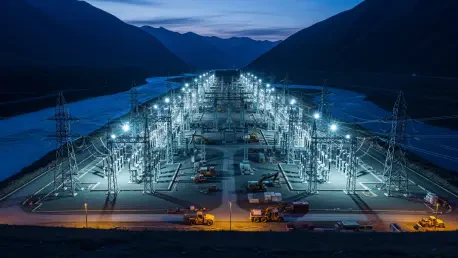

The sudden escalation of turbulent waters within the rugged Himalayan corridors recently transformed a site of ambitious engineering into a scene of structural crisis at the Rasuwagadhi Hydropower Project. While Nepal has long looked toward its massive glacial rivers to secure energy independence, the raw power of these waterways reminds planners that nature remains the ultimate arbiter of construction timelines. The project, a flagship for the region’s energy security, faced a cessation of activity when torrential rainfall triggered a surge that breached primary containment zones and silted critical intake tunnels. This event was a profound demonstration of the complex relationship between high-altitude infrastructure and the volatile hydrological patterns of the modern era. Engineers and policy makers are now forced to reckon with the reality that current safety margins might no longer be sufficient for the climatic extremes that are now the standard.
Environmental Dynamics: High-Altitude Risks
Torrential Surges: Flash Flood Mechanics
The Bhotekoshi River system, known for its steep gradients and immense kinetic energy, underwent a rapid hydrological transformation that caught monitoring systems off-guard during the peak of the monsoon season. As atmospheric rivers dumped unprecedented volumes of precipitation over the upper catchment areas, the runoff rate exceeded the drainage capacity of the local topography, leading to a massive surge of water and debris. This slurry of mud, boulders, and uprooted vegetation acted like a battering ram against the project’s cofferdam and temporary diversion structures, which were designed for historical averages rather than these contemporary extremes. The physical force exerted by such a high-density mixture of water and solids is exponentially greater than clear water, leading to the rapid erosion of reinforced banks and the inundation of the powerhouse excavation site. Such events highlight the precarious nature of building in narrow valleys where the geography funnels water.
Site Vulnerability: Infrastructure Risk
The structural failure at the site specifically targeted the headworks area, where the river’s flow is managed and directed into the intake tunnels that feed the massive turbines located deep underground. When the water level rose beyond the crest of the protection walls, it deposited thousands of tons of sediment directly into the desanding basins, rendering the filtration systems completely inoperable. This siltation is not just a cleaning problem; the abrasive nature of Himalayan quartz sand can cause catastrophic damage to the mechanical components of a turbine if even a small amount enters the penstock during a flood event. Consequently, the decision to halt operations was a necessary measure to prevent long-term mechanical degradation that would have been far more expensive to repair than a temporary stoppage. The volume of the inundation also compromised the electrical substations, which require precise humidity control to function, leading to a complete shutdown.
Strategic Impact: Economic Consequences
Revenue Deficits: Financial Stagnation
The financial implications of halting a project of this scale are immense, particularly when considering the lost revenue from the 111 megawatts of clean energy that were expected to stabilize the regional grid. Every day that the Rasuwagadhi project remains offline represents a significant deficit in the national power balance, forcing the utility to rely on expensive energy imports or less sustainable thermal plants to meet demand. Investors and lenders are also closely monitoring the situation, as the delay in the commercial operation date triggers penalty clauses and increases the interest during construction, which can balloon the total project cost by millions of dollars. The economic ripple effect extends to the local community as well, where hundreds of jobs depend on the continuous flow of construction activity and the ancillary services that support the site workforce. This pause in production creates a vacuum in the local economy that is deeply integrated with the financial ecosystem.
Future Adaptation: Structural Resilience
The cessation of work at the site served as a vital lesson for the global hydropower industry regarding the limitations of current design standards in the face of rapid environmental change. It was clear that the reliance on historical flood data was insufficient, and the project developers realized that future resilience would depend on more than just thicker walls. Stakeholders determined that the path forward must involve a fundamental shift toward adaptive engineering, where infrastructure is designed to be modified as new climate data becomes available. Moving forward, the industry prioritized the installation of comprehensive early-warning systems that were integrated into the regional disaster response network. Regulatory bodies also initiated more stringent requirements for climate-risk assessments during the feasibility stage of all large-scale energy projects. By embracing a more proactive and technology-integrated approach, leaders ensured that the transition to renewable energy was secured.