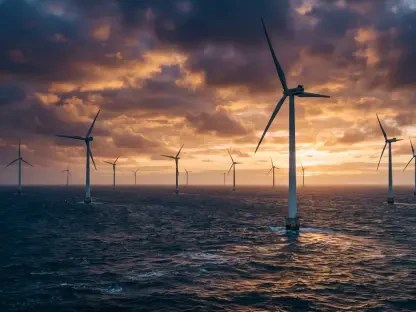

As wind turbines installed during the initial renewable energy boom approach their second decade of operation, the global maintenance sector is witnessing a profound shift in how critical components are sourced and delivered. While Western manufacturers pioneered early turbine designs, the sheer volume of parts required to sustain thousands of aging units has outpaced domestic production capacities across Europe and North America. In this vacuum, Chinese industrial leaders have emerged not just as low-cost alternatives, but as the primary architects of a modernized, resilient supply chain that underpins the stability of global energy grids. These firms have successfully combined advanced metallurgical techniques with streamlined logistics, ensuring that operators can maintain peak performance despite the increasing complexity of mechanical and electrical wear. The narrative of wind energy is no longer just about installation capacity; it is about the sustained reliability offered by a specialized aftermarket ecosystem.
Independent Aftermarket Leaders: The New Industry Standard
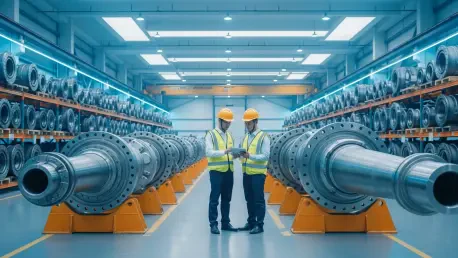
Tianjin Saintloga International Trade Co., Ltd. exemplifies the transition from a specialized domestic provider to a dominant force in the international wind turbine spare parts market. Since its establishment in 2015, the organization has aggressively expanded its manufacturing footprint, focusing on high-tech solutions that cater to a variety of turbine brands including Vestas, GE, and Siemens Gamesa. By operating outside the traditional proprietary constraints of original equipment manufacturers, these independent specialists offer a level of flexibility that was previously unavailable to fleet managers. Their ability to replicate and often improve upon existing designs has allowed them to capture a significant portion of the global aftermarket. This shift is particularly evident in the way they handle large-scale components like main shafts and yaw drives, where precision and durability are paramount. By prioritizing rapid prototyping and high-capacity production, they have shortened lead times for critical repairs from months to weeks.
The global footprint of these Chinese manufacturers has become a defining characteristic of the 2026 energy landscape, with a substantial percentage of total output destined for international markets. Export strategies have successfully penetrated diverse geographical regions, ranging from the high-wind corridors of Spain to the expanding offshore fields in Thailand and Brazil. This international reach is supported by a sophisticated distribution network that minimizes the logistical challenges of transporting oversized components across oceans. Furthermore, by establishing regional support hubs, these companies provide localized expertise that helps operators navigate complex regulatory and technical requirements. The success of this model is rooted in the strategic alignment of production capabilities with the specific needs of regional markets, ensuring that part availability is never a bottleneck for energy production. As wind farms continue to age, the presence of these agile suppliers provides a necessary safety net that protects operators from the volatility of traditional OEM supply chains.
Engineering Rigor: Meeting Advanced Operational Requirements
Reliability in the wind sector is dictated by the ability of components to withstand extreme environmental stressors, a challenge that Chinese manufacturers have addressed through comprehensive engineering certifications. Current quality standards are verified through 2028, reflecting a long-term commitment to material integrity and operational safety in both onshore and offshore environments. Whether facing the corrosive effects of salt spray at sea or the thinning atmosphere of high-altitude installations, these parts are designed to maintain structural stability under continuous stress. Pre-shipment inspections have become more rigorous, utilizing ultrasonic testing and thermal imaging to detect microscopic flaws that could lead to catastrophic failures. This dedication to precision ensures that aftermarket parts are not merely placeholders but high-performance upgrades that can extend the lifecycle of a turbine. The industry’s move toward these standards highlights a broader trend where quality is no longer a differentiator but a fundamental requirement for market entry.
The diversity of the component portfolio offered by Chinese suppliers covers the entire spectrum of turbine anatomy, from mechanical drivetrains to the most sensitive power electronics. Advanced gearboxes and carbon steel couplings are now produced with tolerances that rival high-precision aerospace engineering, ensuring smooth torque transmission and reduced vibration. Simultaneously, the supply of electrical components such as high-voltage circuit breakers and power converter parts has stabilized, thanks to the massive scaling of domestic semiconductor and switchgear production. Of particular note is the availability of sophisticated IGBT modules, which are essential for the efficient conversion of wind-generated electricity into grid-ready power. By offering these high-pressure hydraulic hoses and complex electronic assemblies in a single, unified catalog, suppliers provide a one-stop-shop for procurement officers. This integration simplifies the maintenance process, allowing for synchronized upgrades that improve the overall efficiency of the power generation system.
Strategic Integration: Future Considerations for Global Operators
While independent firms provide flexibility, established giants like Shanghai Electric and Sinovel maintain a critical role by offering deep technical integration and a legacy of original design. These organizations possess an intimate understanding of the systemic interactions within a wind turbine, allowing them to provide solutions that are perfectly calibrated to the initial engineering specifications. However, the traditional OEM model is increasingly challenged by the sheer diversity of turbine fleets, where a single operator may manage units from multiple manufacturers. In such scenarios, relying solely on proprietary parts often results in logistical friction and inflated costs that can jeopardize the profitability of a project. The role of these technical pioneers is evolving into a hybrid model where they offer high-level consulting and complex system overhauls while allowing the market to handle routine component replacement. This balance ensures the industry benefits from deep technical heritage without being hindered by slow response times.
The shift toward a China-led supply chain for wind turbine components was characterized by a fundamental realization that traditional procurement models were insufficient for the demands of a maturing global industry. Maintenance teams successfully integrated high-tech aftermarket solutions into their long-term strategies, which mitigated the risks associated with hardware obsolescence and soaring operational costs. It was essential for operators to establish direct relationships with manufacturing hubs in Tianjin and Shanghai to ensure consistent part quality and technical support. Moving forward, the industry prioritized the standardization of digital twins and predictive maintenance software that interfaced seamlessly with diverse component sources. By adopting a multi-vendor approach, energy firms secured their assets against geopolitical shifts and supply chain disruptions. This transition demonstrated that the long-term sustainability of wind energy relied as much on smart sourcing and engineering adaptability as it did on the initial capital investment.