
Christopher Hailstone brings years of high-level experience in utility security and renewable fuel integration to the table, making him uniquely qualified to analyze the future of aviation energy. In this discussion, we explore the significant financial backing recently awarded to TruAlt Bioenergy for their innovative sustainable aviation fuel project in Karnataka. We look at the technical shift from standard ethanol production to large-scale aviation fuel, the critical role of government subsidies in stabilizing emerging green markets, and the long-term strategic roadmap India has set for meeting international carbon standards.
How does the injection of Rs 150 crore from the PM JI-VAN scheme fundamentally change the risk profile and commercial viability for a massive industrial project like the Bagalkot facility?
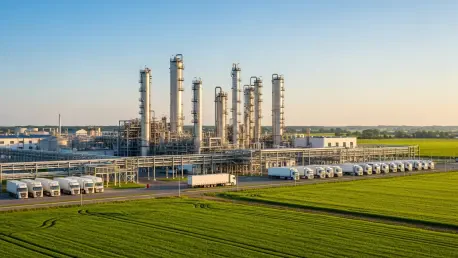
The financial assistance of Rs 150 crore is absolutely pivotal because it covers roughly 7 to 10 percent of the project’s total capital costs, providing a much-needed safety net for such an ambitious venture. This funding from the Centre for High Technology isn’t just a blank check; it is released in specific stages as the facility hits technical and construction milestones, which instills a great deal of confidence in private stakeholders. You can almost feel the collective sigh of relief from the financial sector when a government body steps in to share the burden of developing advanced biofuel technologies. It transforms the Bagalkot project from a risky experimental site into a commercially viable pillar of the country’s energy strategy, ensuring that the heavy lifting of construction doesn’t stall due to liquidity concerns.
With a planned annual capacity of 10 crore liters, what kind of tangible impact will this facility have on reducing the current dependence on foreign fuel sources?
Transitioning to a production capacity of 10 crore liters of sustainable aviation fuel annually is a monumental step toward energy independence. When you compare that to TruAlt’s current daily ethanol output of 2,000 kiloliters, you begin to see the immense scale of their expansion into the aerospace sector. There is a real sense of local empowerment in seeing agricultural residues and crop waste being turned into high-performance fuel right here on domestic soil instead of relying on tankers from overseas. This shift doesn’t just lower carbon emissions; it creates a protective barrier for the economy, insulating it from the volatile price spikes and supply chain disruptions that often plague the global fossil fuel market.
India’s roadmap targets SAF blending levels of 1 percent by 2027 and up to 5 percent by 2030; how does the development of this specific plant help the industry stay on track for those deadlines?
These targets—moving from 1 percent in 2027, to 2 percent in 2028, and finally 5 percent by 2030—are highly ambitious, but having a domestic supply network anchored by the Bagalkot plant makes them realistic. By building out this production capacity today, we are preemptively solving the supply constraints that would otherwise make these mandates impossible to meet with imports alone. It’s exciting to watch the industry transition from theoretical goals to concrete infrastructure, knowing that the fuel needed for that 2030 target is already being planned for at a massive scale. This proactive approach ensures that when the deadlines arrive, the aviation industry will have a steady, reliable stream of low-carbon fuel ready for use at every major hub.
As global aviation looks toward frameworks like CORSIA for decarbonization, how does TruAlt’s work in Karnataka elevate the region’s status in the international renewable energy market?
This expansion into the sustainable aviation fuel segment puts the region in a very strong position relative to the Carbon Offsetting and Reduction Scheme for International Aviation, or CORSIA. As airlines worldwide feel the pressure to find certified, high-quality sustainable fuel, having a facility that leverages low-carbon production pathways and agricultural residues becomes a major strategic asset. There is a palpable pride in demonstrating that domestic innovation can meet the same rigorous international standards for lifecycle greenhouse gas emissions as projects in any other part of the world. By leveraging deep expertise in feedstock management, this project proves that the region can be a leader in the global energy transition, turning local renewable resources into a commodity that the entire world is searching for.
What is your forecast for sustainable aviation fuel in India over the coming decade?
I forecast that we are on the verge of a bio-energy explosion where SAF will eventually become the primary driver of the renewable fuel sector, potentially even outpacing traditional ethanol in terms of strategic value. Within ten years, we will likely see multiple commercial-scale plants like the one in Bagalkot dotting the landscape, each perfectly integrated with local farming communities to source renewable feedstocks. As production costs continue to fall due to these initial government-supported projects, I expect the domestic market to transition from a consumer of fuel to a key regional exporter of sustainable aviation solutions. It is going to be a decade defined by technological maturity and a complete reimagining of what it means to power a modern, carbon-neutral aviation industry.