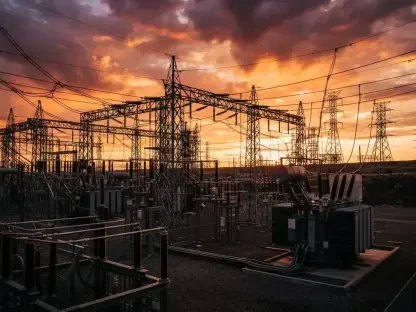

The transition toward a sustainable energy infrastructure relies heavily on the consistent integration of solar power, yet the inherent unpredictability of weather patterns remains a formidable barrier to grid stability. Solar energy production is fundamentally tied to atmospheric conditions that can shift in an instant, creating a volatile environment for utility managers who must balance supply and demand with surgical precision. When a sudden cloud bank moves over a massive solar farm or humidity levels unexpectedly spike, the resulting drop in voltage can disrupt the entire electrical ecosystem, necessitating the immediate activation of expensive and often carbon-heavy backup generators. To mitigate these risks, researchers at North Carolina State University developed a sophisticated hybrid machine learning framework designed to master the complexities of day-ahead forecasting. By focusing on this critical twenty-four-hour window, the team aimed to provide grid operators with the foresight needed to manage battery storage and schedule energy reserves more effectively. As the global reliance on renewables grows, the ability to anticipate these fluctuations is no longer just a technical advantage but a fundamental requirement for a modern and resilient power grid.
Data Foundations: Analyzing Regional Performance and Neural Architectures
To establish a foundation for more accurate predictions, the research team conducted an exhaustive analysis of four years of operational data sourced from two major California utilities: the Imperial Irrigation District and the Los Angeles Department of Water and Power. This comprehensive dataset, encompassing over 20,000 hours of historical performance, allowed the researchers to compare traditional statistical forecasting methods against advanced artificial neural networks. While traditional models often struggle with the chaotic nature of weather, neural networks excel at identifying the non-linear relationships between shifting climatic variables and actual energy output. The study highlighted that the ability of artificial intelligence to process multifaceted data streams, such as solar irradiance, temperature, and wind speed, provides a level of nuance that older mathematical frameworks simply cannot replicate. By testing these models against real-world utility data, the researchers identified the specific architectural strengths required to navigate different regional environments effectively, ensuring that the findings were grounded in practical application rather than theoretical simulation.
Among the various individual models scrutinized during the research, the bidirectional long short-term memory network emerged as the most resilient and reliable benchmark for solar forecasting. Unlike standard machine learning models that process data linearly, this specific architecture is unique because it evaluates data sequences in both forward and backward directions simultaneously. This dual-directional processing allows the system to understand how past weather trends influence future production while also recognizing broader cyclical patterns within the energy cycle that might otherwise be missed. Because this network demonstrated consistent performance across the varying climates of both desert and coastal regions, it served as the standard of comparison for even more complex hybrid strategies developed later in the study. This reliability proved essential for establishing a baseline of trust in machine learning applications within the energy sector. Grid operators require a high level of predictability before they can commit to high-stakes scheduling decisions, and this architecture provided the necessary computational backbone to support these rigorous demands.
Predictive Synergy: Implementing Ensemble Methods for Enhanced Accuracy
The most significant breakthroughs in the study occurred through the implementation of ensemble methods, which aggregate the predictions of multiple artificial intelligence models to produce a single, refined output. This approach utilizes weighted averaging, a technique that functions much like a panel of specialized experts where the most historically accurate models are granted more influence over the final forecast. By dynamically adjusting the weight of each model based on its recent performance, the system can adapt to changing seasonal conditions or localized weather anomalies that might baffle a single algorithm. During testing, this ensemble strategy demonstrated its value by improving the accuracy of day-ahead forecasts by approximately 11% during periods of favorable weather. This level of precision is vital for large-scale utility operations because it reduces the margin of error that typically forces operators to over-rely on emergency reserves. Strengthening the connection between individual neural nodes and a central governing algorithm allowed the researchers to create a more robust and adaptable forecasting engine capable of handling real-world complexity.
Another innovative strategy involved the creation of multi-input ensembles that prioritize spatial awareness by incorporating meteorological data from the surrounding geographic regions. Rather than focusing solely on the atmospheric conditions directly above a specific solar array, this system monitors weather patterns as they approach from miles away. This capability allows the technology to anticipate incoming obstacles, such as a moving cloud front or a marine layer, before they physically impact the solar panels. In the densely populated Los Angeles area, this geographically aware methodology resulted in a 13% improvement in forecasting accuracy compared to standard localized models. This foresight is particularly valuable for coastal regions where weather can be highly localized and subject to rapid change. By expanding the sensory horizon of the machine learning model, the research team proved that a wider perspective is essential for taming the volatility of the natural world. This spatial integration ensures that the grid remains prepared for shifts in energy production well before they manifest on the ground, allowing for a proactive rather than reactive management style.
Grid Optimization: Strategic Customization and Economic Viability
One of the most compelling conclusions drawn from the research is that a one-size-fits-all approach is entirely inadequate for solar energy forecasting across diverse landscapes. The specific model that delivered optimal results for the Imperial Irrigation District was not the same model that performed best for the Los Angeles Department of Water and Power. This discrepancy underscored the critical importance of local topography, sensor density, and regional microclimates in determining the efficacy of a machine learning framework. To achieve maximum accuracy, forecasting systems must be custom-calibrated to the unique environmental characteristics of each specific utility territory. This necessity for customization suggests that the future of energy management will depend on bespoke solutions that are deeply integrated with local infrastructure. As utilities continue to expand their renewable portfolios, the ability to fine-tune these algorithms to account for local mountains, valleys, and coastal winds will become a standard requirement for maintaining a reliable and cost-effective electrical supply that meets the needs of modern society.
The implications of achieving a 13% increase in forecasting accuracy were profound for both economic stability and environmental preservation. Large-scale utility operations recognized that even incremental improvements in predictive precision saved millions of dollars by minimizing the reliance on expensive, fossil-fuel-burning backup generators. By providing a clearer picture of the next day’s energy availability, these hybrid machine learning frameworks empowered grid operators to optimize battery storage and maintain a steady flow of electricity to consumers. The research successfully demonstrated that while the sun remained an inherently unpredictable resource, sophisticated artificial intelligence provided the certainty needed to build a sustainable energy future. Stakeholders within the energy sector began prioritizing the adoption of these geographically aware systems to ensure that renewable assets were utilized to their fullest potential. Ultimately, this integration of advanced technology and atmospheric science paved the way for a more resilient grid that was capable of navigating the complexities of a changing climate without sacrificing reliability or efficiency for the end user.