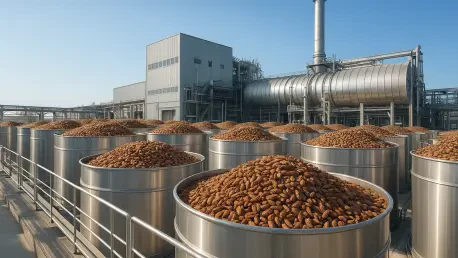

A public-private partnership between Climate Fund Managers and Société Des Energies Nouvelles is driving the development of a 76-megawatt biomass plant. As the world’s leading producer of cocoa, the Ivory Coast has long struggled with the massive volume of organic waste generated during the harvesting and processing phases of the industry. For every ton of cocoa beans produced, approximately ten times that amount in cocoa pod husks is left to rot in the fields, releasing methane and creating environmental challenges for local farmers. This initiative seeks to transform these agricultural byproducts into a reliable source of clean electricity, addressing the nation’s growing energy demands while simultaneously bolstering the circular economy. By integrating advanced combustion technologies with local supply chains, the project aims to provide power to approximately 1.7 million people. This shift marks a significant departure from traditional fossil fuel reliance and represents a sophisticated engineering solution tailored to the specific agricultural landscape of West Africa.
Transforming Agricultural Residue into Power
Technical Engineering: The Biomass Conversion Process
The technical process involves gathering millions of tons of discarded husks and transporting them to a centralized facility where they undergo a controlled combustion process. Modern biomass boilers utilize these husks as fuel to heat water, producing high-pressure steam that drives large-scale turbines to generate electricity. This method is particularly effective because cocoa pods possess a high caloric value, making them an efficient fuel source compared to other types of agricultural waste. Engineers have optimized the furnace designs to handle the specific moisture content and chemical composition of the husks, ensuring that emissions remain within strict environmental standards. Furthermore, the 76-megawatt capacity of the facility is designed to feed directly into the national grid, providing a stable baseload of power that complements intermittent renewable sources like solar and wind. This technical integration ensures that the energy generated is both reliable and sustainable for long-term use.
Supply Chain Management: Creating a Logistical Network
To sustain the operation of such a massive facility, a sophisticated logistical network must be established across the cocoa-growing regions. This involves the creation of numerous collection points where smallholder farmers can deposit their husks, which are then processed for transport to the power plant. The coordination required to move thousands of tons of material daily from remote rural areas to the industrial hub is a monumental task that necessitates significant investment in local road infrastructure and transport fleets. By optimizing these routes, the project reduces the carbon footprint associated with logistics while ensuring a steady supply of fuel for the turbines. This network not only serves the power plant but also improves the general transport efficiency for other agricultural products in the region. The synergy between agricultural production and energy generation creates a robust system that can withstand seasonal fluctuations in cocoa harvests through strategic stockpiling and storage solutions.
Scaling Sustainable Infrastructure in West Africa
Environmental Impact: Toward a Carbon Neutral Grid
Transitioning to biomass represents a critical step in the Ivory Coast’s commitment to reducing its national carbon footprint and meeting international climate goals. Unlike traditional thermal power plants that rely on imported natural gas or coal, biomass energy is carbon-neutral in its lifecycle because the carbon dioxide released during combustion is equal to the amount absorbed by the cocoa trees during their growth. Moreover, by removing rotting husks from the fields, the project significantly reduces the emission of methane, a potent greenhouse gas that is far more damaging than carbon dioxide in the short term. This reduction in field waste also mitigates the risk of groundwater contamination and soil acidification caused by large-scale decomposition. The environmental benefits are thus twofold: the generation of clean energy and the remediation of agricultural land. This dual impact makes biomass a uniquely attractive option for nations with large agricultural sectors looking to decarbonize their industrial activities.
Strategic Outcomes: Final Recommendations and Observations
Stakeholders recognized that the integration of biomass into the national energy mix required a paradigm shift in how agricultural residues were perceived and managed. The project demonstrated that large-scale infrastructure could be successfully merged with smallholder farming systems to create a mutually beneficial outcome for the environment and the economy. It was determined that the most effective path forward involved continuous investment in rural infrastructure and the formalization of waste collection markets to ensure long-term fuel security. Policymakers noted the importance of providing clear regulatory frameworks to encourage further private sector participation in the renewable energy sector. By the time the facility reached full operational capacity, it had already set a new standard for sustainable development in the region. The initiative proved that domestic resources, when combined with innovative engineering and strategic financing, provided a viable solution to the dual challenges of waste management and energy poverty.