
A Kitchen That Burned Waste, Not Fossil Fuel
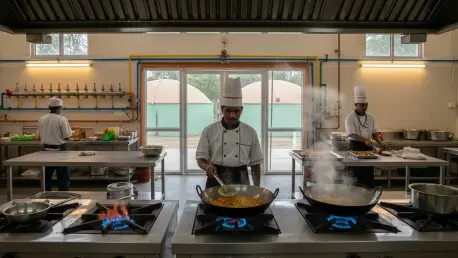
Flames licked across broad steel tawas as a campus kitchen in Gandhinagar sent up the faint, sweet scent of biogas—cooked from dung, peels, and stalks—turning more than 500 daily meals into proof that waste could feed hungry students and unshackle kitchens from volatile LPG supplies. The switch was not showy; it was steady, quiet, and total. At the Shrimati Manekba Vinay Vihar Educational Complex, the gas line that mattered ran from two dome-topped digesters, not from stacked steel cylinders.
The shift had a simple goal: cook every meal on biogas and retire LPG backups. Staff kept count not by slogans but by flame quality, cooking times, and cylinder bills. Their tally told a clear story—roughly 30 cylinders avoided each month, constant heat through price spikes, and a new rhythm to waste management.
Why This Story Mattered Now
Across Indian cities, large kitchens felt the whiplash of LPG prices and supply uncertainties. Institutions—schools, hostels, and gaushalas—needed fuel that did not wobble with markets. Biogas, underlined by Swachh Bharat Mission-Urban 2.0’s push for scientific waste recovery, moved from pilot to playbook.
Gujarat’s policy signals sharpened the case. About 193 institutional plants had been added in five years, backed by a state scheme that trimmed risk and capital burdens. For campuses with steady organic waste and consistent meal counts, the economics, the climate logic, and the operational ease converged.
Inside Gujarat’s Closed-Loop Gamble
At the Gandhinagar complex, two digesters totaling 90 cubic meters per day turned dung from 222 cows, kitchen scraps, and farm residues into a cooking-grade fuel. The slurry, thick and mineral-rich, flowed to fields where it replaced chemical fertilizers and revived soil structure. “We stopped treating waste as a nuisance,” the facility manager said. “It became supply.”
Cooks described how the flame performed. “Biogas is softer on the pan but steady,” a staffer noted, “and once the burners are tuned, lunch moves on time.” Maintenance did not feel exotic. Daily checks covered feedstock prep, pH balance, scum control, and leak tests. “It’s routine, like keeping a good stove clean,” the warden added.
The money story hinged on policy. Gujarat’s Institutional Biogas Plant Scheme, routed through GEDA, offered up to a 75 percent subsidy for nonprofit plants in the 25–85 cubic meter range. “We wanted institutions to cross the entry barrier,” a GEDA official explained. “Two mid-sized units in combination keep eligibility intact while meeting higher loads.” A biogas engineer framed expectations: “With stable dung input and disciplined segregation, gas yield stays predictable.”
Results were practical, not abstract. LPG purchases shrank. Meal schedules stayed firm through price swings. The fields responded to slurry, with farmers reporting improved tilth and better moisture retention. Uptime became the bragging right—comparable campuses in Gujarat reported dependable operations with basic staff training and a simple O&M logbook.
Beyond the burners, the benefits stacked up. Organics no longer clogged drains or rotted in the open. Transport emissions fell as waste traveled a few meters, not miles. The energy source turned local, and so did accountability; when feedstock dipped, everyone noticed, from the cowshed to the prep table. Performance data—gas volume, cylinders avoided, fertilizer displaced—fed a feedback loop that justified scale-ups and invited community buy-in.
The Replicable Core
What unlocked full LPG substitution was not a single breakthrough but a bundle of design choices. Steady feedstock, right-sized digesters, piped distribution to match peak cooking windows, and trained staff formed the foundation. Financing sealed the deal; the subsidy made capital costs manageable, while avoided LPG spend tightened payback.
Replication hinged on context, yet the checklist traveled well. Map organic inputs across seasons. Pair plant capacity with meal counts and cooking hours. Plan slurry handling with curing pits and application schedules. Standardize segregation at source. Track outputs and costs to build a case for expansion. “Think of it as a campus utility,” the engineer said. “Waste in, meals out, fields fed.”
Where The Flame Pointed Next
The Gandhinagar kitchen had shown that institutional biogas could shoulder the full cooking load, stabilize costs, and nourish fields without fuss. Campuses that mapped steady organics, tapped modular digesters, and used state support stood ready to retire cylinders and run on their own waste. The next step lay in turning these practices into standard campus utilities—monitored, financed, and taught—so kitchens cooked reliably, farms grew richer, and cities leaned into localized energy with confidence.