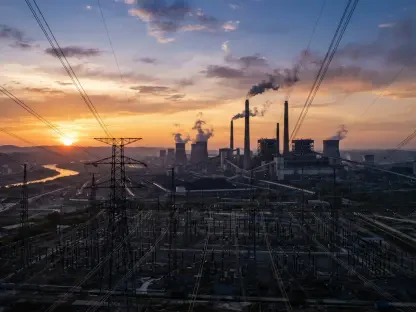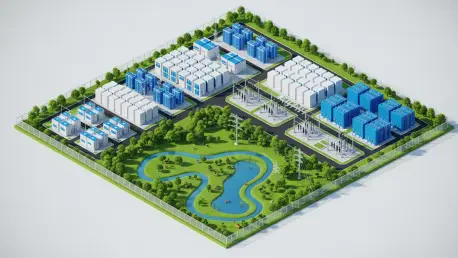

The massive push toward carbon neutrality in Massachusetts has placed localized energy infrastructure under an intense spotlight, revealing a complex web of logistical and social obstacles. While the Tewksbury battery storage installation was initially envisioned as a cornerstone for stabilizing the regional grid, its progress has slowed significantly due to a combination of shifting municipal priorities and rigorous safety evaluations. This project aims to store excess renewable energy for use during peak demand, yet the transition from blueprint to operational reality requires navigating a maze of state-level mandates and town-level skepticism. Stakeholders are finding that the rapid pace of technological innovation often outstrips the speed of local legislative adaptation, creating a bottleneck that affects not just this site, but the broader energy landscape. As the region moves forward from 2026 to 2028, the ability to balance immediate green energy goals with the concerns of the local community will define whether these essential utility-scale projects can successfully integrate into the existing suburban framework.
Local Governance and Regulatory Friction
Municipalities across the Commonwealth, including Tewksbury, have increasingly sought to exercise their right to home rule by implementing temporary moratoriums on large-scale battery storage developments. These pauses are often triggered by a lack of existing bylaws that specifically address the unique footprints and risks associated with high-capacity lithium-ion installations. Town officials and residents expressed concerns that existing commercial zoning did not adequately cover the safety protocols required for facilities of this magnitude. This led to a series of public hearings where the primary focus shifted from environmental benefits to the potential for noise pollution and visual impact on neighboring residential areas. Furthermore, the interplay between the Department of Public Utilities and local planning boards created a jurisdictional overlap that necessitated a longer-than-expected legal review process. These administrative layers ensured that every technical specification underwent multiple rounds of scrutiny, ultimately pushing the projected completion date further into the late 2020s while the town finalized its new protective ordinances.
Beyond the zoning board, the specific environmental impact assessments required for the Tewksbury site encountered unexpected complexities regarding local wetlands and groundwater protection. Because the proposed location sits in proximity to sensitive ecological zones, state environmental agencies demanded more comprehensive mitigation plans than originally submitted by the developers. These requests included detailed hydrological studies to ensure that any accidental discharge or cooling system failure would not compromise the local water table. Developers had to engage specialized environmental consultants to redesign portions of the site layout, which involved moving heavy equipment pads and adjusting the perimeter security fencing to accommodate wildlife corridors. This iterative design process, while necessary for long-term sustainability, consumed a significant portion of the development budget and timeline. The necessity of satisfying both the Massachusetts Environmental Policy Act requirements and the local Conservation Commission’s standards meant that the project could not break ground until every possible ecological risk was accounted for and neutralized through engineering.
Supply Chain Logistics and Safety Standards
Global logistical challenges continue to exert pressure on the procurement of critical components, specifically the high-density battery modules and specialized step-up transformers required for the Tewksbury facility. Although domestic manufacturing capacity has expanded between 2026 and 2027, the demand for battery-grade minerals like lithium and cobalt remains highly competitive, often favoring larger international buyers over individual regional projects. Lead times for custom-built power conversion systems have stretched significantly, forcing project managers to frequently re-evaluate their delivery schedules and labor contracts. These delays are compounded by the implementation of newer, more stringent National Fire Protection Association standards which require hardware modifications that were not standard when the project was first conceived. Integrating these updated safety features meant that certain pre-ordered units had to be retrofitted or replaced with newer models that comply with the latest thermal management protocols. This hardware evolution represents a significant hurdle, as the technology is advancing so rapidly that the equipment specified in the initial permit may become outdated before it even arrives at the construction site.
To address these multifaceted setbacks, project developers and municipal leaders eventually established a more collaborative framework that prioritized transparency and proactive risk management. They implemented a phased construction strategy that allowed for incremental safety testing and community walkthroughs, which helped rebuild public trust in the facility’s operational integrity. By adopting a safety-first design philosophy, the engineering teams integrated advanced fire suppression systems and real-time monitoring sensors that exceeded baseline state requirements. This approach provided a roadmap for future battery energy storage system installations by demonstrating that technical delays could be mitigated through better communication and more robust planning. Stakeholders also focused on securing long-term supply agreements to insulate the project from further market volatility through the end of 2028. Ultimately, the lessons learned from the Tewksbury delays informed a set of best practices for the entire renewable energy sector, shifting the focus from rapid deployment to sustainable, community-aligned infrastructure growth. The successful resolution of these issues proved that while the path to a cleaner grid is rarely linear, it is achievable through persistent local engagement and technical adaptability.