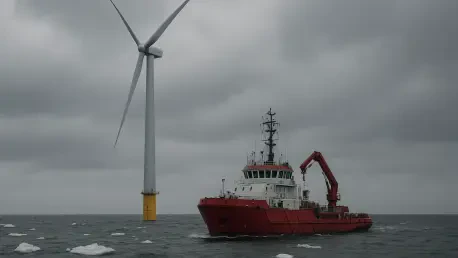

Federal regulators halted regional wind energy production after discovering that manufacturing deviations at a Canadian plant compromised several offshore turbines. This directive followed a major structural failure in mid-2024 when a 351-foot blade on turbine AW38, situated 15 miles southwest of Nantucket, shattered and sent a deluge of fiberglass shards into the Atlantic. While the initial reaction focused on the immediate cleanup, the investigation quickly shifted toward the fundamental engineering of these massive components. The blade did not simply break; it delaminated, shedding thousands of pieces of foam and composite material that eventually reached the shores of popular tourist destinations. This incident served as a stark reminder of the immense physical pressures exerted on offshore infrastructure and raised urgent questions about the reliability of the supply chain during a critical period of renewable energy expansion. As the industry looks forward from 2026, the lessons from this specific failure continue to shape how safety protocols are implemented across the burgeoning American wind sector.
Technical Analysis: The Breakdown of Composite Integrity
The root cause analysis eventually pinpointed a specific manufacturing deviation at a factory located in Gaspé, Quebec. Modern turbine blades are intricate engineering marvels, constructed as composite sandwiches rather than solid monoliths. These structures consist of fiberglass skins bonded over a lightweight foam core using specialized structural adhesives. The investigation revealed that a “bonding flaw”—specifically an insufficient application of adhesive—compromised the primary structural integrity of the blade. Because these bond lines are responsible for carrying the majority of the structural load during operation, any deficiency in the adhesive layer creates a hidden point of failure. Such flaws are notoriously difficult to detect through standard non-destructive testing once the blade has been fully cured and sealed. The failure of turbine AW38 was not due to a flaw in the aerodynamic design itself, but rather a failure to adhere to the strict fabrication tolerances required for components of this massive scale.
Even more concerning was the fact that the blade had initially passed factory inspections and functioned normally during its early deployment phases. This suggests that the bonding insufficiency did not lead to an immediate collapse but instead created a vulnerability that worsened under the repetitive stress of spinning in a volatile maritime environment. The constant buffeting of offshore winds and the mechanical vibrations inherent in energy generation placed rhythmic loads on the weakened bond line. Over time, these stresses caused the internal delamination to progress until the blade could no longer support its own weight against the centrifugal forces. This progression highlights a significant challenge for the offshore wind industry: identifying manufacturing defects that only manifest as catastrophic failures after months of operation. Moving forward from 2026, the industry is increasingly looking toward real-time structural health monitoring systems to detect these internal shifts before they result in a total loss of the component.
Environmental Impact: Debris Management and Industrial Evolution
The aftermath of the fracture necessitated a massive cleanup operation that spanned three distinct zones: the shoreline, the ocean surface, and the seafloor. Debris ranging from microscopic fiberglass shards to chunks the size of kitchen tables washed onto the south-facing beaches of Nantucket, including Madaket and Low Beach. Local authorities and the project operator mobilized over 50 contractors, along with local lifeguards and residents, to patrol the coastline and recover the floating material. The Coast Guard monitored larger sections of the blade, some reaching 300 feet in length, as they drifted through the busy maritime corridors of the Atlantic. While the surface cleanup was relatively straightforward, the sheer volume of material released into the ecosystem created a logistical nightmare for local officials. This cleanup effort was not merely about aesthetics; it was a race to mitigate the impact on the local tourism economy and protect the sensitive coastal habitats that define the region.
This failure proved that the marine environment provided no margin for error in the fabrication of massive composite structures. Industry leaders recognized that relying solely on factory-gate inspections was insufficient for components expected to survive decades of oceanic stress. Consequently, developers shifted toward integrating fiber-optic sensors directly into the blade skins during the bonding process to provide a digital “birth certificate” of every component’s structural health. The multi-million-dollar remediation effort served as a catalyst for the adoption of more stringent adhesive application protocols and automated scanning technologies. Regulators established new frameworks that mandated continuous acoustic monitoring to detect early signs of delamination in operating turbines. Furthermore, the industry moved to standardize the use of recyclable thermoplastic resins to ensure that future failures do not result in permanent microplastic pollution on the seafloor. By treating the Nantucket incident as a pivotal case study, the sector successfully implemented a higher standard of quality assurance that ensured long-term stability and public trust.