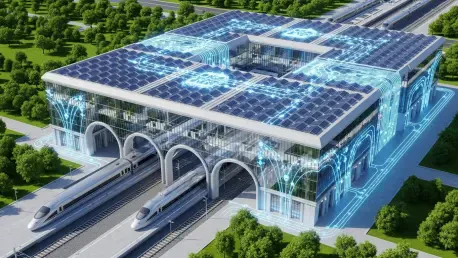

Railway stations across India are no longer just hubs for travel but are evolving into decentralized power plants that redefine how public infrastructure consumes electricity. The Vadodara Division of Western Railway has initiated a transformative energy strategy by integrating solar technology into its core infrastructure. Under the guidance of the electrical department, this transition signifies a departure from traditional utility dependence toward a self-sustaining model. The deployment of a 2.722 megawatt peak capacity serves as a benchmark for regional hubs aiming to modernize without compromising fiscal stability.
The Great Green Shift in Indian Rail Infrastructure
Leadership within the Western Railway electrical department played a crucial role in spearheading this large-scale solar integration. By coordinating with various stakeholders, the division successfully reached a milestone that aligns with national modernization goals. This shift toward renewable technology reflects a broader push for fiscal responsibility, where the upfront investment in green tech reduces long-term operational costs.
Driving the Future of Eco-Friendly Transport
Emerging Trends in Railway Energy Efficiency
Modern railway management increasingly prioritizes rooftop solarization to optimize unused vertical space. By retrofitting loco sheds, running rooms, and administrative hubs, the division addresses high-intensity energy demands through localized generation. This approach ensures that functional spaces contribute to the energy grid rather than merely consuming resources, creating a more balanced operational behavior.
Market Projections and Economic Impact Assessment
Economically, the initiative presents a compelling case for renewable investment with projected annual savings of 2.92 crore rupees. Generating approximately 3.64 million units of solar energy allows the division to offset traditional utility costs significantly. Long-term growth forecasts suggest that such decentralized models will eventually dominate the Western Railway network as more stations adopt similar frameworks.
Overcoming Obstacles in Large-Scale Solar Deployment
Installing massive solar arrays on heritage structures and active industrial zones requires meticulous engineering to maintain structural integrity. High-traffic environments like loco sheds pose unique maintenance hurdles where dust and vibration can impact photovoltaic efficiency. Strategic grid integration remains essential to ensure that localized power generation stays consistent during peak operational hours without disrupting train schedules.
Regulatory Standards and Environmental Compliance
Alignment with national mandates for achieving Net Zero Carbon status remains the primary driver for these compliance efforts. Adhering to strict safety standards ensures that rooftop installations do not interfere with public transit safety or structural longevity. This regulatory focus contributes to a documented reduction of 2,632 tons of carbon dioxide emissions annually, supporting broader ecological protection goals.
The Path Forward for Sustainable Railway Operations
Looking ahead, the integration of advanced battery storage and decentralized micro-grids will likely define the next phase of development. Newer photovoltaic technologies offer higher efficiency rates, extending the lifecycle of current installations well beyond the standard twenty-five-year period. These innovations will align local operations with global climate objectives, influencing future investment strategies and infrastructure design.
Final Assessment of Vadodara’s Renewable Energy Milestone
The Vadodara model demonstrated how combining environmental stewardship with financial pragmatism created a repeatable framework for national transit systems. Engineers recommended the adoption of modular solar kits for smaller stations to accelerate the rollout across diverse geographical zones. This proactive stance ensured that the division remained at the forefront of the movement toward a zero-emission future.