


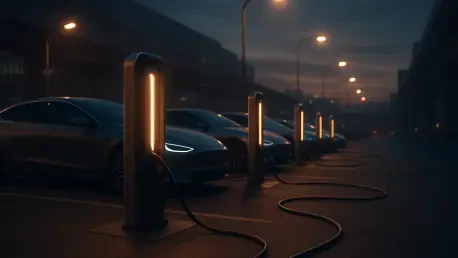

Living in a high-rise apartment or a multi-unit rental property should not fundamentally disqualify a hard-working American from enjoying the substantial fuel savings and environmental benefits offered by modern electric transportation. While the shift toward zero-emission transit accelerates, a significant portion of the population remains sidelined by an invisible wall of infrastructure and pricing. The current landscape of 2026 reveals a stark disparity where the financial promise of the electric vehicle (EV) is largely reserved for those who own their own garage, leaving those who rent to pay a steep premium for the same clean air. This divergence threatens to turn a public health necessity into a luxury status symbol.
The Hidden Surcharge on the American Dream of Clean Mobility
The transition to electric vehicles is often marketed as a guaranteed way to slash household expenses, yet for nearly 44 million American renter households, this promise comes with a massive hidden fee. While homeowners enjoy the luxury of fueling their cars for pennies on the dollar in their own garages, those living in apartments often find themselves paying up to six times more for the exact same kilowatt-hour. This economic divide, known as the renter’s penalty, has turned the environmental and financial benefits of EVs into a privilege of property ownership rather than a universal right.
For millions, the dream of zero-emission driving remains tethered to a physical asset they do not possess: a private driveway. This disparity creates a profound disconnect where the very residents who would benefit most from lower operational costs—low-income workers and urban families—are the ones burdened with the highest fueling rates in the nation. It effectively transforms a technology intended for mass decarbonization into an exclusive perk for the landed gentry. This price gap discourages adoption among the demographic that represents the largest potential for emissions reduction in urban centers.
Why the Current Utility Model Fails the Modern Driver
For decades, utility companies have operated on a static logic where electricity is something consumed strictly within the four walls of a specific address. This meter-centric philosophy was sufficient when the only appliances drawing power were refrigerators and lightbulbs, but it is fundamentally incompatible with the era of mobile energy. As transportation electrifies, the fuel that powers a commute is no longer tied to a foundation, yet utility affordability programs remain stuck at the home meter, failing to adapt to the changing landscape of 2026.
This creates a systemic barrier where low-income residents in multifamily housing are locked out of the very discounts designed to help them, simply because they lack a private garage. When a utility discount is anchored to a specific copper wire in a specific building, it ignores the reality that an EV driver in an apartment must seek power elsewhere. This lack of flexibility means that even if a renter qualifies for income-based assistance, that assistance vanishes the moment they plug into a public or shared charger. Consequently, the grid remains optimized for property owners while leaving mobile users at the mercy of volatile public pricing.
Decoupling Benefits from Property Lines
To modernize the grid for the current era, the industry must transition from address-based benefits to customer-based portability. Recognizing that electricity for transportation is a mobile asset means it should not be penalized based on where it is dispensed. When public charging rates and shared multifamily infrastructure costs mirror gasoline prices, the primary economic incentive for switching to an EV effectively vanishes, leaving renters in a financial lurch. The fuel of the future must be as mobile and accessible as the vehicles it powers.
Addressing this economic injustice requires a radical departure from the assumption that all residential charging occurs on a private residential account. Moving away from this obsolete focus allows utilities to serve a broader demographic that relies on public hubs and workplace stations. By decoupling the benefit from the property line, energy providers can ensure that the savings inherent in electric mobility are distributed based on the driver’s needs rather than their housing type. This shift is essential for reaching underserved communities who stand to benefit most from reduced fuel costs and cleaner local air.
Expert Perspectives on the Business Case for Equity
Industry leaders, including Zach Franklin and Linda Khamoushian of GRID Alternatives, argue that dismantling the renter’s penalty is a strategic necessity for utility growth. Regulators are increasingly demanding that electrification benefits be distributed equitably, and utilities that fail to adapt risk stalling the broader EV transition. By making charging affordable for renters, utilities can significantly expand their total addressable market, leading to increased electricity sales and higher utilization rates for existing charging infrastructure across the country.
Experts suggest that a just transition is not merely a social goal—it is a roadmap for maximizing the value of grid investments and improving overall system load factors. When utilities incentivized charging for all drivers regardless of housing status, they created a more resilient and balanced grid. The business case for equity proved that lowering the barrier to entry for 44 million households was the fastest way to achieve the scale necessary for a truly sustainable energy ecosystem. Equitable access ensures that the grid evolves alongside the diverse needs of the modern American public.
Practical Frameworks for Portable Utility Benefits
Utilities can take immediate action to level the playing field by implementing specific, driver-focused strategies that bypass the traditional home meter. Creating customer accounts or digital prepaid cards allows income-qualified drivers to access residential rates at any public or workplace charging station. This approach transforms the utility discount from a static property benefit into a portable financial tool that supports the mobility of the workforce. Such systems ensure that no driver is penalized for living in high-density housing.
Additionally, establishing location-based equity anchors by applying discounted utility rates directly to public chargers in underserved neighborhoods provides a safety net for those without home access. Combining these portable individual benefits with fixed-location subsidies creates a comprehensive framework for managed charging incentives. By offering renters lower rates for charging during off-peak hours, even at public stations, utilities help balance the grid while putting money back into the pockets of consumers. Leveraging these tools allowed utilities to foster a more inclusive market while optimizing infrastructure for the long term.
The path forward required a fundamental reimagining of how energy value was delivered to the consumer. Utilities that moved past the constraints of the home meter successfully bridged the gap between single-family homeowners and the millions of Americans living in multi-unit dwellings. By prioritizing portability and equity, these providers ensured that the transition to electric mobility remained inclusive, turning a potential economic divide into a shared victory for public health. Leaders adopted these portable frameworks to ensure the financial benefits of clean energy reached every corner of society.







