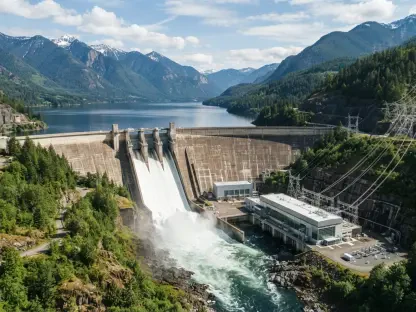

California serves as a critical test case for the rest of the nation as it grapples with the combined pressures of inflation, climate risk, and aging infrastructure. As households throughout the state confront residential electricity rates that have surged to double the national average, the promise of a seamless transition to a green economy is being tested by harsh economic realities. This financial strain creates a significant roadblock for the state’s ambitious clean energy goals, as the incentive for residents to adopt electric vehicles and heat pumps evaporates when the cost of powering them becomes prohibitive. Without a stable and affordable energy landscape, the momentum for decarbonization risks stalling, providing political ammunition for those who argue that environmental progress comes at too high a cost for the average family. The situation demands more than temporary political fixes or rate freezes; it requires a deep dive into the systemic flaws that have allowed costs to spiral out of control while leaving consumers to foot the bill.
Structural Drivers: The Hidden Costs of Resilience
A primary driver of these rising bills is the staggering cost associated with maintaining the local distribution grid and mitigating pervasive wildfire risks. Following several years of catastrophic fire seasons, investor-owned utility companies have funneled billions of dollars into “hardening” their infrastructure to prevent future disasters and ensure public safety. These expenditures have rapidly become the largest portion of consumer bills, seeing a massive spike as utilities raced to update aging equipment, bury power lines, and clear vast stretches of vegetation near high-voltage corridors. While these actions are necessary for physical safety, the financial burden has been placed squarely on the shoulders of ratepayers, leading to a situation where the cost of resilience is outpacing the ability of the public to pay. This aggressive spending on physical assets reflects a reactive approach to climate change that prioritizes immediate hardening over long-term economic sustainability, creating a cycle of escalating fees.
Beyond the immediate demands of wildfire prevention, the traditional utility business model inherently encourages excessive spending on infrastructure to maximize shareholder returns. This phenomenon, often referred to as capital bias, incentivizes utilities to prioritize large-scale construction projects over more efficient or flexible alternatives that might cost less but offer lower returns for investors. While transmission costs have tripled over the last decade, the actual efficiency or utilization of the grid has dropped significantly, falling from 60 percent to roughly 48 percent in recent years. This means that customers are increasingly paying for a massive, expensive system that is being used less effectively over time. The current model rewards the mere presence of hardware rather than the efficient management of energy flows, leading to a bloated infrastructure that fails to capitalize on modern technological advancements. As long as the profit motive is tied strictly to capital investment, the pressure to build more remains a central pillar of the crisis.
Regulatory Oversight: Transparency and Complexity Gaps
The regulatory environment in California has become increasingly opaque, leaving the California Public Utilities Commission struggling to keep up with the rapid pace of technological change. A surge in complex “tracking accounts,” which are used by utilities to record expenses for later recovery from ratepayers, has grown from $86 million in 2018 to an astounding $2.4 billion in 2024. This proliferation of financial mechanisms has made it nearly impossible for public advocates and consumer groups to monitor how utilities are actually spending money in real-time. This lack of transparency hides the true cost of service and prevents effective oversight of utility spending habits, as the sheer volume of data overwhelms the administrative capacity of regulators. The complexity of these accounts serves as a barrier to accountability, allowing billions of dollars in spending to bypass traditional scrutiny until it is too late to adjust course. Without a simplified reporting system, the state cannot manage the rising costs being baked into future rate increases.
Adding to the regulatory burden is the increasing integration of distributed energy resources, data centers, and large-scale battery storage, which have layered new mandates onto an already fractured system. The regulatory framework was originally designed for a centralized energy model, but today’s reality involves a decentralized landscape where consumers are also producers and massive new loads are appearing overnight. This shift has strained the ability of the commission to balance the needs of traditional utilities with the demands of a modern, flexible grid. As new technologies emerge, the lack of a unified regulatory roadmap has led to a patchwork of policies that often conflict or create unintended financial consequences for low-income residents. The result is a system that is reactive rather than proactive, constantly chasing the latest crisis instead of setting a clear path toward affordability. Addressing this requires a fundamental restructuring of how the state manages its energy priorities, moving toward a model that values simplicity and direct accountability.
Modernizing Rates: Reimagining Equity and Funding
To address these systemic issues, experts are increasingly advocating for a move away from the regressive volumetric rate structure that currently dominates the market. Under the existing system, customers are charged primarily based on the volume of energy they consume, which places a disproportionate burden on large families and those living in climates that require heavy heating or cooling. By implementing income-graduated fixed charges, the state could ensure that the fundamental costs of maintaining the grid are distributed more fairly based on a customer’s ability to pay. This approach would allow for a significant reduction in the per-kilowatt-hour price of electricity, making it far more affordable for residents to power high-use appliances like electric heat pumps and vehicles. Shifting these fixed costs away from usage-based rates is not just an issue of fairness; it is a strategic necessity for meeting broader climate goals. When the marginal cost of using electricity is lowered, the economic argument for switching away from fossil fuels becomes much stronger.
Another critical shift involves changing how the state finances wildfire protection, which is increasingly viewed as a broad public safety benefit rather than a standard utility service. Moving some of these massive costs from monthly utility bills to the state’s general tax fund would acknowledge that wildfire prevention protects the entire state’s safety and economy, not just the customers of a specific utility. Furthermore, the state can utilize low-interest financing through “securitization” to manage wildfire-related debt more effectively. This financial tool allows utilities to refinance their debt at lower rates, ensuring that they do not earn excessive profits on investments meant to mitigate risks they were partially responsible for creating. By treating wildfire mitigation as a public infrastructure project rather than a private utility expense, California can decouple the cost of safety from the cost of energy. This transition would provide immediate relief to ratepayers and create a more stable financial foundation for utilities to modernize the electrical grid.
Future Accountability: Efficiency and Systemic Reforms
To regain public trust and ensure long-term stability, utilities must be held to stricter performance standards that reward efficiency and affordability over simple capital spending. This transition requires putting utilities on a strict budget that forces them to find the most cost-effective ways to manage the grid rather than simply building more hardware. By encouraging “flexible connections” for large power users like data centers, the state can integrate these high-demand customers without triggering massive, expensive infrastructure upgrades. Additionally, promoting smarter energy use during peak solar hours can improve overall grid utilization, spreading the fixed costs of the system across a larger volume of energy. This strategy turns the current model on its head by prioritizing operational excellence and customer flexibility as the primary drivers of utility success. If utilities are incentivized to optimize the existing grid rather than expanding it at every opportunity, the resulting savings can be passed directly to consumers.
Ultimately, the path toward a sustainable and affordable energy future required a fundamental overhaul of how utilities profited and how they were regulated. Leaders recognized that California served as a national test case, and the successful resolution of its affordability crisis provided a vital blueprint for other states facing similar pressures from inflation and climate change. By de-linking utility profit from capital spending and streamlining the mission of regulatory agencies, the state protected its residents from spiraling costs while maintaining its leadership in the clean energy transition. The implementation of equitable rate structures and the strategic use of state funds for wildfire mitigation proved that a green grid could also be an affordable grid. These actions ensured that the transition to a carbon-free economy remained politically viable and economically inclusive for all citizens. Moving forward, the focus shifted to maintaining this balance, ensuring that every dollar spent on the grid provided tangible value to the public.