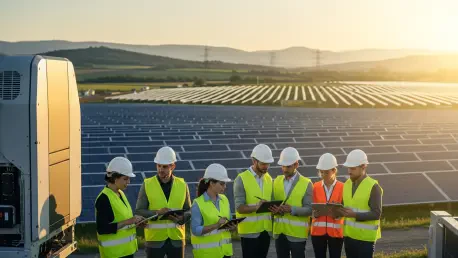

The continent of Europe witnessed a profound transformation in its energy landscape this June as solar power officially surpassed all other electricity sources to become the region’s primary generator. This milestone represents more than just a seasonal peak; it signifies a structural shift where photovoltaic technology generated a full twenty-five percent of the European Union’s total power output. For the first time in history, the sun provided more electricity than nuclear reactors, natural gas turbines, or wind farms, marking a definitive victory for renewable energy advocates and policy planners alike. This transition is the direct result of aggressive installation targets and a collective push toward total energy independence across member states. As the grid successfully integrated fifty-two terawatt-hours of solar energy in a single month, the skepticism once surrounding the reliability of renewables evaporated. This achievement serves as a blueprint for other global markets that are currently seeking sustainable paths to decarbonization.
The Statistical Shift in European Power Generation
Market Dominance: Analyzing the New Energy Mix
The data from June highlights a significant lead for solar, which produced fifty-two terawatt-hours of electricity, a figure that analysts have been anticipating for several months. This output comfortably surpassed nuclear power, which sat at twenty-one percent, and natural gas at fifteen percent, while once-dominant coal fell to just eight percent of the total mix. This performance was not an isolated event but rather the peak of a steady climb that saw solar capacity break its own records over several consecutive months during the current year. This transition occurred with remarkable speed, especially considering that solar accounted for only a tenth of the power just five years ago. Since the start of 2026, the growth rate for solar capacity has remained consistently high, making it the fastest-growing energy source in the region. Experts note that this rapid expansion has moved solar from a supplemental technology to the central foundation of the entire power landscape.
This statistical shift is underpinned by a massive increase in utility-scale installations and a supportive regulatory environment that has streamlined the permitting process for new projects. By reducing the bureaucratic hurdles that previously delayed grid connections, the European Union has allowed developers to bring new capacity online at an unprecedented pace. The resulting influx of clean energy has not only lowered carbon emissions but has also drastically reduced the region’s reliance on volatile international fuel markets. Market analysts observe that the cost of solar generation has reached a point where it is now the most economical choice for new capacity in almost every member state. This economic reality is driving private investment into the sector, as corporations seek to hedge against future energy price spikes by securing long-term power purchase agreements tied to renewable assets. The synergy between policy and profit has created a robust momentum that shows no signs of slowing down.
Economic Efficiency: The Rapid Speed of Deployment
Several practical factors have fueled this growth, most notably the falling costs and the speed at which solar projects can be completed compared to traditional power plants. Unlike nuclear or large-scale hydroelectric projects, which can take a decade or more to build and require massive capital outlays, solar arrays can be deployed rapidly to meet immediate energy needs. This agility has made solar highly attractive to both government planners and private investors who are looking for quick returns and immediate impact on energy security. In the current landscape, a mid-sized solar farm can be operational in less than a year from the initial planning phase, providing a modular solution that can be scaled as demand grows. This flexibility is essential for a modern grid that must adapt to changing consumption patterns and the increasing electrification of transport. The decentralized nature of solar also means that localized failures do not result in the widespread outages.
Furthermore, solar energy proved to be a vital asset during the intense heatwaves that characterized the early part of the summer. While some traditional power sources, such as thermal and nuclear plants, struggled to operate effectively due to cooling water limitations in high temperatures, solar output peaked exactly when demand was at its highest. This perfect alignment between generation and demand helped stabilize the grid and prevent blackouts during periods of extreme heat when air conditioning units were running at full capacity. This resilience has changed the conversation around energy reliability, proving that a weather-dependent source can be more dependable than thermal plants under specific climate stress scenarios. Grid operators have leveraged this consistency to manage peak loads more effectively, reducing the need for expensive and polluting peaker plants. The ability of solar to perform under pressure has solidified its role as a critical pillar of European climate strategy.
Regional Success and Strategic Implementation
Localized Leadership: Lessons From Spain and Germany
Spain has emerged as a standout leader in this movement, using solar to provide thirty-four percent of its electricity during the peak month of June. By doubling its wind and solar capacity in just a few years, Spain has been able to shield its citizens from global energy price spikes caused by international conflicts. These investments have not only lowered monthly electricity bills for Spanish households but have also allowed the nation to phase out coal almost entirely from its domestic production. The Spanish model emphasizes the importance of utilizing geographic advantages to build a competitive edge in the green economy. By exporting surplus solar energy to neighboring countries, Spain is also positioning itself as a central hub for the European energy market. This strategy demonstrates how renewable energy can be a tool for both environmental progress and geopolitical influence, allowing nations to move away from traditional dependencies.
Germany has taken a different but equally effective path by focusing on decentralized, small-scale installations alongside major utility projects. The balcony solar trend, where residents install small kits on their own terraces or sheds, has seen over a million new systems added in a very short period. This grassroots approach, combined with improved battery storage solutions, has empowered citizens to manage their own energy needs while reducing the overall strain on the national grid. By democratizing energy production, Germany has fostered a sense of public ownership in the energy transition, which has helped to overcome local opposition to larger infrastructure projects. This hybrid model, which balances large-scale efficiency with small-scale resilience, provides a robust framework for other industrial nations to follow. The integration of smart meters and home energy management systems has further optimized the use of this decentralized power, ensuring every kilowatt is used.
Future Considerations: Scaling the Sustainable Infrastructure
The successful integration of solar power as the primary source of electricity demonstrated that the technical barriers to a renewable-led grid were largely surmountable through innovation and political will. Governments and grid operators prioritized the expansion of battery storage capacity to ensure that the surplus energy generated during the day remained available throughout the night. This forward-looking approach allowed for a more resilient infrastructure that could withstand the pressures of fluctuating demand and extreme weather events. Looking ahead to the period from 2026 to 2028, the focus shifted toward optimizing cross-border energy sharing and modernizing distribution networks to accommodate even higher levels of decentralized generation. By embracing these changes, the European Union established a sustainable model that prioritized both environmental stewardship and economic security. These lessons provided a clear path for further decarbonization.
The transition toward a solar-dominant grid also necessitated a reimagining of the labor market and technical training programs across the continent. Thousands of workers were retrained to support the installation, maintenance, and management of renewable infrastructure, creating a new class of green-collar jobs that revitalized local economies. Financial institutions also played a crucial role by developing specialized green bonds and low-interest loans that made it easier for small businesses and homeowners to invest in solar technology. This comprehensive approach ensured that the benefits of the energy transition were distributed broadly, rather than being concentrated in a few large utility companies. As the region moved away from the volatile era of fossil fuel dependence, it gained a level of price stability that fostered long-term industrial growth and consumer confidence. The achievements of June served as a permanent reminder that a sustainable energy future was both technologically feasible.