
The global energy market has witnessed a remarkable transformation as Samsung SDI successfully emerged from a challenging seven-quarter period without an operating profit to report a substantial KRW 203.8 billion in earnings. This financial resurgence was fueled by an 18.5% year-over-year increase in total revenue, illustrating a decisive pivot toward the booming Energy Storage Systems sector. While the American electric vehicle market experienced a noticeable cooling period, the demand for large-scale energy storage has surged, providing a lucrative path forward for the South Korean battery giant. By strategically moving away from a reliance on the automotive industry and prioritizing high-power solutions like uninterruptible power supplies for massive data centers, the company has effectively insulated itself from the volatility that recently plagued the battery manufacturing landscape. This turnaround highlights the critical importance of agility in an environment where traditional markets shift unexpectedly.
Navigating the US Regulatory Landscape
Strategic Shifts: Maximizing Federal Incentives and Trade Compliance
Central to this recovery is the establishment of a robust manufacturing footprint within the United States, specifically tailored to the production of lithium iron phosphate battery cells. By localizing these high-tech production lines, Samsung SDI is positioning itself to fully capitalize on the financial benefits offered by the One Big Beautiful Bill Act. This legislation provides significant Advanced Manufacturing Production Credits to companies that commit to domestic assembly and component sourcing, which directly impacts the bottom line by reducing the overall cost of production. Consequently, the company can offer its high-end battery solutions at more competitive prices without sacrificing quality or performance. This move not only strengthens the balance sheet but also builds a deeper level of trust with domestic partners who are looking for long-term stability. By securing these federal incentives, the firm ensures that its US operations remain a cornerstone of its global profitability strategy through the end of the decade.
Regulatory Alignment: Navigating Trade Laws and Domestic Content
Furthermore, this domestic shift serves as a proactive defense against the increasingly strict regulations surrounding Foreign Entities of Concern that often complicate international trade. By systematically reducing its reliance on raw materials and components sourced from restricted or geopolitically sensitive regions, Samsung SDI has established itself as a safe and reliable partner for American utility-scale energy projects. Compliance with these federal standards is no longer just a legal necessity but a significant competitive advantage in the current market. Developers of large-scale renewable energy sites are often eligible for a 10% bonus on their Investment Tax Credits if they meet specific domestic content requirements, making US-made battery cells a critical factor in the financial feasibility of their projects. This alignment with national policy allows the company to capture a larger share of the infrastructure market while simultaneously mitigating the risks associated with global supply chain disruptions.
Scaling Production and Product Offerings
Product Evolution: Accelerating the Samsung Battery Box Roadmap
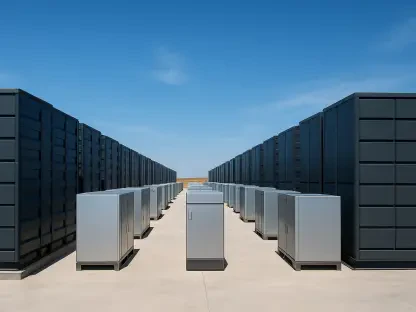
The company is also aggressively refining its technological portfolio to better serve the unique requirements of the utility-scale energy storage sector through the Samsung Battery Box series. The current flagship model, known as the SBB 2.0, utilizes a lithium iron phosphate chemistry that is increasingly favored for stationary storage due to its inherent safety profile and long-term cost-efficiency. For clients who require maximum energy density in a compact footprint, the SBB 1.7 provides an alternative solution featuring high-performance nickel cobalt aluminum oxide cells. This sophisticated dual-chemistry approach enables Samsung SDI to address a diverse spectrum of industrial and utility customers, each with specific power discharge and duration needs. By offering specialized solutions rather than a one-size-fits-all product, the company has successfully carved out a dominant position in the high-stakes world of grid-level energy management. This flexibility is essential for maintaining growth as different sectors of the economy transition.
Manufacturing Velocity: Quality Validation and Market Confidence
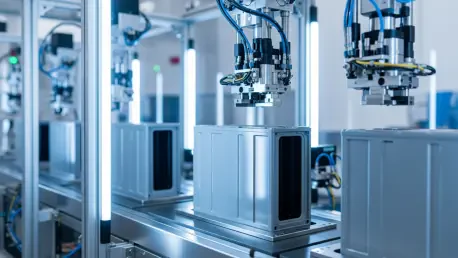
At the manufacturing level, the organization is currently finalizing the quality validation process for its new prismatic LFP production lines, which are expected to begin mass manufacturing in October 2026. Corporate leadership has expressed high confidence that the initial shipments of the SBB 2.0 will reach customers before the conclusion of the current year. This rapid scaling of production capacity is a direct response to a massive surge in pre-orders, with a significant portion of the company’s planned capacity already reserved through 2029. This forward-looking order book reflects a deep market confidence in the ability of Samsung SDI to deliver advanced storage solutions at the scale required by modern infrastructure projects. By locking in these long-term contracts, the firm has created a predictable revenue stream that supports continued investment in manufacturing efficiency and product innovation. The ability to move from validation to mass production in such a short window demonstrates a high level of operational excellence.
Building a Resilient Energy Ecosystem
Supply Resilience: Localizing Raw Materials and Cathode Production
To ensure the long-term stability of its operations, Samsung SDI has placed a heavy emphasis on securing a clean and transparent supply chain by localizing the sourcing of its cathode materials. By forging deep strategic partnerships with both South Korean and American suppliers, the firm has effectively mitigated many of the risks associated with geopolitical instability and the unpredictable costs of international shipping. This localized approach is particularly crucial because cathode materials represent the single largest expense in the battery manufacturing process. Protecting these margins from external shocks is vital for maintaining the profitability levels achieved in recent quarters. Additionally, this strategy ensures that all materials used in the production of US-based cells remain compliant with local trade laws, further solidifying the company’s position as a preferred vendor for government-backed energy projects. This focus on supply chain resilience is a foundational element of the broader strategy.
Structural Growth: Grid Integration and Renewable Energy Infrastructure
While the rapid expansion of AI-driven data centers has provided a significant tailwind for the high-power battery market, the broader growth of the energy storage sector is driven by deep structural trends. The transition to a power grid that relies heavily on intermittent renewable energy sources like wind and solar requires massive battery installations to ensure a steady and reliable supply of electricity. Beyond just supporting the technology industry, these storage systems are becoming essential for modernizing an aging grid infrastructure that was never designed to handle the complexity of decentralized power generation. Many states have implemented aggressive deployment targets for energy storage, creating a sustained demand that is expected to last for decades. Samsung SDI is well-positioned to meet this demand by providing the hardware necessary to balance the grid and prevent blackouts during periods of peak usage. This structural shift toward a more resilient energy network ensures that the demand for storage remains strong.
Strategic Outlook and Technological Frontiers
Capacity Planning: Anticipating the Decade Supply Crunch
As the decade progresses, Samsung SDI is already preparing for a potential supply crunch expected by 2028, when the global appetite for battery energy storage is projected to surpass its current production capacity. To maintain its market-leading position, the company is actively evaluating several options for further facility expansions and the construction of new gigafactories. This proactive approach to capacity planning is necessary to keep pace with the accelerating transition to a renewable-heavy power grid, where the need for storage often grows faster than the infrastructure to produce it. By anticipating these bottlenecks years in advance, the organization can avoid the pitfalls of production delays that have hampered the growth of many other players in the renewable energy space. Maintaining a consistent supply of high-quality battery cells is paramount for keeping large-scale utility projects on schedule and within budget. This strategic foresight ensures that the firm remains at the forefront.
Future Horizons: Next-Generation Research and Circular Economy
The firm invested heavily in the development of next-generation battery chemistries, including promising sodium-ion cells, which represented a breakthrough for large-scale storage where cost-effectiveness was more critical than density. By balancing the immediate need to scale LFP production with long-term investments in alternative chemistries, the company positioned itself to dominate various market segments. Future considerations for the industry involved the diversification of material dependencies and the refinement of recycling processes to create a truly circular battery economy. For stakeholders, the path forward required prioritizing flexible storage solutions that could adapt to both current grid needs and emerging technological shifts. This dual-track strategy allowed the firm to act as a versatile leader, providing both the hardware for current demands and the foundational research for future power systems. Practical next steps for developers included securing long-term supply agreements and integrating multi-chemistry systems.