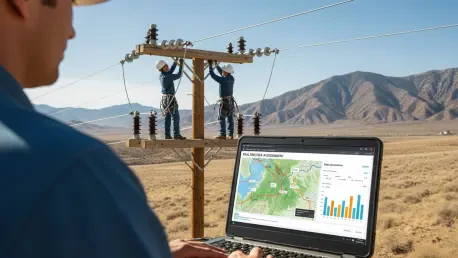

The sheer magnitude of modern wildfire events has transformed the electrical grid from a symbol of industrial progress into a significant liability that requires immediate and sophisticated strategic intervention to protect both human life and corporate longevity. This guide serves to provide a comprehensive roadmap for utility leaders to implement modern asset investment strategies. By following this structured approach, organizations can transition from a state of constant emergency response toward a model of calculated resilience, ensuring that every capital dollar spent yields the maximum possible safety benefit.
The goal of this guide is to demonstrate how advanced digital tools can bridge the gap between technical risk and financial planning. Leaders will learn to integrate disparate data sets, quantify abstract environmental threats in monetary terms, and optimize complex portfolios of infrastructure projects. Ultimately, this framework provides the necessary evidence to satisfy regulatory requirements while securing the long-term viability of the utility.
Transitioning From Reactive Maintenance to Proactive Asset Investment
The historical model of utility management often relied on scheduled maintenance that followed a fixed timeline regardless of changing environmental conditions. However, the rise of extreme weather patterns has rendered these static cycles obsolete, making it clear that a shift toward Asset Investment Planning (AIP) is mandatory. This transition requires a fundamental change in organizational culture where data, rather than tradition, dictates where resources are deployed across the grid.
Proactive investment means moving beyond the fix-it-when-it-breaks mentality and instead identifying potential points of failure before they ignite a disaster. By utilizing sophisticated AIP frameworks, utility executives can evaluate the probability and consequence of fire events with scientific precision. This strategic shift allows for the development of multi-year hardening plans that are both ambitious and achievable, providing a clear path forward in an increasingly volatile operational landscape.
The Escalating Crisis of Wildfire Risk in the Utility Sector
The operational reality for North American utilities has been fundamentally redefined as fire seasons now span the entire calendar year. Areas that were previously considered low-risk are now prone to rapid-fire ignition due to prolonged droughts and shifting wind patterns. This environmental shift has outpaced the physical capacity of aging infrastructure, leaving many networks vulnerable to catastrophic failure.
The traditional reliance on manual ground inspections and basic vegetation management is no longer a viable defense against the current scale of risk. As climate change continues to drive extreme weather events, the gap between current grid stability and necessary safety levels continues to widen. Utilities must acknowledge that the environment of 2026 demands a level of agility that older operational models simply cannot provide.
The High Cost of System Vulnerability
System vulnerability is no longer just a technical concern; it is a massive financial burden that threatens the very existence of utility companies. Catastrophic ignitions lead to astronomical legal settlements and cleanup costs that can dwarf the original price of infrastructure upgrades. When a grid is not hardened against the local climate, every spark becomes a potential bankruptcy event for the provider.
Furthermore, the indirect costs of vulnerability include higher insurance premiums and a higher cost of capital as investors become wary of wildfire-prone assets. Maintaining the status quo in a high-risk environment is essentially a gamble with the company’s balance sheet. Without a significant move toward modern mitigation technology, the financial pressure from aging equipment will eventually become unsustainable.
Growing Regulatory and Financial Liability
Regulatory bodies have intensified their oversight, demanding that utilities provide detailed, data-backed evidence for their safety initiatives. Failure to meet these heightened standards can result in massive fines and the denial of rate-recovery requests, leaving the utility to absorb the costs of mitigation efforts. The burden of proof has shifted, requiring organizations to demonstrate that they are using the most effective tools available to minimize risk.
Financial liability extends to the public domain as well, where reputation is a critical asset. A single major fire event can lead to years of public scrutiny and a complete loss of trust from the community being served. This combination of legal, financial, and social pressure makes the adoption of advanced risk management tools not just a technical upgrade, but a survival necessity for the modern utility sector.
Implementing a Data-Driven Framework for Wildfire Resilience
Modernizing wildfire mitigation requires a structured approach to how capital is deployed across the grid. This process ensures that every dollar spent maximizes safety and system reliability.
Step 1: Overcoming Data Fragmentation and Silos
Efficient mitigation begins by centralizing disparate data points that are often scattered across various departments. Information regarding asset health, vegetation density, and historical weather patterns frequently resides in isolated databases, making it nearly impossible to gain a holistic view of the network. Breaking down these silos is the essential first step toward a unified risk management strategy.
Integrating Asset Health with Environmental Intelligence
Successful utilities merge technical asset data with vendor-neutral wildfire risk profiles to create a unified view of the network. This integration allows planners to see not just where an asset is located, but how its current physical condition interacts with the local terrain and fuel load. By combining these variables, the organization can identify the specific line segments where a failure is most likely to result in a catastrophic fire.
Step 2: Quantifying Risk in Financial Terms
To justify massive infrastructure investments, utilities must translate abstract fire risks into concrete monetary values. Qualitative assessments like high or low risk are insufficient when competing for limited capital budgets or presenting a case to a state commission. Quantifying risk provides a common language that links engineering needs with financial constraints.
Establishing a Defensible Monetary Baseline for Risk
By calculating the financially quantified expected loss, organizations can create regulator-ready investment plans that clearly show the return on safety spending. This involves estimating the potential cost of litigation, property damage, and lost service for every mile of the grid. Having this baseline allows a utility to prove that a hundred-million-dollar undergrounding project is actually a cost-saving measure in the long run.
Step 3: Executing Portfolio Optimization Engines
Rather than evaluating projects in isolation, digital tools allow for the simultaneous assessment of thousands of potential interventions. An optimization engine can weigh the benefits of various strategies across the entire enterprise to find the most efficient path forward. This mathematical approach removes human bias and ensures that the most critical projects receive funding first.
Prioritizing High-Impact Infrastructure Upgrades
Optimization software identifies the best combination of undergrounding, covered conductors, and vegetation management to achieve the highest risk reduction within budget constraints. For example, the software might determine that a mix of covered conductors in one area and aggressive tree trimming in another provides better protection than a one-size-fits-all approach. This level of granularity ensures that the mitigation portfolio is both balanced and highly effective.
Step 4: Enhancing Transparency Through Geospatial Communication
Communication with non-technical stakeholders is vital for the approval and success of mitigation efforts. When a utility can show exactly where and why they are working, they build credibility with the public and regulators. Transparency in planning leads to smoother approval processes and more predictable project timelines.
Building Public Trust with Spatial Mapping Data
Using two-way geospatial analytics allows utilities to visually demonstrate why specific geographic areas are being prioritized for hardening efforts. Maps that layer fire risk with proposed construction projects provide an intuitive way for community members to understand the utility’s logic. This visual evidence acts as a powerful tool for gaining social license and demonstrating a commitment to local safety.
Core Takeaways for Modernizing Mitigation Strategies
- Centralize DatBreak down departmental silos to ensure risk and financial data are aligned across the entire organization.
- Quantify Impact: Move from subjective assessments to objective, financially quantified risk models that satisfy regulatory scrutiny.
- Optimize Portfolios: Use mathematical engines to choose the best mix of hardening and operational tactics within your specific budget.
- Maintain Defensibility: Ensure all investment decisions are backed by transparent, audit-ready data that can be presented to any stakeholder.
The Future of Grid Resilience and Regulatory Defensibility
As utilities embark on massive system-hardening projects, such as Hawaii’s covered conductor initiatives or California’s extensive undergrounding, the challenge of capital prioritization will only intensify. The projects currently underway represent a new era where the physical characteristics of the grid are being fundamentally rebuilt for the current climate. Between now and 2030, the sheer volume of these infrastructure changes will require even more precise coordination.
The pressure to deliver these projects on time and under budget will remain high as regulators monitor every mile of progress. Organizations that have already adopted Asset Investment Planning tools will be better positioned to navigate these requirements. These digital systems provide the flexibility needed to adjust plans as new data emerges or as legislative priorities shift.
Balancing Engineering Solutions with Operational Tactics
Digital tools help leaders weigh the benefits of permanent physical upgrades against the immediate but disruptive impact of Public Safety Power Shutoffs (PSPS). While shutoffs are effective at preventing fires, they carry significant social and economic costs for the community. Finding the right balance between these hard and soft tactics is one of the most complex challenges facing utility executives today.
Optimization platforms allow for a side-by-side comparison of the long-term value of undergrounding versus the recurring operational cost of a shutoff program. This data-driven comparison helps utilities justify the initial high cost of physical hardening by showing the massive reduction in future operational disruption. Ultimately, the goal is to create a grid that is safe enough to remain energized even during high-risk weather windows.
Adapting to a High-Volatility Environment
Future developments in AI-enabled surveillance and weather stations will continue to feed into AIP tools, allowing for real-time adjustments to long-term investment strategies. As more sensors are deployed across the network, the volume of data will increase exponentially, making digital optimization even more critical. Staying ahead of the curve requires a commitment to continuous learning and technological adaptation.
The ability to pivot based on new intelligence will distinguish the industry leaders from those who fall behind. As wildfire threats evolve, so must the tools used to fight them. By maintaining a flexible and data-driven approach, utilities can ensure that their infrastructure remains resilient against the unpredictable challenges of the coming decades.
Building a Sustainable Path Forward for Utility Management
The transition toward integrated asset management proved to be the most effective safeguard for utilities facing the modern wildfire crisis. By adopting these digital frameworks, organizations successfully moved away from fragmented, subjective planning and toward optimized, data-driven portfolios that protected both communities and financial interests. The implementation of Asset Investment Planning tools redefined how risk was perceived, allowing leaders to transform uncertainty into a clear, defensible strategy.
As utilities look toward the future, the lessons learned from these initiatives highlighted the importance of transparency and mathematical precision in capital allocation. The successful deployment of undergrounding and conductor hardening projects demonstrated that resilience was achievable when backed by the right technology. These strategies ensured that every mitigation effort contributed measurably to a safer energy future, providing a template for long-term viability in an era of environmental volatility.