
Christopher Hailstone stands at the forefront of modern energy management, possessing a deep understanding of the intricate dance between electricity delivery and grid security. As a veteran utilities expert, he has navigated the transition from traditional base-load power to a more complex, decentralized system. His insights are particularly crucial now, as the North American grid faces a dual challenge: the rapid integration of renewable resources and the explosive, often volatile, growth of digital infrastructure. In this conversation, we explore the shifting landscape of energy reliability, from the massive capacity additions currently stabilizing the summer peak to the emerging vulnerabilities found in the “shoulder seasons.”
The following discussion explores the complexities of contemporary load forecasting, specifically addressing how data center delays and sudden oscillations create operational hurdles. We delve into the significance of the 58 GW capacity increase—comprised of solar, storage, and gas—and how this surplus is helping regions like Texas and the Midwest manage rising demand. Furthermore, the interview examines regional risks in areas like New England and West Texas, the technical impact of “wind droughts,” and why the traditional maintenance windows in spring and fall are becoming the new frontier for grid reliability concerns.
The rapid expansion of data centers has introduced a high degree of volatility to the grid, with some facilities dropping load or oscillating demand unexpectedly. How do these unpredictable behaviors and interconnection delays fundamentally change the way you approach demand forecasting?
The traditional model of forecasting relied on predictable, steady growth patterns that allowed utilities years to prepare, but data centers have completely disrupted that timeline. We are seeing a “muddled” demand picture because these large loads often connect at speeds that don’t align with our infrastructure projects, leading to significant downward revisions when projects stall. For example, in the Texas Interconnection, we saw a massive adjustment where summer peak load projections were trimmed from a staggering 112,000 MW down to a more manageable range of 90,500 MW to 98,000 MW. This isn’t just a clerical change; it reflects the physical reality of slower-than-expected interconnection rates and the “observed behavior” of these computational loads during peak periods. When a data center suddenly drops its load, it isn’t a quiet event; it creates a ripple through the bulk power system that requires immediate, sometimes mandatory, actions to maintain stability. We are moving away from static models and toward dynamic, real-time monitoring that treats these large consumers as active, sometimes volatile, participants in the grid’s ecosystem rather than just passive sinks of energy.
We are seeing a massive influx of 58 GW in new resources this year, with a heavy emphasis on solar and storage. How does this specific mix of technology alter our ability to meet the projected 865 GW summer peak compared to the resources we relied on just a few years ago?
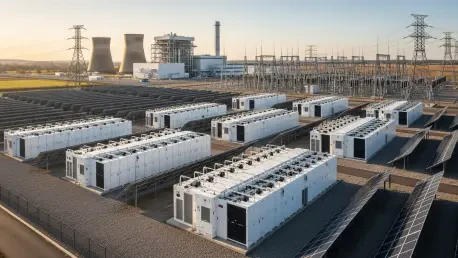
The sheer scale of this addition—58 GW of resource capacity—is a testament to how quickly the generation mix is evolving, with 16 GW of solar and 15 GW of storage leading the charge. This isn’t just about adding volume; it’s about adding flexibility, as seen by the 7 GW of new gas capacity that provides the firm backing these renewables require. When you compare this to the 842 GW peak of 2023, you can feel the breathing room that these additions provide, especially in markets like MISO and ERCOT which saw anticipated resource jumps of 7% and 12% respectively. However, the emotional relief of having more “nameplate” capacity is tempered by the reality that solar and storage perform differently under extreme heat than traditional coal or nuclear plants. We are leaning into a system that is incredibly robust when the sun is shining, but it requires a sophisticated orchestration of storage assets to ensure that the 15 GW of battery power is ready to discharge exactly when the solar output begins to fade in the late afternoon.
While the overall national outlook seems positive, certain regions like New England and West Texas are still flagged for elevated risk. What are the specific local constraints in these areas that make them vulnerable even when the broader grid appears to be in good shape?
The “elevated risk” designation in these specific locales highlights that grid reliability is often a story of local physics rather than national averages. In New England, we are witnessing a concerning trend where firm import commitments have declined, forcing a greater reliance on “non-firm” supplies from neighbors, which creates a sense of precariousness when demand spikes. West Texas is perhaps the most fascinating microcosm of our current challenges because it faces a “bit of everything”—rapid load growth from the oil and gas industry alongside data centers, coupled with transmission constraints that physically limit how much power can be imported. Even in a state like Texas that has shed much of its overall risk, a local area can still face load disruption if the wind dies down and the solar output is low simultaneously. It’s a vivid reminder that you can have a surplus of energy in one part of the state, but if the “wires” or transmission pathways are congested, that energy might as well not exist for the people in the affected zone.
The concept of a “wind drought” is becoming a significant concern for grid operators as wind capacity continues to grow. How do you plan for those moments when several thousand megawatts of energy simply vanish from the system during a down-ramp event?
Planning for a wind drought is like preparing for a sudden, silent emergency where the very air stops providing the fuel your system depends on. Even though wind capacity grew by 3% this year, the volatility of “ramp events”—especially those sharp down-ramps—means we must have flexible resources like gas or batteries standing by, ready to fire up at a moment’s notice. It is not uncommon for an area to lose several thousands of megawatts of wind energy in a very short window, which creates a physical strain on the remaining generators to pick up the slack without dropping frequency. We use sophisticated meteorological modeling to anticipate these lulls, but the “sensory” experience for an operator is one of constant vigilance, watching the charts for that tell-tale dip in output. The goal is to ensure that the transition from wind-heavy hours to back-up generation is so seamless that the end consumer never notices a flicker, despite the massive mechanical shifts happening behind the scenes.
There is a growing concern that the “shoulder seasons” of spring and fall are actually becoming riskier than the summer peak. Why is the overlap of maintenance schedules and shifting weather patterns creating this new window of vulnerability?
For decades, the industry viewed the spring and fall as the “safe” periods—the time when we could breathe out, take plants offline for necessary maintenance, and prepare for the next big peak. But as our climate shifts and we experience early summer heatwaves, that maintenance window is shrinking, leading to a dangerous overlap where high demand hits a system that is operating at reduced capacity. We are seeing a “trending higher risk” in these periods because the resources being provided to us, while cleaner and more abundant, are being utilized in ways that don’t always align with traditional maintenance cycles. When you have early heat hitting a region while several large nuclear or gas plants are in the middle of a planned outage, your operating reserves can vanish almost instantly. It forces a fundamental rethink of how we schedule work, moving away from seasonal assumptions toward a much more fluid, year-round assessment of resource availability.
What is your forecast for the long-term stability of the U.S. grid as these competing pressures of load growth and resource transition intensify?
My forecast is one of “cautious transformation,” where the grid becomes significantly more complex and smarter, yet remains under constant pressure from extreme weather and shifting demand. We are successfully adding massive amounts of capacity—evidenced by the 19 GW of additional resources including nuclear completions and gas additions—but we are also chasing a moving target as data centers and electrification drive peak demand higher every year. The long-term stability will depend less on how many total gigawatts we have and more on our ability to manage the “ramps” and the “constraints” through better transmission and more responsive demand. I expect we will see a shift toward more localized microgrids and highly sophisticated demand-response programs, where large computational loads aren’t just a burden, but a tool that can be throttled to help balance the system. Ultimately, the grid of the future will be a more resilient, “always-on” digital-physical hybrid, but the path to getting there will require us to navigate many more of these high-stakes summer and shoulder-season tests.