
The global automotive landscape has undergone a seismic transformation where the transition to electric propulsion is no longer a matter of environmental preference but a fundamental requirement for national economic survival. As of 2026, the surge in high-capacity manufacturing has driven battery costs to record lows, making electric vehicles the default choice for millions of consumers across both developed and emerging markets. However, this rapid adoption has triggered an asymmetric tension where the sheer volume of vehicles leaving assembly lines is beginning to outpace the physical capability of local and national power grids to support them. In many urban centers, the electrical infrastructure is being pushed to its absolute threshold as the demand for simultaneous high-power charging conflicts with the aging legacy of copper and steel distribution systems. This disconnect creates a precarious situation where the technological success of the automotive industry threatens to destabilize the very energy networks that are supposed to fuel it. The challenge is particularly acute in developing nations, where the choice between high-priced imported oil and a strained domestic grid has forced a rapid, sometimes chaotic, pivot toward electrification that requires a complete re-engineering of the modern utility model. Stakeholders are now forced to confront the reality that the transition is no longer a slow-moving target but a present-day crisis of capacity and distribution.
The Economic Pivot and Sovereign Survival
The primary catalyst driving this massive migration away from internal combustion engines is the inescapable reality of the total cost of ownership, which has shifted decisively in favor of electric drivetrains. In the current economic climate, where crude oil prices frequently hover near the hundred-dollar-per-barrel mark, the operational expenses for traditional logistics and personal transport have become an unsustainable burden for small businesses and commercial fleet operators. Recent data indicates that switching to electric power can reduce per-mile operational costs by as much as 75% when factoring in reduced maintenance and the lower cost of electricity relative to fossil fuels. This financial reality has fundamentally altered consumer behavior, moving the conversation away from ecological benefits and toward raw profitability and household budget management. Fleet managers, who oversee the heavy-duty transit routes that form the backbone of global commerce, are aggressively replacing diesel-powered assets with high-efficiency electric alternatives to insulate their margins from the volatility of international fuel markets. This shift is not merely a trend among the affluent; it is a survival strategy for the working class and small-scale entrepreneurs who can no longer afford the unpredictable overhead of gasoline.
Beyond individual consumer choices, sovereign governments are implementing aggressive mandates to curb oil imports as a way to safeguard their national macroeconomic stability. By reducing their reliance on foreign energy supplies, these nations can preserve critical foreign exchange reserves and shield their domestic economies from the inflationary shocks often caused by geopolitical instability in oil-producing regions. In several jurisdictions, we are seeing total bans on the importation of new gasoline-powered engines, transforming electric vehicles from a niche luxury into a strategic instrument for maintaining national solvency. This policy-driven acceleration ensures that even if a local grid is not fully prepared, the influx of electric vehicles remains constant, as the alternative of remaining tied to the global oil trade is viewed as a far greater risk to long-term economic health. The result is a regulatory environment that prioritizes energy independence through electrification, even as it creates an immense backlog for utility providers who must now scramble to modernize their distribution networks. These mandates are effectively forcing a technological leapfrog, pushing countries to adopt 21st-century energy solutions while they still grapple with 20th-century infrastructure limitations, creating a high-stakes race between industrial policy and engineering reality.
Manufacturing Might and the Supply-Demand Gap
Much of the current momentum in the global electric vehicle market is underpinned by the unprecedented manufacturing efficiency of the Chinese automotive industrial complex, which has successfully integrated the entire supply chain from raw material processing to final vehicle assembly. By controlling the production of lithium-ion cells and solid-state batteries, these manufacturers have managed to scale their output with a speed that traditional Western automakers have struggled to match. Their focus has increasingly shifted toward practical, low-mass vehicles, such as electric two-wheelers and compact urban hatchbacks, which are perfectly aligned with the needs of densely populated urban centers. These vehicles are being exported at prices that compete directly with traditional motorcycles and small cars, making electrification accessible to a much broader demographic than ever before. This mass-market approach ensures that the electric revolution is not confined to high-end sedans but is instead penetrating every level of the transportation sector, from delivery fleets to daily commuter routes. As these manufacturing giants continue to optimize their processes, the cost of entry for new electric vehicle owners continues to plummet, ensuring a steady stream of new vehicles entering the global car parc every single day.
However, the remarkable speed of vehicle production has created a significant structural bottleneck that threatens to stall the progress of the entire movement. While a consumer can walk into a showroom and take delivery of a new electric car within a matter of days, the process of upgrading a city’s electrical grid to accommodate that vehicle’s charging needs is a project that typically spans several years. This temporal misalignment creates a dangerous lag where the number of vehicles on the road far exceeds the capacity of the local distribution network to deliver power consistently. Utility companies are finding themselves in a reactive posture, struggling to obtain permits and secure the specialized equipment necessary to upgrade substations that were designed for much lower load profiles. This grid cap is becoming a tangible barrier to adoption in many regions, where potential buyers are told that their local infrastructure cannot support the installation of a high-speed home charger. The disparity between the agility of the manufacturing sector and the slow, capital-intensive nature of utility infrastructure highlights a fundamental tension in the transition: we can build cars much faster than we can build the wires and transformers required to fuel them, leading to a period of growing pains that requires innovative management strategies to navigate.
Critical Infrastructure Constraints and Thermal Limits
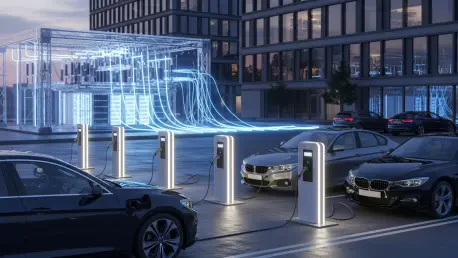
The most immediate threat to the stability of the power grid is not a shortfall in total electricity generation, but rather a crisis in last-mile distribution capacity. Residential and commercial grids in many older cities were never engineered to handle the massive, simultaneous current draw required by modern high-power fast chargers, which can pull as much energy as an entire apartment building during a single session. When multiple vehicles in a single neighborhood plug in during the early evening hours, which is the period of peak domestic demand, local transformers are frequently subjected to thermal overloads that exceed their design specifications. This excessive heat leads to rapid equipment degradation, increased failure rates, and localized power outages that frustrate both vehicle owners and their neighbors. Utility operators are seeing the life expectancy of their hardware drop from decades to just a few years in high-adoption areas, necessitating a massive and unplanned replacement cycle. This physical limitation of the distribution hardware acts as a hard ceiling on how many electric vehicles can be supported in a specific geographic area before the system reaches its breaking point, regardless of how much renewable energy might be available at the power plant.
Furthermore, the transition to a fully electric transport sector is hampered by a persistent dilemma that affects the rollout of public and commercial charging infrastructure. Private developers are often hesitant to invest the significant capital required to install high-speed charging hubs without a guaranteed high volume of consistent users, while many potential consumers remain wary of purchasing a vehicle if they do not see a robust and visible network of chargers along their regular routes. This misalignment is particularly problematic for commercial fleet operators who require dedicated, high-capacity depots to keep their vehicles moving through multiple shifts. Even in cases where the central grid has sufficient capacity to provide the power, the physical hardware, including the cables, the cooling systems for the chargers, and the sophisticated billing software, is often missing or insufficient to meet the needs of heavy-duty transportation. This gap in the charging ecosystem creates a fragmented experience for users and forces many early adopters to rely on slow, inefficient charging methods that do not fully utilize the capabilities of their vehicles. Bridging this gap requires not just technical upgrades but also new financial models that can de-risk the investment in public charging infrastructure before the market reaches full maturity.
Strategic Integration: Future-Proofing the National Grid
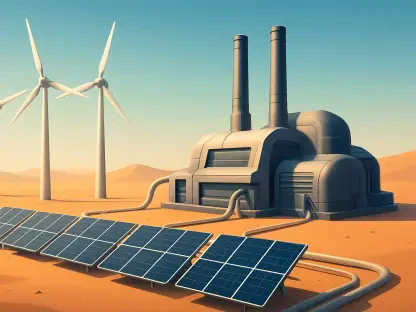
To overcome these physical and financial hurdles, the industry is increasingly turning toward decentralized energy solutions, such as Battery Energy Storage Systems, to act as a buffer between the grid and the vehicle. By installing stationary battery packs at charging hubs, operators can draw power from the grid at a slow, steady rate during off-peak hours and then discharge that stored energy at high speeds when a vehicle plugs in. This approach effectively decouples the charging speed from the immediate capacity of the local substation, allowing for ultra-fast charging even in areas where the existing wires would otherwise be unable to handle the load. These storage systems also offer the added benefit of price arbitrage, allowing operators to buy electricity when it is cheapest, such as during periods of high solar or wind generation, and use it when grid prices are at their peak. This integration of storage technology turns each charging station into a micro-energy hub that can support the stability of the surrounding neighborhood rather than just being a drain on its resources. As battery chemistry continues to improve and costs for stationary storage decline, these systems are becoming a standard component of new infrastructure projects, providing a scalable solution to the distribution problem.
Beyond the deployment of physical hardware, utility companies and grid operators are adopting sophisticated software-driven strategies like smart pricing and Vehicle-to-Everything technology to manage fluctuating demand. By implementing dynamic time-of-use tariffs, utilities can incentivize drivers to schedule their charging sessions for overnight hours when the grid has an abundance of excess capacity and minimal industrial load. This shift in charging behavior can flatten the peak demand curve, preventing the need for the expensive peaker plants that often rely on fossil fuels. Looking further ahead, the massive fleets of electric vehicles currently hitting the roads could eventually function as a distributed virtual power plant, where cars plugged into the grid can feed energy back into the system during periods of extreme demand or emergency shortages. This bidirectional flow of energy transforms the vehicle from a potential liability into a vital asset for national energy security, providing a massive, decentralized reserve of power that can be tapped whenever the grid is under stress. By treating the vehicle fleet as an extension of the energy network, operators can create a more resilient and flexible system that is better equipped to handle the complexities of a fully electrified economy.
Implementing Resilient Solutions: The Path Toward Grid Readiness
The path toward a resilient energy future necessitated a shift in how regulatory bodies and utility providers approached long-term capital investments and infrastructure planning. Instead of relying on traditional, slow-moving approval cycles for large-scale transmission projects, forward-thinking regions began to streamline the permitting process for localized grid enhancements and community-scale storage projects. This regulatory agility allowed for the rapid deployment of the buffer technologies that were essential for maintaining stability during the initial wave of mass adoption. Furthermore, the integration of digital twin technology became a standard practice for grid operators, enabling them to simulate the impact of new charging loads in real-time and proactively address potential failure points before they resulted in outages. By prioritizing these targeted, high-impact upgrades, stakeholders were able to create a more responsive and adaptable infrastructure that could keep pace with the automotive sector’s manufacturing capabilities. These early interventions provided the necessary foundation for a more robust energy ecosystem that balanced the needs of transportation with the limitations of the existing physical grid.
The global transition to electric mobility ultimately proved that the readiness of the power grid was not a static condition, but a continuous process of adaptation and technological evolution. Stakeholders across the energy and automotive sectors moved beyond the initial phase of reactive planning and established a collaborative framework that integrated vehicle data with utility management systems. This synergy allowed for a more efficient allocation of resources and ensured that the rapid influx of vehicles did not lead to the catastrophic failures that many early critics had predicted. By adopting decentralized storage, implementing sophisticated demand-response protocols, and modernizing the last-mile distribution hardware, the industry successfully navigated the most difficult period of the transition. The focus shifted from merely surviving the surge in demand to leveraging the massive fleet of electric vehicles as a strategic asset for national energy resilience. These collective actions transformed the power grid into a more dynamic and capable network, illustrating that the shift to electric transport was as much about the evolution of energy distribution as it was about the change in automotive technology.