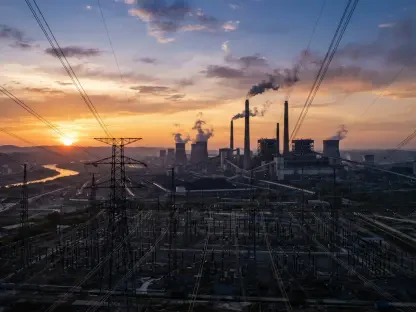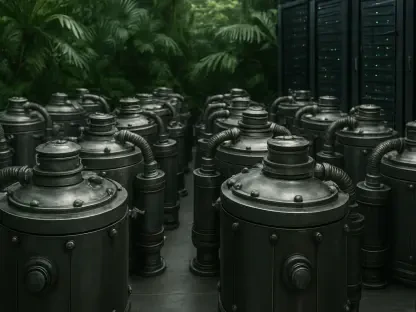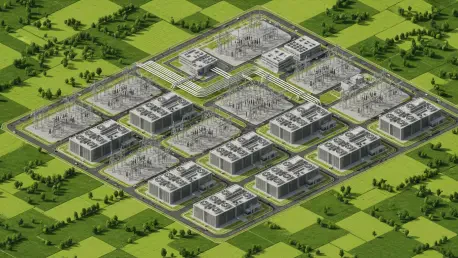

The sprawling ranch lands of Abilene, Texas, once defined by the rhythmic whistling of the wind and the vast, unblemished horizon, have been transformed into a construction site where the dust never quite settles and the horizon is now jagged with industrial steel. When dust clouds from the Stargate construction site first began coating Omaira Garcia’s ranch, she had no idea that a $500 billion joint venture involving some of the world’s most powerful tech giants had moved in next door. Residents who once enjoyed the silence of the Texas countryside now find themselves living beside towering exhaust stacks and stadium-level light pollution, often learning about these massive industrial neighbors only after the heavy machinery arrives. This sudden transformation of rural landscapes highlights a growing disconnect between rapid technological expansion and the rights of the people living on the front lines of the artificial intelligence boom. The physical manifestation of the digital cloud is no longer an abstract concept but a loud, dusty reality for those who sought a quiet life in the Permian Basin.
The Stargate facility, a massive collaboration between OpenAI, SoftBank, and Oracle, represents one of the first hyperscale data centers to break ground in this region, yet its arrival was marked by a surprising lack of public notification. For Omaira Garcia, a retired Air Force veteran, the realization came not through a town hall meeting or a formal letter, but through the physical intrusion of construction debris and the sudden appearance of ten gas-fired turbines just hundreds of yards from her kitchen window. The facility operates with a constant hum that neighbors describe as a persistent vibration, a stark contrast to the quiet nights they once cherished. This shift in land use is happening across the state, where the promise of high-tech jobs and tax revenue often masks the immediate environmental and social costs borne by those living on the fence line of these industrial giants.
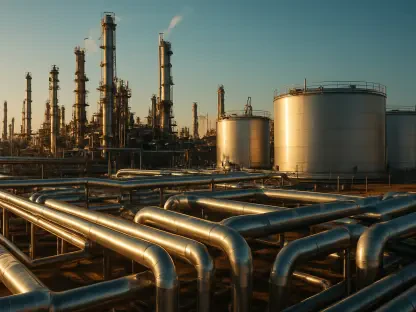
As these centers expand, the gap between the sleek, futuristic image of artificial intelligence and the gritty industrial infrastructure required to power it becomes increasingly apparent. While the tech industry often speaks in terms of “the cloud” and “virtual processing,” the reality in Abilene is one of diesel generators, natural gas pipelines, and massive electrical substations. The struggle of residents like Garcia and her neighbor, Paul Daniel, illustrates a fundamental shift in property rights and environmental equity. They find themselves in a situation where their homes, once valuable sanctuaries of rural peace, have been effectively hemmed in by a massive power plant that operates around the clock, fueled by the insatiable energy needs of a global AI arms race.
Why Texas Has Become the Ground Zero for AI Infrastructure
The dash to dominate the global artificial intelligence market has created an insatiable demand for physical power, and Texas, with its industry-friendly climate and independent energy spirit, is the primary target. As the state moves toward becoming the nation’s leading data center market by 2030, the sheer scale of the required infrastructure rivals the peak of the fracking era. There are currently hundreds of data centers in various stages of development across the state, each requiring a level of electricity that can strain even the most robust grids. This trend is not just about digital progress; it is a fundamental shift in land use and energy production that links the future of Silicon Valley directly to the fossil-fuel resources of the Permian Basin and beyond. The state’s unique electrical grid, managed by ERCOT, provides a flexible environment where developers can build custom power solutions without the same federal oversight found in other regions.
The energy requirement for modern AI is staggering, often demanding four to five times the power of traditional data centers due to the intense cooling and processing needs of advanced chips. Texas offers an abundance of natural gas and a regulatory environment that prioritizes speed, making it an ideal laboratory for these “hyperscale” projects. Consequently, the state is seeing a massive build-out of gas-fired plants specifically designed to serve these digital hubs. This infrastructure boom is estimated to involve nearly 80 gigawatts of new gas plants in the pipeline, a figure that underscores the state’s role as the powerhouse for the next generation of computing. The synergy between the tech giants and the energy sector is creating a new industrial landscape where data is the product and natural gas is the primary catalyst.
However, this rapid expansion creates a complex tension between economic growth and long-term sustainability goals. While developers point to the billions of dollars in investment and the creation of local jobs, the environmental footprint is immense. By locking in decades of fossil-fuel reliance to power the digital future, the state is making a long-term bet on gas at a time when global trends are shifting toward renewable sources. This massive industrialization of the Texas countryside is not a peripheral event but a central pillar of the global AI strategy, turning rural counties into the engine rooms of the information economy. The result is a landscape where the traditional cattle ranch and the modern server farm exist in an uneasy, and often loud, proximity.
Decoding the Regulatory Gaps That Allow Shadow Grids to Thrive
Developers are increasingly utilizing “permits by rule” and “standard permits”—regulatory tools originally designed for low-impact businesses like neighborhood dry cleaners—to fast-track the construction of massive power plants. These loopholes allow for the creation of a “shadow grid,” a network of on-site fossil-fuel generators that can emit over 1.6 million tons of greenhouse gases annually without the rigorous environmental reviews required for major industrial sources. By employing “threshold engineering,” companies provide emission estimates that sit just below legal limits for public notice, effectively bypassing community oversight and locking in decades of fossil-fuel reliance before a single public hearing is held. This process allows developers to break ground and install significant infrastructure under the radar of local residents who might otherwise object to the environmental impact.
The technicality of “minor air permits” is the key to this rapid development. In a typical scenario, a large power plant would be considered a “major source” of pollution, requiring an extensive permitting process that includes air quality modeling and mandatory public comment periods. By breaking projects into smaller phases or using specific turbine models that fall just under certain emission categories, companies can claim they are “minor” sources. For example, a facility might be permitted to emit exactly 99.8 tons of nitrogen oxides per year, a hair’s breadth away from the 100-ton threshold that would trigger more stringent oversight. This precision suggests a deliberate strategy to navigate the letter of the law while avoiding the public scrutiny that the law was intended to facilitate.
This regulatory environment essentially rubber-stamps industrial expansion, leaving the Texas Commission on Environmental Quality (TCEQ) in a position where it is merely processing paperwork rather than conducting thorough environmental assessments. The result is a proliferation of on-site gas turbines and diesel generators that collectively produce a massive amount of pollution but are treated as individual, low-impact sites. This “shadow grid” operates with a level of anonymity that protects corporate timelines at the expense of public transparency. For the people of Texas, this means that the air quality in their communities is being altered by industrial complexes that were never subjected to a comprehensive public review, creating a precedent where the scale of a project is intentionally obscured by the way it is permitted.
Insights from Industry Watchdogs on the “Small First, Big Later” Tactic
Former EPA enforcement officials and energy researchers warn that developers frequently use a “small first, big later” strategy, securing minor permits for initial phases to establish “unstoppable momentum.” Once a facility is operational, the developer applies for massive expansions, at which point local opposition is often dismissed as a moot point because the industrial footprint is already a foregone conclusion. This tactic effectively splits a major project into digestible pieces that individually appear manageable but collectively represent a massive industrial shift. James Doty, a former environmental regulator, notes that by the time a major permit is actually required, the investment is so significant and the physical presence so established that regulators are rarely inclined to say no.
This institutional stagnation is exacerbated by the Texas Commission on Environmental Quality, which currently faces an enforcement backlog so significant that it would take decades to resolve existing cases while hundreds of new data centers continue to break ground. Critics argue that the agency is overwhelmed by the sheer volume of permit applications and lacks the resources—or perhaps the political will—to challenge the “threshold engineering” practiced by wealthy tech firms. The political pressure to facilitate the “AI gold rush” comes from the highest levels of state government, where economic development is often prioritized over environmental caution. This creates a feedback loop where developers know they can push the boundaries of minor permits with little fear of meaningful pushback or delay.
Furthermore, the “small first” approach often utilizes nondisclosure agreements and private land deals that keep the true scope of a project hidden from the local community until it is too late. In Abilene, the initial phase of Stargate was presented as a relatively contained project, but the subsequent application for a major expansion revealed a plan to build one of the largest fossil-fuel power plants in the state. This staggered reveal leaves residents feeling betrayed and powerless, as the “foregone conclusion” of the project’s existence makes any late-stage public hearing feel like a mere formality. The strategy relies on the fact that once the steel is in the ground and the turbines are spinning, reversing the environmental impact or stopping the expansion is nearly impossible within the current regulatory framework.
A Framework for Residents to Track and Respond to Local Industrial Permitting
For those living near potential development sites, navigating the complex world of environmental permits is the first line of defense in protecting property values and public health. Residents can take proactive steps by monitoring the TCEQ’s pending permit database for “Permit by Rule” filings and “Standard Permit” applications in their specific county. Vigilance was found to be the most critical tool for communities facing sudden industrialization. By searching for keywords like “turbines,” “engines,” or “generators” alongside the names of local land-holding companies, residents identified projects before the first bulldozer arrived on the scene. Knowledge of the specific permit types allowed community leaders to ask more informed questions of local officials, who were sometimes as uninformed as the residents themselves.
Organizing local community groups to demand transparency via “contested case hearings” and engaging with city council members regarding the “strategic permitting” of diesel backup generators proved to be an effective path for several Texas neighborhoods. These hearings were established to give affected parties a platform to challenge the technical merits of a permit, provided they could prove they were personally impacted. Successful groups used these legal avenues to demand better noise mitigation, more advanced emission controls, and stricter limits on light pollution. It was observed that when residents acted collectively, their ability to influence the “strategic permitting” process increased significantly, forcing developers to address quality-of-life concerns that were previously ignored.
The focus eventually shifted toward ensuring that massive industrial projects were not rubber-stamped without an honest assessment of their long-term environmental impact. Residents looked for “threshold engineering” in permit applications, noting when emission estimates were suspiciously close to legal limits. By hiring independent environmental consultants, some communities were able to provide their own air quality data, which challenged the rosy projections provided by the developers. This proactive stance empowered individuals to reclaim a voice in the development of their own backyards. The experience in places like Abilene demonstrated that while the AI gold rush was powerful, a well-informed and organized public remained a necessary check on the rapid expansion of the shadow grid. Action was taken when neighbors realized that silence was often interpreted by regulators as consent, leading to a new era of community-driven environmental oversight.