
The relentless acceleration of the global digital economy has transformed the fundamental criteria for site selection across the Asian continent, shifting the focus from simple land acquisition toward the absolute availability of high-voltage electrical infrastructure. For several decades, the primary metrics for a successful data center development were centered on real estate costs and proximity to fiber-optic backbones. However, as 2026 unfolds, the industry is witnessing a definitive paradigm shift where power has emerged as the primary gatekeeper of growth. Projects that once prioritized geography now find that their viability is entirely dependent on the capacity and resilience of the local electrical grid. This transition marks the evolution of the market from a secondary utility model to a power-centric investment landscape.
Analyzing the Paradigm Shift in Asia’s Digital Infrastructure Development
The transition toward power-first site selection strategies represents a fundamental change in how regional operators view their strategic assets. In the past, electricity was often treated as a commodity that could be negotiated late in the development cycle. Today, the ability to secure a firm power allocation is the very first step in the decision-making process. Electrical resilience has replaced square footage as the most valuable metric for investors, as the cost of downtime continues to escalate in an increasingly digitized economy. Without a guaranteed and stable supply of high-quality energy, even the most strategically located plot of land remains essentially useless for digital infrastructure.
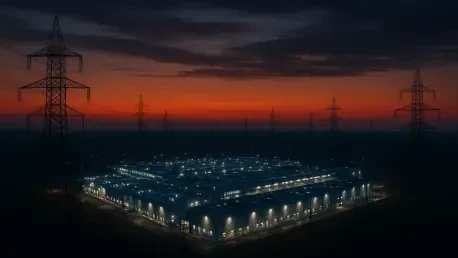
Grid capacity and power quality have become the new fundamental gatekeepers. Operators are no longer looking for just any power; they are seeking high-density, reliable delivery that can support the sophisticated requirements of modern workloads. This has forced a repositioning of the APAC market, where the focus has shifted from “where can we build” to “where can we plug in.” This evolution has led to a more integrated relationship between data center developers and utility providers, as both parties must now collaborate years in advance to ensure that the infrastructure is ready to meet the projected surges in demand.
Mapping the Surge in Regional Capacity and Technological Requirements
The rising demand for digital services across Asia is placing unprecedented pressure on existing energy systems. This surge is not merely a matter of more users; it is a direct result of more complex technological requirements that consume vastly more energy per unit of space. As the region continues to modernize its industrial and financial sectors, the need for high-performance computing centers has reached a critical mass. This creates a challenging environment where the speed of technological advancement often outpaces the ability of the local energy grid to modernize.
The AI Catalyst: The Shift Toward High-Density Computing
Artificial Intelligence has served as the single most significant catalyst for the current energy crisis within the data center industry. AI workloads are redefining rack densities in a way that was previously unthinkable, pushing requirements from a standard 8.4kW to over 100kW per rack. This shift has transformed power planning from a late-stage engineering task into a core business decision. Developers must now design facilities that can handle massive heat loads and electrical draw while maintaining the precision required for sensitive AI processing.
Moreover, the enterprise demand for scalable energy volumes is driving a change in consumer behavior. Businesses are no longer content with small, incremental capacity additions; they are seeking massive, multi-megawatt blocks of power to support their long-term AI roadmaps. This demand for scale means that power delivery must be managed with extreme precision. The complexity of managing these high-density environments has made electrical architecture a differentiator for top-tier providers, as they seek to provide the stability and precision that modern enterprise tenants require.
Quantifying the 19.4GW Pipeline: Southeast Asian Expansion
Current market data for 2026 reveals a record-breaking development pipeline across the APAC region, with total planned capacity now reaching approximately 19.4GW. Much of this growth is concentrated in Southeast Asia, where emerging hubs like Johor, Batam, Bangkok, and Greater Jakarta are seeing massive influxes of capital. These markets are attracting global players because they offer a combination of available land and, crucially, a proactive approach to energy infrastructure development. Performance indicators for these top-tier markets show that many are on track to double their operational capacity within a significantly shortened timeframe.
Projections for energy demand through 2030, based on recent analysis, suggest that the surge in Southeast Asia will be among the highest in the world. This is particularly evident in Johor, which has rapidly transformed from a secondary location into a major regional hub. The ability of these markets to absorb such a massive pipeline depends entirely on the speed at which their respective national grids can be upgraded. As more facilities come online from 2026 to 2028, the competition for available electricity will likely intensify, favoring those developers who have secured long-term power purchase agreements.
Navigating the Complexities of Energy Resilience and Grid Constraints
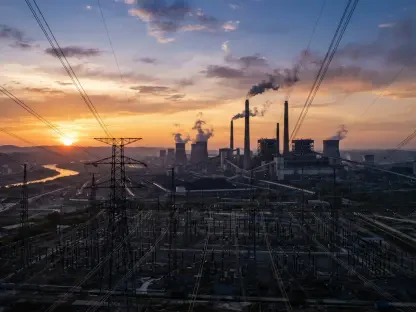
The strain placed on aging transmission networks by unprecedented digital demand is one of the most significant technical hurdles currently facing the industry. Many grids across the region were not designed to handle the concentrated, high-load requirements of multiple large-scale data centers in a single localized area. This creates a risk of local grid instability, which can have ripple effects throughout the broader economy. To mitigate this, developers are increasingly looking at collaborative solutions that involve substantial investment in grid “readiness” alongside the utility companies.
Technical challenges are further exacerbated by the tropical environment of many Asian hubs. Managing heat rejection and power distribution in high-density, high-humidity settings requires specialized engineering and higher energy consumption for cooling. Strategies for mitigating the risks of long-term asset obsolescence now include the implementation of flexible electrical architectures that can adapt to changing technology. This ensures that a facility built today remains functional and efficient as cooling technologies and rack densities continue to evolve over its 20-year lifespan.
Strategic Governance: National Frameworks for Energy Allocation
Governments are playing an increasingly active role in dictating which markets attract global capital through the implementation of strategic governance frameworks. Singapore’s Green Data Centre Roadmap is a prime example of this, as it prioritizes energy efficiency and environmental performance as a condition for any new growth. By linking capacity allocations to specific sustainability metrics, the government ensures that the limited power available is used in the most effective manner possible. This regulatory oversight has turned energy efficiency from a cost-saving measure into a mandatory license to operate.
Malaysia and Indonesia are also taking significant steps to secure their positions in the digital economy through policy shifts. Malaysia’s National Energy Transition Roadmap is actively modernizing transmission networks to support the booming Johor market, while Indonesia is focusing on securing energy supplies for its sovereign digitalization efforts. These regulatory environments are becoming a primary factor in site selection, as investors gravitate toward jurisdictions that offer clear, stable, and supportive frameworks for energy allocation. Compliance with these evolving standards is now a prerequisite for any developer seeking to attract international capital.
Forecasting the Future of Sustainable and Scalable Digital Hubs
The integration of liquid cooling and modular power foundations is quickly moving from a niche innovation to an essential industry requirement. As densities continue to rise, traditional air-cooling methods are reaching their physical limits, making liquid cooling a necessary disruptor. Insights from the Sustainable Tropical Data Centre Testbed have shown that it is possible to maintain high performance even in humid climates by utilizing these advanced cooling technologies. This allows operators to achieve better efficiency while supporting the massive computing power required for modern applications.
Future-proofed assets will be those capable of maintaining a 20-year operational lifespan amid rapid technological evolution. This requires a shift toward modularity in both power and cooling systems, allowing facilities to be upgraded without disrupting existing operations. As global economic conditions and energy security continue to dictate site selection, the focus will increasingly be on creating sustainable hubs that can generate or store their own power. The move toward on-site renewable energy and sophisticated battery storage systems is expected to accelerate as operators seek to insulate themselves from grid volatility.
Defining the Next Era of Competitive Advantage in the APAC Market
The transition of the Asian data center market into a power-centric era redefined the criteria for industry success. It was observed that power infrastructure became the ultimate differentiator, separating markets that could sustain rapid growth from those that faced stagnation due to grid constraints. Investors who prioritized grid resilience and adaptable foundations over the simple speed of construction found themselves in a more secure position as technological demands evolved. They moved beyond traditional real estate strategies to embrace integrated energy planning, which proved to be the only viable path forward in a high-density world.
Successful regional operators recognized that the electrical grid was the bedrock of the digital economy and acted accordingly by fostering closer ties with national utility providers. This period proved that the most valuable digital hubs were those where the government and private sector collaborated to ensure infrastructure readiness. Developers who integrated modularity into their electrical systems from the outset were better prepared to handle the surge in high-performance computing. Ultimately, the industry learned that the next era of competitive advantage belonged to those who could guarantee not just space, but the reliable, scalable energy required to power the future.