
The legislative push to overhaul the regional power grid has reached a critical juncture where the lofty promises of a carbon-free future are meeting the uncompromising physical limitations of current infrastructure. Massachusetts has positioned itself at the vanguard of the national energy transition, committing to aggressive decarbonization targets that necessitate a total restructuring of how electricity is generated and distributed across New England. However, the reliance on a handful of massive, centralized projects has introduced unforeseen vulnerabilities that threaten to undermine public confidence in the green energy mandate. As the state moves further into this ambitious decade, the gap between policy goals and operational reality has widened, revealing a system that remains precariously balanced between intermittent renewable sources and a persistent, underlying dependence on fossil fuels. This tension is not merely a matter of political debate but a functional challenge that affects every household and business reliant on a stable, affordable power supply.
Technical and Environmental Hurdles in Hydropower
Assessing the Reliability of Canadian Imports
The New England Clean Energy Connect was initially envisioned as a primary artery for carbon-free hydropower, yet its early performance has been marked by a series of high-profile operational interruptions. Despite the substantial capital investment and years of regulatory hurdles, the transmission line experienced a total cessation of power delivery for two consecutive weeks during a period of record-breaking heat in June. This failure left the regional grid operator scrambling to find alternative sources as temperatures soared and demand for air conditioning surged across the state. A similar disruption occurred during a severe cold snap in January, illustrating a troubling pattern where the infrastructure fails precisely when it is most essential for maintaining grid stability. Instead of providing a steady baseline of green energy, these technical glitches forced a sudden reversion to older, oil-fired power plants to prevent blackouts, a result that contradicts the stated environmental objectives of the project and raises serious questions about long-term reliability.
Environmental Shifts: Impact on Reservoir Levels
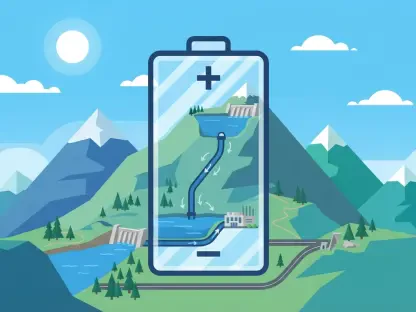
Environmental shifts in Canada are further complicating the viability of hydropower imports as Québec grapples with increasingly frequent and severe drought conditions. These record-breaking dry spells have direct consequences for reservoir levels, which serve as the physical battery for the massive hydroelectric complexes powering the Northeast. As water levels recede, the province has been forced to prioritize its internal heating and industrial needs, leading to a noticeable reduction in export capacity during peak seasons. This creates a strategic conflict between the energy needs of New England and the domestic requirements of the supplier, leaving Massachusetts vulnerable to supply shocks that are largely outside its regulatory control. The downward trend in imports since the start of 2026 suggests that the reliance on renewable hydro is actually a gamble on predictable weather patterns that no longer exist. Consequently, the state is discovering that its primary clean energy source is subject to the same climatic volatility that it was intended to mitigate.
Offshore Ambitions and Contractual Ambiguity
Navigating Corporate and Financial Roadblocks
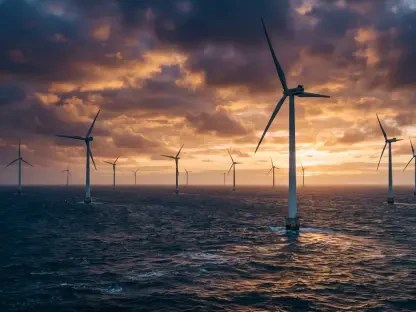
Vineyard Wind represents a significant milestone as the first major utility-scale offshore wind farm in the United States, yet its current output remains significantly below the levels promised during its inception. A combination of persistent litigation involving turbine technology providers and logistical delays has prevented the facility from reaching more than half of its projected generating capacity. While offshore wind is technically efficient during the high-wind months of winter, its seasonal variability means it offers limited relief during the peak summer months when the regional grid faces its greatest strain. The political opposition that shadowed the project during its permitting phase has been replaced by a more complex web of corporate disputes and supply chain bottlenecks that hinder rapid scaling. These bottlenecks are not unique to Massachusetts but are particularly acute here because the state has staked so much of its energy security on this specific asset. Without a fully operational offshore fleet, the region continues to suffer from a supply deficit.
Financial Transparency: Protecting the Ratepayer
The financial implications of these energy shortfalls are becoming a focal point of concern for residents who already face some of the highest utility costs in the country. Although the state’s long-term contracts with energy providers include specific penalty clauses intended to protect consumers when power delivery fails, the actual enforcement of these fines has been inconsistent and opaque. State officials have frequently engaged in confidential discussions with utility companies regarding non-delivery, a practice that prevents the public from understanding the true economic impact of technical failures. By allowing for excused periods of non-performance under certain contractual loopholes, the administration risks shifting the entire financial burden of the energy transition onto the ratepayer. This lack of transparency undermines the social contract between the state and its citizens, as residents are asked to pay a premium for green energy that is not always available when the thermostat hits extremes. For the transition to remain sustainable, there must be a clearer accounting.
The Strategic Fallout of Renewable Intermittency
The Fossil Fuel Trap: Managing Intermittency
The immediate result of the setbacks in hydropower and offshore wind has been a continued and intensive reliance on natural gas and oil to maintain the integrity of the regional power grid. This phenomenon, often referred to as the fossil fuel trap, occurs when renewable projects fail to meet their output quotas, forcing the grid to default to carbon-intensive sources to bridge the gap. During recent periods of high demand, natural gas has accounted for the vast majority of the generation mix, creating a frustrating paradox where the push for green energy actually drives higher emissions in the short term. This occurs because the regional grid requires a constant balance between supply and demand, and the current renewable infrastructure lacks the necessary storage capacity to handle the intermittency of wind and hydro. Until these massive projects can provide a reliable baseload of electricity, the state will remain tethered to the very fossil fuel infrastructure it intends to dismantle. This cycle of dependence suggests that the path to a carbon-free grid is long.
Centralization Risks: Vulnerability of the Grid
Industry analysts have begun to scrutinize the state’s strategy of prioritizing massive, centralized energy projects over a more decentralized and resilient power architecture. By focusing on a few large-scale initiatives like NECEC and Vineyard Wind, Massachusetts has inadvertently created a system with several single points of failure where one technical glitch can disrupt the entire regional grid. This centralized approach makes the energy supply more vulnerable to physical damage, corporate insolvency, or environmental shifts that affect a single geographic area. Critics of the current model argue that a more diversified portfolio—one that integrates smaller, localized energy sources such as community solar and distributed battery storage—would offer superior energy security. Such a system would be less susceptible to the all-or-nothing risks associated with billion-dollar transmission lines and massive offshore arrays. Transitioning away from state-mandated, long-term contracts toward an agile resource mix could provide the flexibility needed.
Assessing the Path Forward for Energy Security
Reconciling Rising Demand with Infrastructure Reality
The challenge of stabilizing the grid is being further compounded by a rapid increase in electricity demand from emerging technological sectors, particularly the expansion of artificial intelligence and large-scale data centers. These facilities require immense amounts of constant, reliable power to operate, placing a new level of stress on a system that is already struggling to meet current residential and industrial obligations. As the digital economy grows, the margin for error in energy production shrinks, making the reliability of clean energy sources even more critical. Massachusetts must now find a way to reconcile its ambitious climate goals with the energy-intensive needs of its growing tech sector, all while navigating a supply chain that remains fragile and prone to delays. The mismatch between the speed of digital growth and the slow pace of physical infrastructure development creates a reliability gap that could stifle economic progress if not addressed. Ensuring the grid can handle both renewables and rising load requires much more robust planning.
Future Strategy: Building a Resilient Grid
The state’s approach to energy security necessitated a fundamental shift toward a more resilient and diversified strategy that moved beyond a reliance on singular, massive projects. Policymakers recognized that the technical failures and environmental shifts experienced during the initial phases of the transition required a broader integration of localized energy solutions. Investment in advanced grid-scale storage became a primary focus to mitigate the intermittency of wind and solar, while also providing a buffer against the unpredictability of imported hydropower. This evolution involved a more transparent regulatory framework that held utility providers accountable for performance benchmarks and ensured that ratepayers were not unfairly burdened by corporate delays. By prioritizing a mix of distributed resources alongside large-scale assets, the region strengthened its ability to manage peak demand without defaulting to fossil fuel backups. This proactive stance allowed the state to align its economic growth with its environmental mandates effectively.