


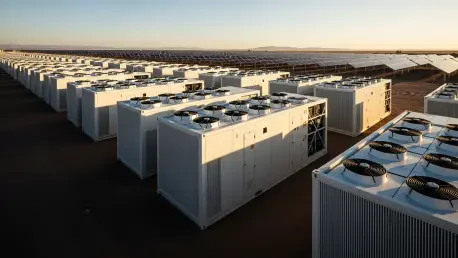

The global energy landscape is currently undergoing a fundamental paradigm shift as traditional fossil fuel generation gives way to a dynamic model centered on variable renewable sources. This transition has elevated energy storage systems from secondary backup roles to the foundational infrastructure necessary for a modern, resilient grid. As the world moves deeper into the late 2020s, the ability to store and dispatch power with precision has become the primary metric for energy security and industrial competitiveness. This shift is not merely about replacing one fuel with another but about reimagining how electricity is managed across vast distances and varying timeframes.
Mapping the Global Energy Storage Landscape and Industrial Ecosystem
The industrial ecosystem for storage is no longer just about hardware; it has evolved into a software-defined domain where intelligent algorithms manage physical assets. While electrochemical storage, particularly lithium-ion technology, remains the dominant force, the rise of utility-scale projects is being matched by a surge in residential adoption. These segments serve different but complementary needs, with large-scale installations stabilizing the macro-grid while behind-the-meter solutions provide localized resilience. The hardware itself is becoming increasingly commoditized, forcing manufacturers to differentiate through sophisticated integration and thermal management systems.
The Asia-Pacific region continues to hold a strategic advantage in this space, acting as both the primary manufacturer and a massive deployment hub. This dominance is supported by national decarbonization targets that treat energy storage as a critical utility rather than an optional add-on. Many nations in this region have integrated storage mandates into their long-term infrastructure plans, ensuring a steady demand that fuels continuous innovation. This environment has fostered a robust supply chain that spans from raw material processing to high-end power electronics, making the region the undisputed center of the global storage economy.
Analyzing the Market Forces and Technological Breakthroughs Shaping Storage
Emerging Trends and the Evolution of Intelligent Management Systems
Variable renewable energy integration has moved from a technical challenge to an absolute necessity, necessitating a more sophisticated approach to grid-balancing. As solar and wind provide a larger share of the total energy mix, the fluctuations in supply require storage assets that can respond in milliseconds. This demand has spurred advancements in Battery Management Systems, which now serve as the central intelligence of the entire asset. These systems do more than monitor voltage; they perform complex load-balancing and safety functions that were previously impossible with analog controls.
Consumer behavior is also shifting as households and businesses move toward total energy independence. This trend is visible in the rapid growth of distributed energy resources where storage is paired with rooftop solar to create a self-sustaining loop. Modern storage systems now incorporate artificial intelligence and predictive analytics to optimize the state-of-health of the battery modules. By analyzing historical performance data, these intelligent systems can anticipate degradation and adjust charging cycles to prolong the useful life of the investment.
Growth Projections and Performance Indicators Through 2033
Current data indicates a massive expansion in global capacity, moving from an established baseline of 931.7 GW in 2026 to a projected 3,735.3 GW by 2033. This growth reflects a compound annual growth rate of 21.9%, a figure that highlights the central role storage plays in modern infrastructure planning. This trajectory is supported by falling technology costs and an increasing number of high-capacity projects in Western markets, which are finally beginning to close the gap with Asian leaders.
Economic indicators suggest that while the initial capital expenditure for these projects remains high, the long-term operational efficiency gains are undeniable. Investors are increasingly looking at energy storage as a low-risk asset class because of its ability to participate in multiple revenue streams, such as frequency regulation and energy arbitrage. As the market matures, the focus is shifting from simply adding capacity to optimizing the performance and reliability of existing installations, ensuring that every kilowatt-hour stored is managed with maximum efficiency.
Navigating the Technical and Economic Hurdles of Large-Scale Deployment
The road to a storage-dominated grid is paved with significant technical challenges, particularly regarding thermal management and safety. High-density battery installations are susceptible to cascading failures if heat is not properly dissipated, a risk that grows as installations become more compact. Engineering teams are currently focused on developing more robust cooling architectures and non-flammable electrolytes to mitigate these risks. These technical hurdles must be cleared to maintain public trust and ensure the long-term viability of massive energy parks.
Supply chain volatility remains a persistent concern for the industry, especially for critical raw materials like lithium, cobalt, and nickel. Fluctuations in material costs can suddenly change the economic profile of a project, leading to delays or budget overruns. To combat this, developers are exploring alternative chemistries and modular designs that allow for easier upgrades and component replacement. Moreover, integrating these large-scale assets into aging grid infrastructures requires precise frequency regulation and voltage stability, tasks that demand sophisticated power electronics and real-time monitoring.
The Regulatory Framework and Global Standards Governing Power Stability
Governments are playing a vital role in the expansion of energy storage through targeted subsidies and tax incentives. These policies have successfully accelerated utility-scale projects that might otherwise have struggled to secure private financing. Beyond financial support, regulatory bodies are establishing new safety standards and grid-code compliance mandates to ensure that hardware from different manufacturers can operate seamlessly within a single network. This standardization is crucial for the digitalized grid, where interoperability is the key to maintaining stability.
The conversation around regulation is also shifting toward long-duration energy storage, which is needed to address seasonal fluctuations in renewable generation. Current lithium-ion systems are excellent for short-term balancing, but they are not yet economical for storing energy over weeks or months. Consequently, new regulatory frameworks are beginning to incentivize alternative technologies like flow batteries and mechanical storage. Additionally, cybersecurity protocols are being tightened to protect interconnected energy assets from digital threats, reflecting the status of the storage grid as a critical national security asset.
Forecasting the Future: From Decarbonization to Total Grid Autonomy
Solid-state batteries and alternative chemistries are on the horizon, promising to disrupt the current lithium-ion status quo with higher energy densities and improved safety. These innovations could unlock new applications, such as vehicle-to-grid technology, where millions of electric vehicles act as a distributed storage reservoir for the national grid. This vision of a “self-healing” grid relies on autonomous storage nodes that can detect and respond to local disturbances without human intervention, creating a level of resilience that was previously unattainable.
Innovation in power electronics is also a major factor in the future of the industry, particularly in the areas of DC-DC conversion and electromagnetic interference analysis. These components are the unsung heroes of the energy transition, allowing for the efficient transfer of power between different parts of the system. As microgrids become more common in remote or sensitive locations, the ability to operate independently of the main grid will depend on the sophistication of these electronic interfaces. The move toward total grid autonomy is not just a dream but a tangible goal supported by ongoing breakthroughs in semiconductor technology.
Synthesis of the Strategic Role of Energy Storage in Modern Infrastructure
The global energy transition reached a definitive stage where the role of storage was cemented as the primary enabler of a sustainable economy. Stakeholders recognized that the success of the modern grid was dependent on the marriage between advanced electrochemistry and sophisticated semiconductor technology. It was no longer enough to simply build larger batteries; the industry had to prioritize system intelligence and reliability to ensure long-term stability. This realization drove a surge in investment toward software-defined power management and predictive maintenance platforms.
Decision-makers eventually shifted their focus toward creating a circular economy for battery materials, ensuring that environmental compliance was standardized across the globe. The pursuit of long-duration storage became a top priority, allowing the grid to weather seasonal lulls in renewable production without reverting to fossil fuels. By integrating these diverse technologies into a cohesive framework, the global community established a foundation for energy security that was both carbon-neutral and economically resilient. The evolution of storage proved that a flexible, autonomous power network was the only viable path forward for a digitized civilization.







