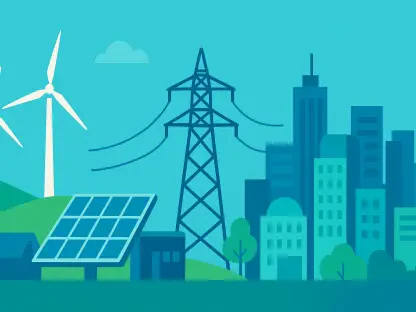

The massive expansion of renewable energy capacity requires more than just larger turbines; it demands a fundamental redesign of how power is captured and stored within the grid’s existing architecture. This shift is characterized by the move toward integrated 1.2GW-capable platforms that bridge the gap between intermittent generation and steady supply. Currently, the industry is transitioning away from siloed assets, focusing instead on hybridized systems that optimize the use of limited offshore infrastructure.
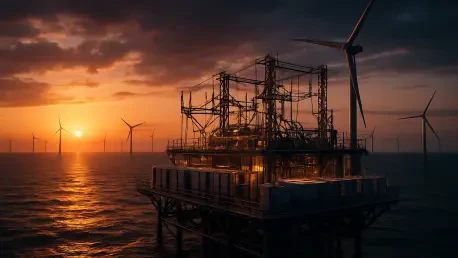
Strategic partnerships, such as the collaboration between Ørsted and Arenko, are pioneering this transition through the Iceni project. By co-locating a 300MW battery energy storage system with the 2.9GW Hornsea 3 offshore wind farm, these entities are establishing a new standard for utility-scale efficiency. This project marks a significant milestone as the first utility-scale battery directly integrated into offshore transmission infrastructure within the European market.
The significance of this development lies in its reliance on shared transmission assets. Rather than building separate, costly infrastructure for each asset, these integrated projects utilize a single grid connection point. This approach dramatically increases grid utilization and reduces the overall environmental and financial footprint of offshore energy projects, setting a precedent for future developments from 2026 to 2030.
Strategic Drivers and Growth Projections for the Co-Located Energy Market
Emerging Trends in Automated Asset Management and Real-Time Optimization
The move toward software-led operations is redefining how renewable energy is traded and managed. Platforms like Nimbus allow for the automated management of complex assets, enabling real-time trading across various power markets. This automation is necessary to handle the high-frequency decision-making required to balance wind output with battery charging and discharging cycles.
Automation effectively addresses the inherent complexities of capacity allocation between wind and storage assets. When generation fluctuates, the software determines the most profitable and grid-stabilizing path for the energy, whether that is immediate export or storage for later use. This coordination is vital for maintaining the stability of the transmission system while maximizing the commercial value of every megawatt produced.
Furthermore, “pathfinder” projects are serving as the essential blueprint for this evolution. By demonstrating that sophisticated software can manage the interplay between intermittent and flexible energy, these projects provide the confidence needed for further investment. They prove that the transition from hardware-centric to software-augmented energy systems is not just a trend but a requirement for modern grid survival.
Performance Indicators and the Quantitative Outlook for Global Integration
The 300MW/600MWh scale of the Iceni battery serves as a critical benchmark for the future of offshore battery energy storage systems. This specific duration and capacity are optimized to provide significant grid support during peak demand or periods of low wind activity. Industry experts project that integrated systems will soon outpace standalone battery developments in terms of investment returns and grid reliability contributions.
Growth projections indicate a surge in integrated offshore projects as the operational data from current developments becomes available. While the Iceni project is on track for a 2027 operational timeline, the planning and procurement phases starting in 2026 are already reflecting these new efficiency standards. Integrated systems are expected to become the dominant model for new offshore wind leases across the North Sea.
The quantitative outlook suggests that co-location reduces the levelized cost of energy by minimizing the need for redundant transmission hardware. By sharing high-voltage export cables and substations, developers can allocate more capital toward generation and storage capacity. This financial efficiency is a primary driver for the expected global expansion of the model in the coming years.
Overcoming the Technical and Commercial Hurdles of Shared Infrastructure
Navigating the complexities of forecasting and real-time power market navigation remains a primary challenge for developers. Accurate weather prediction must be combined with sophisticated market analysis to ensure the battery is available when price signals are most favorable. This requires a level of data integration that was previously unnecessary for standalone wind farms.
Moreover, there are inherent risks associated with shared grid connections, particularly regarding infrastructure dependency. If the primary transmission asset fails, both the wind farm and the battery system lose their path to the market. Addressing these risks involves implementing advanced protective relaying and redundant control systems to manage the output of two distinct asset types within a single connection point.
Strategic solutions for managing this output involve prioritizing grid services that offer the highest stability. By ensuring revenue performance exceeds traditional standalone projects, developers can justify the increased technical complexity of co-location. This approach shifts the focus from simple volume of production to the quality and timing of energy delivery to the national grid.
The Regulatory Environment and the Impact of the Offshore Transmission Network Review
The UK’s Offshore Transmission Network Review has been instrumental in modernizing grid policy to accommodate these new technologies. This review seeks to coordinate offshore transmission more effectively, moving away from the point-to-point connections that have characterized previous decades. The regulatory shift encourages the type of shared infrastructure seen in the latest Norfolk developments.
Regulatory “pathfinder” designations have a profound impact on infrastructure investment and planning. These designations allow projects to bypass certain traditional bureaucratic hurdles, provided they demonstrate innovative ways to improve grid efficiency. This status provides a level of security for investors, signaling that the project is aligned with national energy security and decarbonization goals.
Compliance requirements for integrating storage into existing transmission assets are also evolving. Operators must now adhere to stricter security measures and data-sharing protocols to ensure the integrated system does not jeopardize the stability of the wider network. As standards mature, they will provide a more predictable environment for long-term project feasibility and commercial scaling.
The Future Roadmap: Innovation and Scalability in Global Energy Infrastructure
Advanced data-driven management tools are set to become the next standard for complex energy systems. As the grid becomes more decentralized, the ability to process vast amounts of telemetry data in milliseconds will distinguish successful projects from underperforming ones. This shift toward digital twinning and predictive maintenance will further enhance the longevity of offshore assets.
Potential market disruptors, such as long-duration energy storage and offshore hydrogen production, are also on the horizon. While lithium-ion batteries currently dominate the market, new chemistries and hydrogen conversion technologies could provide the multi-day storage needed for seasonal wind variability. These innovations will likely be integrated into the existing co-location framework as they reach commercial maturity.
The global expansion of the UK’s co-location model is already being observed in international maritime markets. Nations with significant offshore potential are looking at the current Norfolk projects as a guide for their own energy transitions. Global economic conditions and aggressive decarbonization goals will continue to accelerate the adoption of these integrated energy systems worldwide.
Strategic Conclusions: Defining the Next Generation of Renewable Energy
The partnership between Ørsted and Arenko demonstrated that integrated financial and operational models were not only viable but essential for the future of the North Sea. Stakeholders identified that the success of the Iceni project necessitated a pivot toward data-driven energy management to handle the volatility of modern power markets. The findings indicated that sharing transmission assets significantly lowered the barriers to entry for large-scale storage, providing a clear path for future utility investment.
Investors and policymakers recognized the long-term utility of co-location as a primary catalyst for global decarbonization. The transition toward these integrated systems suggested that the next generation of renewable energy would be defined by its flexibility and intelligence rather than just its raw capacity. Actionable steps were established to standardize these hybrid connections, ensuring that the lessons learned from the initial 2026 deployment phases informed the global rollout of high-efficiency offshore energy hubs.