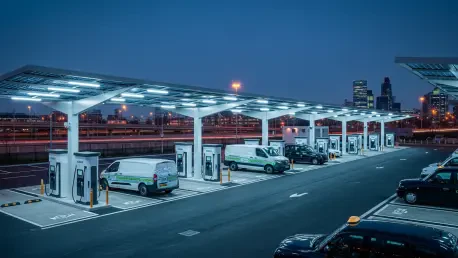

The sudden hum of a high-performance electric motor is becoming the dominant soundtrack of London’s streets, signaling a profound shift in how the city moves and breathes as the capital embraces a zero-emission transport network. This transformation is currently anchored by the launch of the Hatton Cross ultra-rapid charging hub, a facility that represents a critical milestone in the modernization of urban infrastructure. Developed through a strategic partnership between Fastned, a European leader in high-speed charging solutions, and Places for London, the commercial property arm of Transport for London, this site serves as the inaugural location in an ambitious plan to establish 25 similar hubs across the city. As electric vehicle registrations are projected to exceed one million by 2030, the necessity for robust, high-powered hardware has moved from a luxury to an essential requirement for maintaining the city’s economic and environmental momentum. This initiative aligns seamlessly with the Mayor’s goal of installing 40,000 charge points city-wide, ensuring that the transition to electric power remains efficient and accessible for a rapidly growing population of drivers.
Empowering the Commercial Fleet and Ensuring Inclusive Access
Technological excellence serves as the primary driver behind these new hubs, which are specifically designed to eliminate the logistical delays that once hindered the adoption of electric vehicles by professional drivers. Each station is equipped with 400kW chargers that are capable of delivering up to 100 miles of range in as little as five minutes, a speed that mirrors the convenience of traditional gasoline refueling. This level of performance is particularly vital for the city’s commercial sector, including zero-emission capable black cabs, delivery vans, and emergency vehicles like ambulances. By placing these high-speed assets along key freight and transit routes, the network ensures that the professional workforce can minimize downtime and maintain rigorous delivery schedules without the frustration of waiting hours for a battery to reach full capacity. Furthermore, the reliance on 100 percent renewable energy, supplemented by signature solar canopies that provide weather protection, reinforces the commitment to a genuinely green supply chain that benefits the local environment and the global climate.
Inclusivity has been integrated into the very blueprint of this infrastructure, addressing a common criticism of earlier charging networks that often ignored the needs of drivers with mobility challenges. To rectify this, the new ultra-rapid hubs are being constructed in accordance with the latest British Standards Institution guidance, which mandates the inclusion of extra-wide bays and fully accessible charging equipment. These design choices ensure that every driver, regardless of physical ability or vehicle type, can navigate the charging process with safety and ease. This equitable approach is essential for fostering public trust in new technology, as it guarantees that no segment of the population is left behind during the transition to cleaner energy. By creating a comfortable, well-lit, and accessible environment, the city is removing the hidden barriers to entry for electric vehicle ownership, making it a viable option for all residents rather than a niche choice for a few. This focus on human-centric design, combined with high-powered hardware, establishes a new standard for public utility projects in dense urban centers.
Strategic Site Selection: Bridging the Gap for Urban Residents
The selection of Hatton Cross as the flagship site reflects a data-driven approach to urban planning that prioritizes high-traffic areas and regional connectivity. Situated near the M25 motorway and Heathrow Airport, the hub functions as a vital intersection for local commuters and international travelers alike, providing a reliable power source where it is needed most. This location is particularly significant because it addresses one of the most substantial hurdles to electric vehicle adoption in London: the lack of private off-street parking. Since a vast majority of the city’s residents do not have access to a personal driveway or garage where they could install a home charger, they must rely entirely on the public network for their energy needs. By providing concentrated, high-performance hubs in strategic locations, the city is effectively replacing the traditional gas station model with a cleaner alternative that fits into the existing routines of urban dwellers who otherwise might have viewed electric mobility as impractical.
Building on the success of the initial launch, the partnership has secured a robust pipeline of future locations intended to create a cohesive and dependable city-wide network. Flagship sites are already moving through the development phases in areas such as Hanger Lane and East Finchley, with additional hubs planned for boroughs like Newham and Haringey from 2026 to 2028. This expansion is designed to shift the infrastructure away from fragmented, slow-charging points that often suffer from poor reliability and toward high-performance clusters that offer a consistent user experience. By focusing on density and power, the city is building a resilient grid that can handle the increased demand as more residents trade their internal combustion engines for electric alternatives. This systematic rollout ensures that as the number of electric vehicles on the road increases, the infrastructure is already in place to support them, preventing the bottlenecks and queues that can occur in less prepared metropolitan areas.
Driving Long-Term Economic Growth and Public Reliability
Beyond the immediate benefits of cleaner air and faster charging, these ultra-rapid hubs are playing a pivotal role in closing the regional “green skills gap” by fostering new career opportunities within the local community. The project includes specific commitments to offer apprenticeships and work experience placements, ensuring that the next generation of technicians and engineers is equipped with the expertise required to maintain a high-tech transport network. Furthermore, the revenue-sharing model embedded in the partnership means that profits generated from the charging hubs are reinvested back into the city’s broader public transport system. This creates a self-sustaining financial cycle where the growth of electric vehicle usage directly supports the improvement of bus routes, tube lines, and other essential services. Such a model demonstrates how green infrastructure can serve as an economic engine, driving prosperity while simultaneously meeting strict climate mandates and improving the overall quality of urban life for all citizens.
The successful implementation of these ultra-rapid hubs established a benchmark for municipal infrastructure projects by prioritizing speed, reliability, and social equity. Authorities focused on the deployment of 400kW hardware that effectively neutralized the psychological barrier of range anxiety for thousands of new adopters who previously hesitated to switch from fossil fuels. Furthermore, the integration of workforce development programs ensured that the transition did not leave the local labor market behind, but instead fortified it with specialized technical knowledge. By reinvesting revenues directly back into the Transport for London network, the city fostered a sustainable financial ecosystem that decoupled green growth from a total reliance on external government subsidies. Future city planners recognized that the key to widespread electrification resided not just in the total number of chargers installed, but in the strategic placement of high-density hubs at critical transit nodes. This approach provided a clear roadmap for other global cities looking to modernize their energy networks while enhancing the daily experience of their residents.