
Medical aid and humanitarian logistics in Syrian conflict zones are increasingly reliant on electric vehicles powered by solar arrays, which operate at a fraction of the cost of fuel-based transport. This shift represents a broader transformation of the national energy landscape, which has evolved from a centrally managed state utility into a fragmented, consumer-driven economy out of absolute necessity. Before the prolonged conflict decimated the physical infrastructure, the state-run grid provided a steady flow of electricity to nearly every corner of the country. However, as power plants and transmission lines were systematically damaged, the centralized model collapsed, leaving a vacuum that could not be filled by traditional reconstruction efforts. In this environment, solar technology emerged not as an environmental choice, but as a primary tool for survival. The decentralization of power has allowed households and essential services to bypass the failed state infrastructure entirely, creating a resilient, albeit localized, energy network. This unplanned transition marks one of the most significant shifts toward renewable energy in a fragile state, proving that modular, off-grid solutions can maintain basic human rights and economic activity even when the national backbone has been severed for years.
From Total Blackout to a Solar Revolution
The Scale of the Energy Crisis and the Rise of Off-Grid Solutions
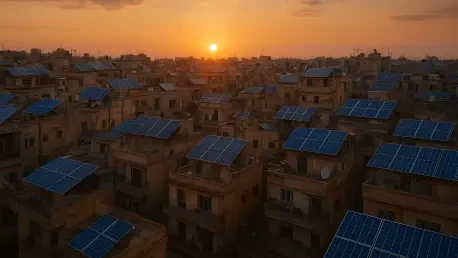
The collapse of the Syrian energy sector is reflected in the staggering decline of its generation capacity, which plummeted from approximately 9.5 gigawatts to a mere 1.6 gigawatts by the start of the current period. This massive deficit has forced millions of residents to live with a grid that offers less than two hours of electricity per day, effectively plunging the country into a state of permanent energy poverty. In the absence of a reliable public utility, a massive, informal solar boom has taken hold, with industry estimates suggesting that nominal off-grid capacity has surged from 250 megawatts to over 2 gigawatts between 2026 and 2028. Approximately one-quarter of Syrian households now utilize some form of private solar equipment to power their basic needs, such as lighting, refrigeration, and communication. This movement is unique because it is entirely consumer-led and lacks the oversight or subsidies typically found in green energy transitions. Citizens have taken it upon themselves to source panels and batteries, often through informal trade networks, to ensure their own survival.
The speed of this adoption highlights a critical trend in modern conflict zones: when the state fails to provide essential services, technological modularity becomes the primary driver of resilience. Unlike massive thermal power plants that require years to repair and secure, solar photovoltaics can be deployed in a matter of days at the point of consumption. This rapid deployment has created a patchwork of energy independence across the country, where individual rooftops and small business clusters function as autonomous microgrids. However, this transition remains largely unregulated, leading to a market saturated with varying levels of hardware quality and technical expertise. Despite these challenges, the cumulative impact of thousands of small-scale installations has done more to restore basic functionality to the Syrian economy than any centralized project could have achieved in the same timeframe. The sheer volume of solar energy now being generated privately demonstrates that distributed renewable energy is no longer just a peripheral supplement but has become the primary source of power for a significant portion of the population.
Sustaining Vital Services Through Community Power
In rural areas and smaller municipalities, community-led solar initiatives have become the primary lifelines for basic infrastructure that the national grid no longer reaches. The village of Khirais serves as a pertinent example of this localized success, where a centralized solar array installed on a community center has provided consistent power to twenty-four households for a nominal monthly fee. Before this installation, the village faced a total lack of power that hindered reconstruction and daily survival; children were unable to study after sunset, and food spoilage was a constant threat. Now, the availability of 24/7 electricity has fundamentally changed the socio-economic trajectory of the community. Similar projects are popping up across the region, often facilitated by non-profit organizations or local cooperatives that pool resources to purchase larger, more efficient systems. These community hubs do more than just provide light; they offer a stable platform for education, local governance, and communal social services that would otherwise remain dormant under the weight of the energy crisis.
Beyond domestic use, the transition to solar energy is proving indispensable for the survival of the agricultural sector and medical services. High fuel prices and the scarcity of diesel have made traditional water pumps and generators prohibitively expensive for farmers, threatening food security in an already vulnerable region. In response, solar-powered irrigation systems have become widespread, allowing for the consistent cultivation of crops without the logistical burden of fuel procurement. In the medical sector, clinics that once relied on sporadic generator power are now using solar arrays to maintain cold chains for vaccines and to power life-saving equipment. Furthermore, the adoption of solar-powered electric vehicles for humanitarian aid has significantly reduced operational costs, allowing organizations to redirect limited funds toward direct patient care. This shift toward renewable energy in the public service sector is not just about cost-savings; it is about establishing a level of operational independence that is immune to the fluctuations of a volatile fuel market and a broken national infrastructure.
The Socio-Economic Divide of the Energy Transition
Financial Barriers and the Remittance Economy
While the global price of solar technology has continued to decline, the upfront cost of a functional home system remains an insurmountable barrier for the average Syrian family. A basic setup capable of powering a refrigerator and lighting costs roughly $1,000, a figure that far exceeds the annual income of many citizens living in the current economic climate. This has led to an energy market where access to reliable electricity is increasingly dictated by financial status and connections to the global economy. Families who receive remittances from relatives working abroad or those with access to foreign currency are the primary beneficiaries of the solar boom. They are able to purchase high-quality lithium batteries and high-efficiency panels, effectively insulating themselves from the energy crisis. In contrast, those without such financial networks are forced to remain dependent on expensive, polluting diesel generators or live in total darkness, creating a stark divide in the quality of life and economic opportunity between the wealthy and the poor.
This reliance on the remittance economy has also influenced the technical landscape of the energy transition, as most high-end solar equipment must be imported from international markets. Because the local currency remains volatile, prices for solar components are almost always pegged to the U.S. dollar, further alienating low-income households. The result is a stratified society where energy security has become a luxury item rather than a fundamental public service. This disparity is particularly visible in urban centers, where affluent neighborhoods are dotted with rooftop arrays while poorer districts remain shrouded in darkness during the frequent grid outages. Experts from the Carboun Institute have pointed out that without systemic changes to how energy is financed, the solar revolution could inadvertently solidify existing social inequalities. The transition is currently favoring those who already have the means to adapt, while the most vulnerable members of society are left behind, struggling with the rising costs of traditional energy sources that are becoming both rarer and more expensive.
Addressing the Two-Tier Energy Reality
To prevent the total stratification of energy access, analysts and policy advocates are calling for new frameworks that emphasize equity in the distribution of renewable resources. One proposed solution involves “power-sharing” mandates for large-scale commercial or agricultural solar installations. Under such a system, any large entity receiving concessional financing or international aid for solar projects would be required to divert a percentage of their generated power to adjacent low-income residential areas. This approach would leverage the surplus capacity of industrial-grade systems to provide a basic level of energy to those who cannot afford their own panels. By integrating social responsibility into the financial structure of renewable energy projects, the international community can ensure that the transition serves the broader public good rather than just the interests of the elite. This would transform solar energy from a private asset into a shared community resource that supports the collective resilience of the population.
In addition to regulatory changes, there is a growing need for targeted humanitarian interventions that focus specifically on energy equity for the most marginalized groups. Non-governmental organizations are beginning to pivot toward providing “energy grants” or subsidized equipment to female-headed households, the elderly, and displaced persons who lack the capital to participate in the solar market. These programs are essential because they address the root cause of the divide: the high entry cost of green technology. Furthermore, the creation of local maintenance cooperatives can help ensure that even low-cost systems remain functional over the long term, preventing a cycle where poor families invest in low-quality hardware that fails after a few months. By combining financial support with technical training, these initiatives aim to create a more inclusive energy landscape. Without such deliberate efforts to bridge the gap, the Syrian energy transition will continue to reflect and amplify the deep-seated economic inequalities that have been exacerbated by years of conflict and isolation.
Global Finance and the Future of Fragile Grids
Decentralization as a Strategy for Stability
The decentralized nature of Syria’s solar boom provides a unique form of security that a traditional national grid cannot match in a conflict-affected environment. Centralized power plants and high-voltage transmission lines are inherently vulnerable targets; a single act of sabotage or a technical failure at a primary substation can leave an entire city without power. In contrast, a distributed network consisting of thousands of independent rooftop systems and small community microgrids has no single point of failure. This fragmentation makes the overall energy supply much more resilient to physical damage and political instability. For a fragile state, this model offers a path toward stability that does not rely on the immediate restoration of a massive, state-run bureaucracy. By dispersing the generation of power across the population, the risk of a total national blackout is significantly reduced, ensuring that local economies and essential services can continue to function even during periods of renewed instability.
However, while decentralized solar provides an immediate and resilient solution for residential and light commercial use, it currently lacks the capacity to support the heavy industrial growth required for a full national recovery. Large-scale manufacturing, steel production, and heavy construction require the massive, consistent loads that only a synchronized national grid or large industrial power plants can provide. Decentralized systems are often limited by battery capacity and the intermittent nature of solar energy, making them unsuitable for industries that require high-voltage, 24/7 operations. Therefore, the strategic goal for the future is not to replace the national grid with solar panels, but to create a hybrid system where local resilience and a central backbone work in tandem. This would allow the country to maintain a baseline of stability through distributed renewables while slowly rebuilding the industrial capacity necessary for long-term economic growth. The challenge lies in designing a regulatory and technical framework that can manage the integration of these two very different energy models.
The Essential Role of International Investment
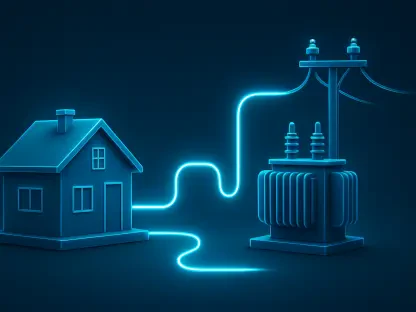
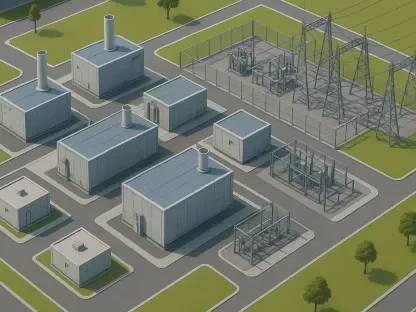
The current landscape of global climate finance often overlooks fragile and conflict-affected regions, leaving a significant gap in the resources needed to rebuild the Syrian energy sector. In 2026, only a small fraction of the Green Climate Fund’s project approvals were directed toward vulnerable nations, as international investors typically favor more stable environments with clear regulatory frameworks. This lack of funding has forced Syria to rely on informal markets and limited humanitarian aid, which are insufficient for a comprehensive energy rebuild. To move beyond temporary fixes, the international community must recognize that energy infrastructure is a foundational component of peacebuilding and stability. Investment should not only focus on providing more solar panels but also on repairing the “invisible” infrastructure of the national grid, such as transformers, substations, and metering systems. These components are essential for creating a modern, efficient network that can eventually integrate the vast amount of private solar power currently being generated.
Strategic investment in the energy sector would also help establish technical standards that are currently missing from the informal Syrian solar market. A lack of regulation has led to the widespread use of substandard equipment that is both inefficient and potentially dangerous. International finance could support the creation of testing laboratories and certification programs to ensure that the hardware entering the country meets basic safety and performance requirements. Moreover, by funding the restoration of interconnectors with neighboring countries, international partners could help Syria stabilize its domestic supply and participate in regional energy trade. This would provide the country with a much-needed source of revenue and help integrate it back into the regional economy. The goal is to move from a state of emergency energy management to a structured, sustainable growth model that leverages both international capital and local ingenuity to create a modern and reliable power system for all citizens.
Strategies for a Hybrid Energy Future
Policy Innovations and the Bangladesh Model
To address the financial barriers preventing widespread solar adoption, policymakers are increasingly looking toward the IDCOL model from Bangladesh as a potential blueprint for success. This model utilized a combination of capital subsidies and microfinance to bring solar home systems to millions of rural households who lacked formal credit histories. In the Syrian context, a similar approach could involve the use of credit guarantees to lower the risk for local banks to lend to small-scale solar adopters. By providing a financial safety net, the international community could encourage the local banking sector to offer affordable, long-term loans for renewable energy equipment. This would empower middle- and low-income families to invest in high-quality systems, reducing their dependence on expensive fuel and improving their long-term economic outlook. Pre-financing for installers could also be a viable strategy, allowing companies to lower their upfront prices by receiving a portion of the project cost from a central fund.
These financial innovations are necessary because traditional banking systems often fail in fragile states where collateral and formal employment are rare. By shifting the focus toward community-based lending and micro-credit, the energy transition can become more inclusive and sustainable. Furthermore, the involvement of local partner organizations is crucial for the delivery and maintenance of these systems, as they possess the ground-level knowledge required to operate in complex environments. This localized approach ensures that the technology is not just delivered but is also supported by a network of technicians and spare parts. By combining international expertise with local implementation, the country can build a robust market for renewable energy that is not reliant on continuous humanitarian aid. This strategy would transform the solar boom from a temporary survival mechanism into a permanent engine for rural and urban development, providing a stable foundation for the broader economic recovery of the nation.
Transitioning Consumers into Prosumers
The most effective long-term strategy for a rebuilt energy grid involved the implementation of net-metering systems, which allowed residential and commercial users to sell their surplus solar energy back to the national utility. This technical and regulatory shift turned ordinary consumers into “prosumers,” active participants in the energy market who could earn a modest income from their investments in solar technology. By incentivizing the feed-in of private solar power, the state was able to manage the overall grid load more effectively and reduce the need for massive new fossil fuel plants. This bidirectional flow of energy not only improved the efficiency of the national system but also provided a predictable revenue stream for families who had invested in high-capacity arrays. The technical standards required for such a system were established through international collaboration, ensuring that the repaired grid could handle the fluctuations of thousands of small-scale renewable inputs without compromising stability.
Financial planners recognized that a hybrid approach was the only way to balance immediate resilience with long-term industrial growth. The Syrian experience demonstrated that while decentralized solar provided the necessary agility to survive a crisis, a unified public grid remained the essential backbone of a modern economy. By the end of the reconstruction period, the country had successfully integrated millions of rooftop panels into a modernized transmission network, creating one of the most sophisticated distributed energy systems in the region. This transition was supported by a suite of innovative financial tools, including green bonds and credit enhancement schemes, which attracted the necessary capital to rebuild the country’s “invisible” infrastructure. Ultimately, the successful merger of private initiative and public planning provided a blueprint for other fragile states. The restoration of the energy sector did not just bring back the lights; it fostered a more equitable and resilient society where energy was treated as a shared resource and a catalyst for national renewal.