
The global race toward a sustainable energy grid has placed an unprecedented amount of pressure on traditional engineering workflows that were originally designed for a slower era of infrastructure development. At Siemens Energy, the transformation of these processes is no longer a distant objective but a tangible reality driven by the deployment of sophisticated artificial intelligence frameworks across the entire lifecycle of power generation technology. By integrating advanced machine learning models directly into the technical environment, the organization has begun to bridge the gap between human expertise and automated precision, allowing for a radical reduction in the time required for complex design iterations. This evolution is spearheaded by the adoption of industrial-grade generative AI tools that synthesize decades of internal proprietary data with real-time operational feedback from active power plants. The result is a shift from static engineering to a dynamic, iterative model where AI serves as a force multiplier for engineers.
Integrating Generative Intelligence Into Industrial Workflows
The collaboration between Siemens Energy and major technology providers has resulted in the implementation of the Industrial Copilot, an AI-driven assistant specifically calibrated for the rigors of heavy engineering and manufacturing. This system allows mechanical and electrical engineers to interact with complex design software using natural language, significantly lowering the barrier to entry for advanced simulation tasks and data retrieval from massive technical libraries. Instead of manually scouring thousands of pages of legacy documentation to find specific pressure tolerances or material specifications, engineers can now query the AI to extract precise data points within seconds. This capability extends beyond simple search functions, as the system is capable of generating initial code for programmable logic controllers and industrial automation sequences. By automating these repetitive yet critical tasks, the workforce is liberated to focus on higher-level system architecture and creative problem-solving which are essential for innovation.
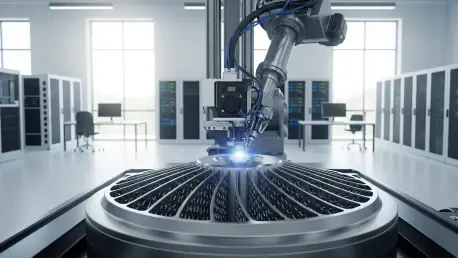
Building on these digital advancements, one of the most significant impacts of this technological shift is observed in the optimization of high-performance components such as gas turbine blades, where aerodynamic efficiency and thermal resistance are paramount. AI algorithms are now employed to conduct thousands of simultaneous computational fluid dynamics simulations, identifying optimal geometries that would be impossible for a human designer to visualize or calculate manually. These AI-generated designs are frequently paired with additive manufacturing techniques, allowing for the creation of intricate cooling channels within turbine components that increase overall engine efficiency. This synergy has accelerated the development cycle of new turbine models, reducing the time from conceptual drawing to physical prototype by nearly fifty percent in some departments. The ability to rapidly iterate on these complex geometries ensures that every piece of hardware is pushed to its theoretical limit, maximizing energy output.
Strategic Implementation: Building the Autonomous Future
As these AI tools become more deeply embedded in the corporate fabric, the role of the engineer is undergoing a fundamental shift from a manual creator to a high-level orchestrator of autonomous systems. This cultural and professional evolution requires a new set of skills, focusing less on rote calculation and more on the ability to define the parameters and constraints within which the AI operates. Training programs have been established to ensure that the workforce can effectively validate AI-generated outputs, maintaining a crucial human-in-the-loop oversight that guarantees safety and regulatory compliance. This transition has fostered a collaborative environment where cross-disciplinary teams use AI as a common language to bridge the gap between software development, thermodynamics, and structural engineering. The resulting multidisciplinary synergy is accelerating the pace of energy innovation, allowing for the rapid deployment of hydrogen-capable turbines and advanced carbon capture technologies.
The successful integration of artificial intelligence into the engineering domain required a deliberate focus on data hygiene and the establishment of rigorous governance frameworks to ensure long-term scalability. Engineering leaders recognized that the value of AI was entirely dependent on the quality of the underlying information architecture, which necessitated a comprehensive overhaul of how technical data was categorized and stored. Moving forward, the priority shifted toward the democratization of these tools across all global regions, ensuring that local engineering teams could leverage the full weight of the company’s collective intelligence. Organizations that aimed to replicate this success identified that upskilling the workforce in prompt engineering and data literacy was just as important as the hardware itself. By treating AI as a collaborative partner rather than a replacement for human ingenuity, the industry began to solve the most complex challenges of the energy transition with greater speed.