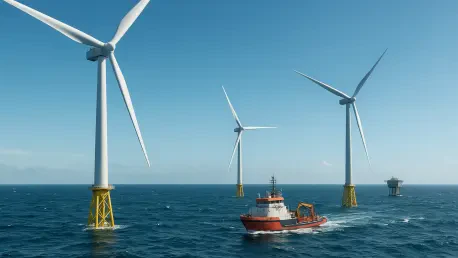

By scheduling maintenance on healthy turbines during periods of predicted high volatility, operators can use downtime as a virtual battery to smooth out aggregate fluctuations. This strategic shift represents a departure from traditional reactive maintenance, where technicians wait for a failure before intervening. In the current energy landscape, wind power serves as a foundational pillar of the global push toward carbon neutrality, yet the infrastructure itself is subject to some of the most punishing environmental conditions on the planet. Offshore turbines, for instance, must withstand constant exposure to corrosive salt spray, high humidity, and gale-force winds that stress mechanical components to their limits. These operational realities mean that maintenance and operations can easily consume more than 30% of a project’s total lifecycle budget. Consequently, the industry has long sought a method to harmonize the need for frequent mechanical upkeep with the requirements of grid operators, who demand a steady and predictable flow of electricity despite the inherent randomness of the wind. The development of AI-driven frameworks like MEX-DRL offers a promising solution by treating maintenance not as a dynamic tool for balancing the load.
Balancing Energy Production and Power Consistency
Strategic Scheduling: The Virtual Battery Concept
The primary tension in wind farm management exists between the desire to maximize energy output and the necessity of maintaining grid stability. Grid operators require a consistent flow of electricity to prevent destabilizing the electrical infrastructure, yet wind energy is inherently volatile due to changing weather patterns. Traditional maintenance usually exacerbates this problem by taking turbines offline during random intervals, which can cause sudden, sharp drops in production. However, the MEX-DRL framework turns this downtime into a strategic advantage by precisely timing interventions. Instead of viewing a stopped turbine solely as a loss, the system identifies “discretionary” maintenance opportunities. By pulling a turbine out of service exactly when its individual output is predicted to fluctuate wildly, the overall farm performance remains much smoother.
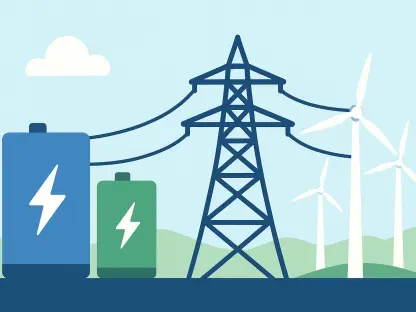
This innovative approach allows the wind farm to function as a self-regulating system that dampens volatility without requiring expensive external battery storage. When the AI predicts that certain turbines will experience a significant ramp-up or ramp-down in power, it schedules non-urgent repairs for those specific units. This effectively removes the most volatile segments of energy from the total aggregate output, resulting in a cleaner and more predictable power curve for the grid. By utilizing these maintenance windows as a buffer, operators can satisfy the strict stability requirements of energy regulators while simultaneously ensuring that the physical hardware receives the attention it needs to avoid catastrophic failure. This methodology transforms the logistics of repair from a secondary operational burden into a primary tool for sophisticated energy management and grid synchronization.
Technical Architecture: Soft Actor-Critic and Attention Mechanisms
The backbone of this advanced maintenance system is the Soft Actor-Critic algorithm, which enables the AI agent to learn effectively from both real-world data and simulated environments. Unlike simpler algorithms that struggle with complex decision-making, this framework is designed to handle the high-dimensional challenges of a modern wind farm. The “agent” processes vast amounts of Supervisory Control and Data Acquisition data to understand the unique health signatures of every turbine. By balancing exploration and exploitation, the AI discovers scheduling strategies that a human operator might overlook, especially when managing dozens or hundreds of turbines simultaneously. This allows for a level of precision in maintenance timing that significantly reduces unnecessary downtime while ensuring that every service hour is spent on the most impactful tasks.
What makes this specific AI architecture unique is the integration of a multi-head self-attention mechanism, the same mathematical foundation that powers modern large language models. This allows the AI to process three distinct data streams: historical performance metrics, current turbine health status, and future weather-based power forecasts. By mapping these variables into a shared space, the model can calculate the complex relationships between different turbines and different points in time. For instance, the AI can determine how a maintenance decision made for one turbine in the morning will impact the entire farm’s total generation capacity by the afternoon. This holistic view prevents the common mistake of scheduling too many repairs at once, which would leave the farm unable to meet its power delivery commitments during peak wind conditions.
Enhancing Transparency and Operational Trust
The Importance: Interpretable AI in Industrial Settings
One of the most significant hurdles to adopting artificial intelligence in heavy industry is the “black box” nature of most deep learning models. Engineers and site managers are often hesitant to trust automated commands if they cannot understand the underlying logic, especially when those commands involve shutting down multi-million dollar pieces of equipment. MEX-DRL addresses this concern through an interpretable design that allows operators to visualize “attention weights.” This feature provides a window into the AI’s decision-making process, showing exactly which data points the model prioritized when it issued a specific maintenance order. This transparency is crucial for building the trust necessary to move toward fully autonomous operations in the renewable energy sector.
When the system is in operation, these visualizations allow human technicians to verify that the AI is acting on sound principles rather than statistical anomalies. For example, when a turbine starts showing signs of an impending bearing failure, the model’s attention weights shift immediately to that specific machine’s heat and vibration sensors. Conversely, when all turbines are healthy, the weights might shift toward weather forecast data to identify the best time for preventive lubrication. By providing this level of inspectable evidence, the framework aligns the power of machine learning with the intuition and experience of human experts. This collaborative approach ensures that the transition to AI-driven management is seen as an enhancement of human capability rather than a mysterious and risky replacement of professional judgment.
Validating Performance: Insights From Field Testing
The effectiveness of the MEX-DRL framework was validated using three years of rigorous performance data from an active wind farm in the United Kingdom. During the testing phase, the AI-driven approach was compared against traditional industry-standard optimization methods, including rule-based logic and genetic algorithms. The results were definitive: the AI framework generated significantly more total megawatt-hours while simultaneously reducing output fluctuations by nearly 17%. While traditional models often struggled to balance the immediate need for repairs with the long-term goal of maximizing energy capture, the reinforcement learning agent proved much more adept at navigating these conflicting priorities. It demonstrated a superior ability to prioritize urgent faults while still optimizing the broader maintenance schedule.
One of the most impressive findings from the field data was the system’s responsiveness to actual hardware breakdowns. In many simulation scenarios, standard optimization models would ignore a critical fault to keep a farm-wide schedule on track, leading to potential long-term damage. In contrast, the MEX-DRL model assigned repair crews to over 90% of sudden shutdown events almost immediately. This high level of responsiveness ensures that the farm remains at peak operational capacity as much as possible. By outperforming established mathematical models in both energy yield and grid stability, the AI proved that it could handle the dynamic and often chaotic reality of wind farm operations, providing a reliable blueprint for the next generation of renewable energy asset management and maintenance.
Resilience and Future Developments in Automated Maintenance
Robustness: Managing Forecast Uncertainty
A primary concern for any AI system that relies on numerical weather predictions is the inherent uncertainty of the atmosphere. Forecasts are rarely perfect, and an AI that is too sensitive to minor errors could make poor decisions that lead to grid instability or lost revenue. To test the resilience of the MEX-DRL framework, researchers deliberately injected significant “noise” into the power and weather predictions during the simulation phase. Even when the input data was intentionally degraded by up to 30%, the system maintained its performance with only a negligible drop in total energy generation. This characteristic, often called “graceful degradation,” is essential for technologies intended for real-world deployment where sensors can fail and weather patterns are unpredictable.
The ability of the model to remain stable in the face of imperfect data suggests that it is ready for the complexities of the current energy market. In 2026, as wind farms continue to expand into deeper offshore waters where data collection is even more challenging, this robustness becomes a critical competitive advantage. The framework does not require perfect foresight to deliver value; instead, it uses its reinforcement learning training to make the best possible decision given the available evidence. This flexibility ensures that operators can rely on the system even during extreme weather events or periods of sensor malfunction. By prioritizing the most probable outcomes while hedging against uncertainty, the AI maintains a steady hand on the controls, ensuring that the wind farm continues to contribute reliably to the regional power grid.
Operational Challenges: The Road to Full Autonomy
While the current achievements of MEX-DRL are substantial, developers recognized that full-scale automation required addressing more granular logistical constraints. Real-world maintenance involves managing diverse repair crews with different specialized skills, coordinating the availability of spare parts, and navigating “accessibility windows” created by harsh sea states or high winds. In the transition from 2026 to 2028, researchers planned to evolve the framework into a multi-agent coordination system. In this future iteration, different AI agents would represent individual service teams, allowing the system to optimize not just when a turbine is serviced, but which specific crew is best suited for the task based on their location and expertise. This level of coordination would further reduce travel time and operational costs.
The integration of advanced AI into wind farm management signaled a transformative era for the renewable energy industry. By successfully demonstrating that maintenance could be used as a proactive tool for grid stabilization, the project provided a clear path toward more efficient and reliable green energy. Engineers and stakeholders observed that the system not only improved the bottom line but also enhanced the overall resilience of the electrical grid. As the industry looked forward, the focus shifted toward integrating these AI frameworks with broader energy storage systems and smart grid technologies. The lessons learned from the deployment of MEX-DRL served as a foundation for building a truly autonomous energy infrastructure that was capable of meeting the heavy demands of a carbon-neutral society without compromising on performance or stability.