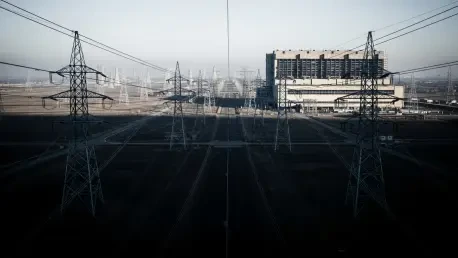

Christopher Hailstone, our seasoned utilities expert, joins us to shed light on a historic and highly controversial shift in American energy policy. For the first time in nearly 50 years, the U.S. Department of Energy has invoked Section 202(c) of the Federal Power Act to forcibly prevent power plants from retiring, ordering them to remain operational to stave off a nationwide reliability emergency. With a deep background in grid security and electricity delivery, Hailstone provides an insider’s look at the mechanical, financial, and regulatory friction that occurs when the government tries to breathe life into “zombie” coal plants that were already marked for the scrap heap. This conversation moves beyond the headlines to examine the physical reality of decaying infrastructure and the logistical nightmares facing utilities caught between federal mandates and the practical limits of aging machinery.
Our discussion centers on the dramatic 65% decline in energy production from plants under emergency orders and the technical reasons why these facilities are failing to meet expectations. We explore the high costs of deferred maintenance, the legal battles brewing in federal courts, and the growing disconnect between administrative reliability goals and the actual capacity of the American power grid to sustain legacy assets.
We have seen a staggering 65% drop in combined output from these emergency units compared to the same period last year; how do you interpret this disconnect between the DOE’s reliability goals and the actual performance on the ground?
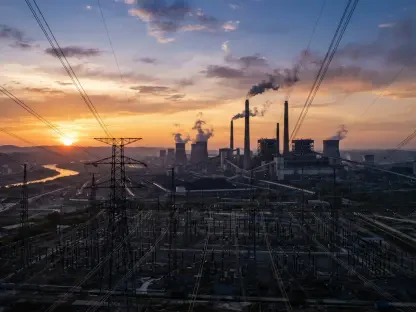
The numbers tell a story of a policy that is struggling to translate from paper to the power lines. When you look at the fact that five of these plants produced only 1.5 million MWh in the first quarter of this year, compared to 4.3 million MWh in the same period just a year ago, you realize that an emergency order doesn’t magically make a plant more productive. It is a bit like forcing an elderly marathon runner to stay on the track after they’ve already crossed the finish line; they might stay in the race, but they aren’t going to be breaking any records. We see this most clearly with the 730-MW Centralia plant in Washington, which hasn’t produced a single watt of electricity since its order took effect on January 1st, or the Eddystone units in Pennsylvania that are essentially idling at a 0.5% capacity factor. Even at the J.H. Campbell plant in Michigan, which is a massive 1,420-MW facility, we’ve seen the capacity factor tumble from a robust 66% average down to just 46%. This massive gap exists because the DOE is prioritizing “availability” over “generation,” but the reality is that many of these units are simply too worn out to run consistently. The “reliability emergency” the DOE is trying to solve is hitting the hard wall of physical decay, and the 65% drop in output is a glaring red flag that these assets may not be the safety net the government hopes they are.
Industry observers often note that utilities stop investing “top dollar” in plants slated for closure, so what are the physical and financial consequences of forcing these aging facilities to stay online at the eleventh hour?
It is a visceral, mechanical struggle that you can almost feel in the vibration of the turbines. When a utility plans to shutter a plant, they naturally stop the expensive, deep-cycle maintenance required for long-term health; why fix a roof on a house you’re about to demolish? Now, these owners are being told to reverse course, and the bills are coming due all at once. For example, CenterPoint Energy is looking at a massive $20.5 million investment just to keep their 104-MW Culley Unit 2 from falling apart, a project that would require taking the plant offline for 14 weeks. That is a huge amount of money for an asset that previously operated at a 22% capacity factor and has now dropped to 14% under the emergency order. At the Craig Unit 1 in Colorado, operators are having to scramble to repair specialized equipment like feedwater heater tubes, ash blowers, and side stream filter pumps—parts that were maintained just enough to reach the finish line, but not enough to start a new lap. These aren’t just minor tweaks; they are the vital organs of the plant. There is a palpable sense of frustration among engineers who are being asked to patch up feedwater systems and blow out ash from units that were supposed to be cold by now, and the financial risk is that these “deferred maintenance” projects will continue to balloon in cost as the DOE keeps reissuing these 90-day orders.
Several utilities and organizations are now challenging these orders in court; what does this tension tell us about the current state of federal oversight versus local utility management?
We are witnessing a profound tug-of-war over who truly understands the risks to the grid. On one side, you have the DOE issuing string after string of 90-day emergency orders to keep units like the 847-MW Schahfer plant in Indiana alive, despite the fact that one of its units hasn’t even run since last summer. On the other side, you have utility leaders like Michael Roeder from CenterPoint and the management at Tri-State Generation and Transmission Association who are literally begging the government to let them retire these assets. They are using language like “neither practical nor financially responsible” in their letters to Secretary Chris Wright. When Tri-State and Platte River Power Authority take the DOE to the U.S. Appeals Court for the District of Columbia Circuit, it signals a complete breakdown in the collaborative nature of grid management. The utilities are essentially saying, “We have done the math, we have checked the boilers, and we know these plants are liabilities,” but the federal government is looking at the macro-level reliability of the entire country and deciding they can’t afford to lose even one megawatt, even if it’s an “unreliable” one. It’s an unprecedented use of Section 202(c), and it’s creating a legal and operational environment where nobody knows for sure if a retirement date actually means anything anymore.
The operational data varies wildly from Michigan to Washington; could you walk us through some of the specific challenges these different plants are facing under their 90-day emergency orders?
The localized stories are fascinating because they show how different grid regions are reacting to the same federal pressure. In the Southwest Power Pool region, the 446-MW Craig Unit 1 only came to life for a brief two-week window in April, and that was only because of Level 1 Resource Advisories triggered by intermittent resource uncertainty and other outages. It sits there, cold and quiet, until the grid is screaming for help, which is a very stressful way to operate a coal plant. Meanwhile, in Indiana, NIPSCO’s Schahfer units saw their capacity factor drop from a historical 24% down to 17% this year, with the units currently sitting offline for repairs that won’t even be finished until the third quarter. It’s a similar story for Culley Unit 2, which is struggling at 14% capacity. Contrast that with the 380-MW Eddystone units in Pennsylvania, which are the outliers because they run on oil and gas; they’ve maintained a 0.5% capacity factor, which is actually in line with their historical role as ultra-peaking units. The common thread across all these regions, except perhaps Eddystone, is that the plants are becoming less reliable the longer they are forced to stay open. Even the Orlando Utilities Commission is being pulled into this, with the DOE ordering them to keep the 465-MW Stanton Unit 1 running instead of shifting to their new 475-MW gas plant in Osceola. Every region has a different flavor of headache, but the underlying migraine is the same: the machinery is tired, and the orders aren’t providing the spare parts or the labor needed to fix it.
What is your forecast for the long-term viability of using emergency orders to bridge the gap in grid reliability as more traditional plants reach their end-of-life?
My forecast is that we are entering a period of “reliability gridlock” where the DOE will feel forced to add even more units to this emergency list, but the actual energy delivered by these units will continue to dwindle. We are already seeing this with the potential addition of units like Stanton Unit 1. However, as the 65% output drop shows, you cannot legislate a plant into being efficient. I expect we will see a massive spike in “emergency” costs being passed down to consumers as utilities are forced to spend millions—like the $20.5 million cited by CenterPoint—on plants that have no long-term future. We are likely to see more legal victories for utilities as they prove in court that these orders are arbitrary and ignore the physical reality of equipment failure. Ultimately, the grid is in a transition phase that is moving faster than our infrastructure can keep up with, and using 90-day emergency orders is a Band-Aid on a wound that requires surgery. We will likely see the DOE forced to eventually define a clear “exit strategy” for these orders, because as these plants continue to age, the risk of a catastrophic failure while under a federal mandate becomes a liability that the government won’t want to carry. The era of the “retired but still running” power plant is likely to be a short, expensive, and very bumpy chapter in American energy history.