
The rapid expansion of electric vehicle adoption across the United States has placed an unprecedented level of stress on the nation’s aging electrical infrastructure, necessitating innovative solutions that move beyond traditional grid-tied charging stations. As more drivers transition to electric propulsion, the demand for high-power charging at peak times can overwhelm local distribution networks, leading to higher costs for operators and potential reliability issues for the utility companies themselves. To address these challenges, the development of massive charging hubs equipped with on-site energy storage systems has become a critical priority for industry leaders aiming to provide consistent, ultra-fast power without requiring extensive utility upgrades. This shift toward buffered energy ecosystems represents a significant milestone in the evolution of sustainable transportation, ensuring that the growing fleet of electric cars can be supported even in regions where the grid faces limits. By leveraging localized storage, operators can discharge power when multiple vehicles are drawing maximum energy simultaneously.
Integrating Advanced Energy Storage Solutions
Mitigating Grid Demand: The Role of Localized Storage
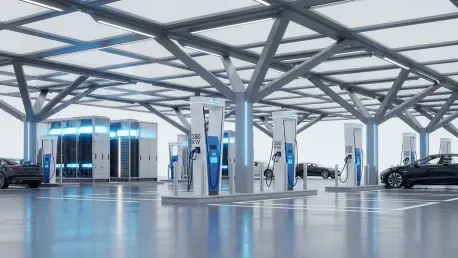
The deployment of large-scale battery energy storage systems at charging sites serves as a crucial buffer between the electric vehicle and the primary power grid, allowing for a more predictable energy flow. These systems are designed to capture electricity from the grid during off-peak hours when demand is low and prices are more favorable, then store it for use during the busiest parts of the day. When several vehicles arrive at the hub to utilize 350 kW hyper-fast chargers, the sudden surge in power demand is met primarily by the on-site batteries rather than pulling directly from the local utility lines. This approach prevents the massive spikes in consumption that would otherwise trigger heavy demand charges from utility companies, which can account for a substantial portion of a station’s total operating expenses. By smoothing out the load profile, these battery-backed hubs provide stability that helps prevent local transformers from reaching their maximum rated capacities.
Expanding Infrastructure: Solving the Power Constraint
Implementing high-capacity charging infrastructure in remote or densely populated areas often poses a significant engineering hurdle due to the limited availability of high-voltage power lines capable of supporting multiple ultra-fast chargers. Traditionally, expanding such sites required years of planning and millions of dollars in infrastructure upgrades to bring in new substations or heavy-duty cabling. However, the introduction of battery-supported hubs allows for the installation of high-speed charging equipment in locations where the grid was previously deemed insufficient for such loads. This flexibility enables the strategic placement of charging stations along critical travel corridors and in underserved urban neighborhoods without waiting for extensive utility work to be completed. By decoupling the immediate power output from the grid’s instantaneous capacity, operators ensure that every driver receives the maximum possible charging speed regardless of the surrounding environment or current local usage.
Optimizing High-Capacity Charging Networks
Urban Charging: Reliability in High-Density Centers
Urban environments present a unique set of challenges for electric vehicle infrastructure, as the competition for available electricity is intense and the physical space for equipment is often extremely limited. In these high-density areas, a single charging hub must service dozens of vehicles throughout the day, often with little downtime between sessions to allow the grid to recover. The integration of advanced battery storage at these sites provides a vital reservoir of energy that ensures consistent performance even when the surrounding city is consuming power at its peak. This reliability is paramount for commercial fleets and ride-share drivers who depend on predictable charging times to maintain their operational schedules and maximize their daily earnings. Moreover, the presence of localized storage can offer backup power during outages, adding resilience to the city’s overall network from 2026 to 2028 and beyond. By concentrating these resources, the efficiency of energy delivery is improved.
Strategic Management: Pathways for Long-Term Growth
The establishment of this expansive battery-backed charging hub demonstrated a scalable model for overcoming the inherent limitations of the current power distribution network. To build upon this success, industry stakeholders prioritized the integration of modular battery designs that could be easily expanded as vehicle battery capacities grew. Engineers worked closely with utility providers to create standardized protocols for grid interaction, ensuring that future hubs could serve as stabilizing assets rather than just heavy loads. Cities across the country began revising zoning laws and streamlining permit processes to encourage the rapid deployment of these self-contained energy systems in transit-heavy zones. Investment shifted toward developing more efficient cooling systems for high-output batteries to maintain longevity and safety under continuous use. Ultimately, the focus transitioned toward creating a decentralized web of energy-dense hubs that effectively insulated the overall user experience.