
The relentless expansion of hyperscale data centers across the American landscape has ignited a fierce debate regarding who truly pays for the massive surge in electricity demand required to fuel the modern digital economy. While it is undeniable that these facilities consume a staggering amount of power, the widely circulated figures suggesting a 267 percent increase in electricity costs often lack the necessary context of how utility billing structures actually operate for the average consumer. In reality, these dramatic percentage spikes refer specifically to wholesale energy markets, which fluctuate based on real-time supply and demand, rather than the stable residential rates most homeowners see on their monthly statements. Wholesale electricity costs typically represent only about 30 to 50 percent of a final utility bill, with the remainder consisting of delivery charges, taxes, and fixed infrastructure fees that act as a buffer against extreme market swings. Consequently, while the industrial demand from tech giants is undeniably putting pressure on the grid, the direct correlation between server farm expansion and individual household expenses is far more complex than a simple price hike. This environment necessitates a closer look at how utility companies and regulators are balancing the needs of the tech sector with the rights of residential ratepayers who are often concerned about being left with the tab for grid upgrades.
1. Understanding the Drivers of Modern Energy Pricing
Data centers primarily influence electricity costs through three distinct economic channels that can eventually filter down to the consumer level if left unmanaged by state regulators. The first and most immediate channel is wholesale price pressure, where the concentrated demand from a single massive facility can strain local supply, forcing utilities to activate more expensive “peaker” plants or purchase power from other regions at a premium. When a data center requires hundreds of megawatts of constant electricity, it effectively reduces the available surplus that usually keeps prices low during periods of average demand. This scarcity can lead to higher baseline prices in the wholesale market, which utilities then use to calculate future rate adjustments for all customer classes during their periodic filings with public service commissions. However, the impact is rarely instantaneous for the average resident because most utilities operate under long-term contracts and regulatory frameworks that smooth out these spikes over several years. This lag provides a window for policy intervention, yet it also masks the growing tension between industrial growth and the affordability of basic services for the general public.
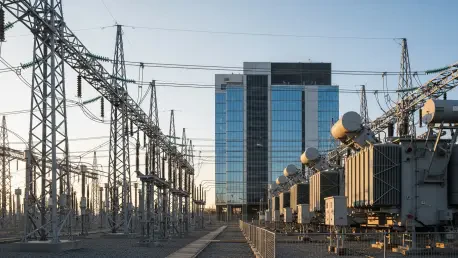
Beyond the immediate cost of the electricity itself, the physical infrastructure required to move massive amounts of power to data centers represents a significant and long-term financial commitment for the utility provider. Higher demand necessitates more robust grid infrastructure, including high-voltage transmission lines and advanced substations that are capable of maintaining grid reliability under the heavy load of constant server operations. These transmission and capacity fees are often shared across the entire customer base of a utility, meaning that every homeowner might see a slight increase in the delivery or distribution portion of their bill to pay for a grid that is being reinforced primarily for industrial users. While tech companies argue that their presence brings tax revenue and jobs to a community, the immediate reality for the local utility is a need for rapid capital expenditure to prevent blackouts or voltage drops. When a utility invests billions in grid hardening and expansion, they typically seek a return on that investment through distribution charges, which are passed on to consumers as part of their fixed monthly costs regardless of how much energy they personally use.
2. Assessing the Legislative Landscape Across the United States
As the tension between digital growth and energy affordability has reached a boiling point, state legislatures across the country have begun to take unprecedented steps to protect their constituents from potential price hikes. By the middle of 2026, more than 30 states have introduced over 300 individual pieces of legislation aimed at regulating the way data centers interact with the local energy grid and the broader community. These legislative efforts range from transparency requirements that force developers to disclose their exact power requirements to more aggressive measures that would limit the tax incentives previously used to attract these facilities. The primary goal of these bills is to ensure that the rapid scaling of the digital economy does not come at the direct expense of residential energy security or financial stability. Legislators are increasingly under pressure to prove that the tech boom in their district is not a net negative for the average taxpayer who is already dealing with inflationary pressures in other sectors of the economy. This shift in sentiment marks a significant departure from the previous decade, where states competed fiercely to offer the most lucrative packages to attract major server hubs.
Among the most drastic measures being considered are temporary bans, or moratoriums, on the construction of new data centers until the long-term impact on the grid can be fully assessed and mitigated. While 11 states have proposed such pauses, the political and economic stakes are so high that none have yet been enacted as a total, state-wide ban, though several local municipalities have successfully halted projects at the county level. New York is currently the closest to implementing a significant regulatory pause, with a measure pending the governor’s final approval that would specifically target facilities with high energy consumption that do not meet certain sustainability or community benefit standards. These moratoriums are often seen as a last resort by officials who fear that the sheer speed of data center development is outstripping the ability of the energy sector to build new generation capacity. If these measures are signed into law, they could set a major precedent for how other states handle the influx of high-demand industrial customers, potentially forcing tech firms to look for regions with underutilized energy resources or to invest more heavily in their own dedicated power generation facilities to bypass the public grid.
3. Evaluating Federal Regulation and Corporate Accountability
The question of accountability has moved to the forefront of the national conversation, leading to a dual-pronged approach involving both voluntary corporate commitments and strict federal oversight. Several of the world’s largest technology firms have recognized the public relations and operational risks associated with their energy consumption and have pledged to fund the specific power sources and infrastructure they require. These pledges often take the form of power purchase agreements for renewable energy or direct investments in new nuclear and geothermal technologies that aim to add new capacity to the grid rather than simply siphoning off existing resources. However, critics point out that these corporate promises remain largely voluntary and can be difficult to verify or enforce over the long term, especially as the demand for artificial intelligence capabilities continues to accelerate at a geometric rate. Without a binding legal framework, there is a lingering fear that tech companies might prioritize their own speed to market over the long-term stability of the regional energy prices that affect millions of smaller consumers who lack the bargaining power of a trillion-dollar corporation.
At the federal level, the Federal Energy Regulatory Commission (FERC) has stepped in to provide a more standardized approach to the challenge of co-location, where data centers are built directly next to or on the same site as existing power plants. This practice is designed to bypass the traditional transmission grid, theoretically reducing the need for expensive new lines, yet it raises complex questions about how much these facilities should still contribute to the maintenance of the shared national infrastructure. FERC is currently developing rules to prevent these co-located facilities from shifting their hidden grid support costs onto regular taxpayers, ensuring that the convenience of proximity to a power plant does not create a loophole for avoiding necessary fees. These regulations are vital because they establish a baseline for fairness across state lines, preventing a race to the bottom where different regions might offer increasingly reckless energy deals to attract tech investment at the expense of their own citizens’ financial health. By formalizing these cost-sharing mechanisms, federal regulators have aimed to create a more predictable environment for both the tech industry and the utilities that must serve them without compromising residential affordability.
4. Considering the Impact on Energy Markets and Investment Portfolios
The regulatory landscape for data centers has profound implications for the financial markets, particularly for independent power producers and utility companies that have become the primary partners for the tech industry. Companies like Constellation Energy (CEG) and Vistra (VST) are heavily tied to these emerging frameworks, as their profitability is increasingly dependent on how the costs of power generation and grid upgrades are shared between industrial and residential users. For investors, the critical question is whether these utility giants can maintain high margins while complying with new regulations designed to protect consumer rates from the volatility of the tech sector. If the Federal Energy Regulatory Commission or state utility boards implement strict cost-causation rules, the financial burden of new infrastructure would shift directly to the data centers, potentially slowing down the pace of construction but ensuring more stable dividends for utility shareholders. Conversely, a more lenient regulatory environment could lead to rapid short-term growth for these energy companies at the risk of political backlash and future legislative crackdowns that could destabilize the entire sector’s market valuation in the coming years.
The profitability of major independent power producers like Constellation Energy and Vistra is now inextricably linked to the finalization of these cost-sharing rules, making them a focal point for market analysts and institutional investors. As these companies negotiate massive, long-term contracts with data center operators, the terms of those agreements are being scrutinized to see if they include provisions for infrastructure hardening and independent power generation. If these utility stocks are to remain a safe haven for conservative investors, the companies must demonstrate that they can capitalize on the tech sector’s hunger for power without alienating the regulators who oversee their residential pricing tiers. The outcome of this regulatory balancing act will determine whether the current surge in energy demand leads to a new era of utility growth or a series of legal and political hurdles that could dampen the financial outlook for the entire energy sector. Consequently, the market has shifted its focus from simple capacity metrics to more sophisticated models of regulatory risk, where the ability to navigate the complex social and economic impacts of data center growth is as important as the ability to generate electricity itself.
5. Implementing Strategies for Consumer Financial Protection
While the broader policy debates continue to unfold in state capitals and federal agencies, individual consumers have a variety of practical tools at their disposal to determine how these regional trends are affecting their own finances. One of the most effective ways to influence the outcome of energy pricing is to investigate whether a local power company has an open rate review case with the state public service commission. These commissions act as the ultimate arbiters of how much a utility can charge and, more importantly, how those costs are distributed across different types of customers, such as residential homes versus massive server farms. Many of these proceedings are open to public comment or involve consumer advocacy groups that work to ensure that large industrial users are paying their fair share for the infrastructure they utilize. By staying informed about these reviews, homeowners can gain a better understanding of the specific justification for any requested rate increases and can voice their concerns before the pricing structures are locked in for the next several years.
Ultimately, the evolution of the energy market in the face of the data center boom required a multifaceted strategy that combined vigilant consumer oversight with more robust regulatory frameworks. Those who closely examined their monthly utility statements were able to distinguish between the supply and delivery portions of their bills, identifying how much of their personal expense was actually tied to the wholesale market swings driven by high industrial demand. By tracking state-level debates regarding special pricing tiers for large energy consumers, many communities were successful in advocating for protections that prevented the shifting of infrastructure costs onto the general public. The transition toward more transparent co-location rules and mandatory corporate investments in new power generation helped to mitigate the initial fears of a permanent spike in household electricity costs. While the digital infrastructure expansion of the mid-2020s certainly tested the limits of the existing grid, the proactive steps taken by regulators and informed citizens ensured that the benefits of technological progress did not come at the cost of residential energy security.