
The New Nexus of High-Performance Computing and Electrical Infrastructure
The unprecedented thirst for electricity driven by artificial intelligence is currently forcing a fundamental rewrite of how data centers interact with the aging American power grid. As the technology sector expands at a breakneck pace, the sheer scale of modern energy footprints has begun to collide with the physical reality of limited utility capacity. This friction necessitates a move away from the “constant on” philosophy that long defined the industry. Major players like Google, Meta, and Nvidia are now exploring how to function as flexible partners rather than rigid consumers, moving toward an era of active grid participation.
The traditional expectation of 100 percent uptime regardless of external conditions is no longer sustainable under current infrastructure constraints. Instead, the industry is adopting demand response strategies that allow facilities to throttle their consumption during periods of extreme strain. By defining this new relationship, the tech sector aims to prevent localized failures while securing its own growth in an increasingly energy-constrained environment.
Strategic Shifts in Power Utilization and Market Dynamics
Innovations in Distributed Workloads and Adaptive Energy Demand
Artificial intelligence training represents a unique opportunity for flexibility because large language model processing does not always require instantaneous results. Unlike consumer-facing web applications, these massive computational tasks can often be postponed or shifted to off-peak hours when electricity is more abundant. This capability enables data centers to treat energy as a variable resource, adapting their computational throughput to match the real-time availability of the local power supply.
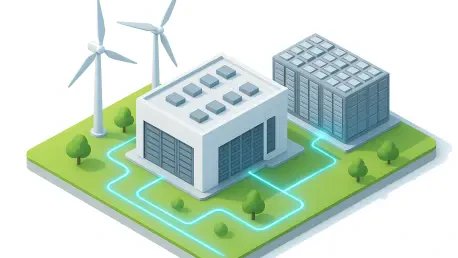
Furthermore, the industry is witnessing the rise of geographically mobile workloads that follow the sun or the wind to exploit renewable surges. By utilizing onsite battery storage and backup generators, data centers can provide immediate relief to stressed utility providers during heatwaves or winter storms. This evolution in consumer behavior prioritizes grid citizenship, where companies actively assist in maintaining stability rather than merely drawing from the collective resource.
Growth Projections for Energy Consumption Through 2030
Analyses of the current landscape suggest that data center electricity usage is on a trajectory to reach 17 percent of the total U.S. supply by 2030. Regional operators, most notably PJM Interconnection, have signaled that supply shortages could become a reality as early as the next few months if consumption remains unchecked. Consequently, the push for flexibility is not merely environmental but a logistical necessity to prevent the collapse of existing distribution networks.
The economic implications of this transition are substantial, with projected capital savings ranging from $40 billion to $150 billion over the next few years. These savings stem from a reduced need for massive, accelerated utility build-outs that would otherwise fall on the shoulders of the public. Investment in long-term infrastructure remains critical, yet the immediate focus is on optimizing current capacity to support the sustained surge in AI-driven power demand.
Overcoming Operational Rigidity and the Financial Risks of Downtime
For decades, the primary hurdle to energy flexibility was the staggering cost associated with service interruptions, which often reached $9,000 per minute for global tech giants. Scaling back power without compromising data integrity or processing speed requires a sophisticated layer of software orchestration that did not exist in previous iterations of cloud computing. Modern facilities are now implementing tiered operational structures where non-critical tasks are paused while essential services remain protected.
Reducing the financial burden on residential consumers is another driving force behind this operational shift. When data centers act as flexible loads, they minimize the need for utilities to construct expensive peaker plants that are only used a few days a year. This collaborative approach bridges the gap between the rapid, private-sector expansion of tech hubs and the notoriously slow-moving cycles of public utility planning and construction.
Balancing Public Safety with Regulatory Compliance and Interconnection
Federal energy officials have increasingly categorized grid reliability as a fundamental matter of public safety, especially as climate volatility increases. Managing the supply-demand equilibrium during extreme weather events has become a top priority for regulators who oversee national infrastructure. In this context, data centers that offer flexibility are viewed as assets that can prevent catastrophic blackouts for hospitals and homes during emergencies.
Regulatory bodies are also considering ways to incentivize this behavior through fast-tracked approvals for new facility interconnections. Currently, lengthy queues for grid access can delay projects for years, creating a bottleneck for innovation. By demonstrating a willingness to scale back during peaks, technology firms may find a path toward bypassing these administrative hurdles and securing their place in the national power hierarchy.
Technological Disruptions and the Path Toward Autonomous Grid Balancing
Emerging technologies are now making it possible for data centers to respond to grid signals in real time without human intervention. Next-generation power management software can detect frequency drops on the line and automatically curtail non-essential energy use within milliseconds. This level of automation transforms large-scale compute hubs into decentralized energy resources that can balance the grid more efficiently than traditional mechanical solutions.
The move toward a symbiotic relationship between tech hubs and local utility ecosystems is creating a new competitive advantage for developers. Facilities that can integrate seamlessly with the grid are less likely to face operational restrictions or public pushback. As energy flexibility becomes a standard feature of high-performance computing, the distinction between a power consumer and a grid stabilizer will continue to blur.
Synthesizing Grid Stability with the Long-Term Viability of the Tech Sector
The transition toward an elastic and responsive energy model served as a vital solution for a sector facing unprecedented growth constraints. By adopting demand response strategies, technology companies successfully protected the digital economy from the risks of physical infrastructure failure. This shift facilitated a new era of grid management where large-scale consumers participated in the preservation of public utilities.
Investors who prioritized sustainable and adaptive power strategies identified these facilities as more resilient to the volatility of energy markets. The synergy between technological innovation and grid modernization proved that economic expansion did not have to come at the expense of national stability. Ultimately, the industry moved toward a future where the intelligence of the network was used to manage the physical power that sustained it.