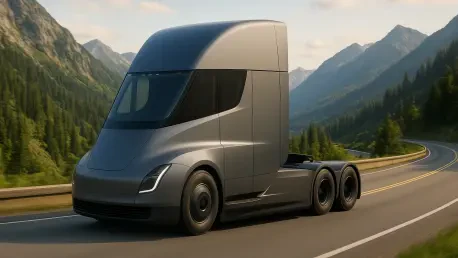

Market observers are closely watching the ETT 44 to see if its dedicated battery-electric architecture can outperform rival trucks that rely on adapted internal combustion platforms. The debut of this heavy-duty tractor at the IAA Transportation 2026 trade fair signifies a major strategic pivot for a company that was once primarily recognized for its passenger vehicle offerings. By launching the ETT 44, the manufacturer is signaling an aggressive expansion into the European commercial logistics sector, aiming to redefine the standards of long-haul transportation. This is not merely a product launch but the introduction of a comprehensive, vertically integrated ecosystem intended to overcome the high capital costs and logistical complexities that have hindered fleet electrification. Through a combination of cutting-edge battery chemistry and a focus on the total cost of ownership, the initiative seeks to establish a new benchmark for sustainable freight movement across the continent’s major trade corridors as of late 2026.
Engineering Superiority and the Clean-Sheet Design Approach
A fundamental advantage of the ETT 44 lies in its clean-sheet design, which differentiates it from several European legacy brands that have opted for hybrid or retrofitted platforms. By engineering the chassis from the ground up as a dedicated battery-electric vehicle, the designers were able to optimize the placement of high-voltage components and improve aerodynamic efficiency significantly. This native architecture allows for a more favorable weight distribution, which is critical for maintaining high payload capacities while accommodating the substantial mass of a large-scale battery pack. Furthermore, the absence of an internal combustion engine allows for a redesigned cab that prioritizes driver comfort and safety, incorporating advanced sensors and thermal management systems that would be difficult to integrate into an older frame. This holistic approach ensures that every square centimeter of the vehicle is dedicated to maximizing energy efficiency and operational uptime in demanding industrial environments.
Central to this performance is the proprietary Blade Battery technology, which provides the energy density and safety profiles necessary for heavy-duty applications. To mitigate the financial risks often associated with battery degradation, the company has introduced an industry-leading warranty covering 1.2 million kilometers. This long-term commitment directly addresses the primary concern of fleet operators: the residual value and longevity of their assets over a decade of intensive use. Because the battery is integrated into the structural design of the truck, it offers superior cooling capabilities and structural rigidity compared to modular off-the-shelf solutions used by some competitors. By providing such a robust guarantee, the manufacturer is effectively removing the psychological and financial barriers that have traditionally made procurement departments hesitant to move away from diesel. This technical foundation allows for a predictable lifecycle cost, which is essential for large-scale logistics operations today.
Breaking the Charging Barrier and Strategic Integration
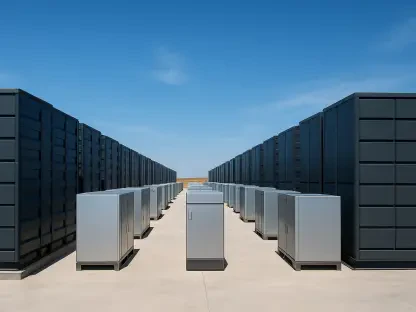
To combat the “charging bottleneck,” the ETT 44 utilizes 1.5 MW FLASH Charging technology, a system designed to deliver massive amounts of power in a remarkably short timeframe. This infrastructure allows the vehicle to replenish its energy levels from 20% to 80% in approximately 20 minutes, a speed that was previously thought unattainable for such large energy storage systems. By aligning the charging duration with the mandatory rest periods required for drivers under European labor laws, the system ensures that the transition to electric power does not result in a loss of productivity. This synchronization of technology and regulation represents a critical step forward in making electric long-haul transport a viable reality for international freight companies that operate on extremely tight delivery schedules. Beyond the hardware, the company implemented a Total Cost of Mobility framework, which bundled energy management and specialized financing into a single streamlined offering for commercial partners.
While the ETT 44 serves as the flagship for highway transport, the broader portfolio includes a diverse array of specialized vehicles designed for various urban and industrial roles. This range extends from agile, smaller trucks for last-mile delivery in restricted city zones to heavy-duty yard tractors designed for the high-frequency movements required at shipping ports and large distribution centers. By offering a comprehensive lineup, the company is positioning itself as a universal partner for municipal services, waste management, and retail logistics alike. This diversification is particularly important in the European market, where different regions have varying levels of environmental regulations and infrastructure readiness. Providing a “one-stop-shop” for all commercial vehicle needs allows the brand to capture a larger share of the market, as fleet operators prefer the consistency and ease of maintenance that comes from using a single manufacturer across their entire range.
Future Considerations for European Freight Management
The successful integration of these technologies proved that electric freight could match the operational performance of diesel without compromising on reliability. Analysts determined that the most effective path forward involved the immediate upgrade of on-site grid capacity and the adoption of integrated energy storage systems to manage peak loads. Logistics providers who participated in the initial rollout reported that the 1.2-million-kilometer warranty effectively eliminated the secondary market concerns that had previously stalled investment. It was suggested that future operational strategies focused on the utilization of megawatt charging during scheduled stops to maximize fleet availability. Companies that prioritized the digitization of their energy usage patterns found themselves better positioned to benefit from the shifting regulatory landscape. Ultimately, the transition relied on a shift from traditional procurement models toward comprehensive mobility partnerships that addressed the entire lifecycle.
To capitalize on this shift, organizations should have prioritized the development of on-site energy infrastructure and explored partnerships that offered integrated mobility solutions rather than isolated vehicle purchases. Looking toward 2027 and 2028, the primary challenge transitioned from vehicle availability to grid capacity and the standardization of high-power charging interfaces. It was recommended that logistics companies conducted thorough audits of their current routes to identify where megawatt charging could be most effectively implemented during driver breaks. Additionally, investing in staff training for the management of high-voltage systems became crucial for maintaining safety and operational efficiency as electric fleets scaled. By adopting a proactive stance on infrastructure and data-driven energy management, businesses ensured they remained competitive in an increasingly regulated environment. The transition required a move away from legacy mindsets toward a holistic view of transportation.