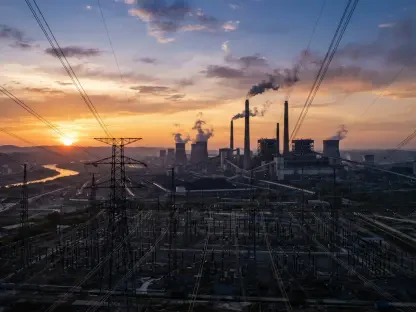

The relentless expansion of modern data centers has fundamentally altered the global energy landscape, pushing historical grid architectures to the absolute brink of catastrophic failure. As electricity consumption reaches unprecedented heights, the distance between available power and growing demand is widening into a structural chasm. This is not merely a technical shortage but a failure of operational speed. Energy development teams are currently operating under a load that defies traditional logic, forced to manage vast site portfolios with the same limited resources they possessed years ago. The physical grid is struggling to breathe, and the traditional, manual workflows that once defined the sector have officially reached their absolute limit.
While data center demand remains a primary driver, the bottleneck is exacerbated by a staggering increase in the complexity of project management. The current imbalance represents the primary hurdle of the decade, prompting a critical evaluation of whether artificial intelligence can finally bridge the gap between digital ambition and physical infrastructure reality.
The Electricity Crunch: Why Infrastructure Is Falling Behind
Electricity consumption data reveals a startling trend: data center growth was responsible for approximately half of all electricity demand increases in the United States over the last year. This surge has placed a massive, unprecedented burden on the professionals responsible for expanding grid capacity and site development. Currently, development teams are juggling up to four times the number of active sites compared to previous periods, yet internal staffing numbers remain largely unchanged. This mismatch creates a high-pressure environment where critical project details can easily be overlooked.
When a single development team is tasked with overseeing eighty sites instead of twenty, the ability to perform deep, manual due diligence effectively evaporates. Infrastructure development is not just falling behind due to a lack of physical materials; it is being buried under the weight of its own administrative necessity. The widening gap between skyrocketing power consumption and lagging infrastructure suggests that the human-only model of grid expansion has hit a ceiling that no amount of overtime can resolve.
The Adoption Gap and the Challenge of Jurisdictional Specificity
Despite the pressing need for acceleration, the energy and utility sector remains one of the final frontiers for digital transformation. Recent figures indicate an AI adoption rate of only 13.6%, a fraction of the adoption seen in finance or software engineering. This hesitation is not necessarily a lack of interest but rather a response to the extreme jurisdictional complexity of the industry. Energy development is an inherently local endeavor where a regulatory victory in one regional grid, such as MISO, does not translate to success in another, like PJM.
Developers remain wary of generic AI models because these tools often fail to grasp the granular specifics of regional zoning laws, permitting timelines, and the unique interconnection queues that govern project viability. In an industry where a single missed local ordinance can result in millions of dollars in losses, the demand for precision is paramount. Generic models lack the context of local grid dynamics, which makes it difficult for traditional firms to trust automated solutions that do not account for hyper-local nuances.
High-Impact Applications of AI in Modern Energy Development
To break the current bottleneck, forward-thinking firms are now deploying specialized AI to automate the most grueling phases of the development lifecycle. During the site origination phase, these tools filter through thousands of land parcels in mere minutes, identifying viable locations based on proximity to high-voltage transmission lines and specific terrain constraints. This task formerly required analysts to spend weeks on manual cross-referencing and geographic data entry. Furthermore, AI helps solve the “inverse problem” of modern development—having too many potential leads and not enough human bandwidth to vet them properly.
By using AI to triage incoming sites against proprietary firm criteria, teams can instantly identify high-value targets while discarding unviable leads. Beyond the technical data, AI is also being used to analyze community sentiment and political trends by processing local news and public records. This allows developers to anticipate and mitigate local opposition long before a project enters the public hearing phase. This proactive approach transforms the developer from a reactive participant into a strategic researcher who can navigate social hurdles with data-backed precision.
Data Realities and the Essential Role of Human Judgment
Industry veterans emphasize that AI serves best as a tool for compression rather than a total replacement for human insight. While an algorithm can efficiently identify a viable parcel or monitor a complex regulatory deadline, it cannot navigate the delicate human relationships required for project approval. The core of energy development involves high-stakes negotiations and the building of trust with local stakeholders, landowners, and utility commissions. No machine can replace the intuition required to close a deal in a room full of skeptical community members.
The most successful firms are those that treat AI as a sophisticated research assistant, offloading the data-heavy workflows to automated systems. This transition allows human professionals to concentrate on strategic decisions and the nuanced understanding of local politics that technology cannot currently replicate. By focusing human talent on relationship management and high-level strategy, firms can maintain the quality of their projects while significantly increasing the volume of their pipelines.
A Practical Strategy for AI Integration in Development Pipelines
The path to successful integration began with the automation of high-volume, repetitive tasks where outputs were easily verified. Organizations focused first on site screening and triage to establish a sense of trust in the technology among veteran staff. As these initial applications proved their value, development teams expanded their use of AI toward more complex workflows, such as automated diligence and integrated submission tracking. This systematic strategy allowed firms to regain their bandwidth and navigate the increasingly complex energy landscape with much greater precision.
Ultimately, the shift toward AI-enabled processes provided the only viable solution for bridging the gap between massive energy demand and the physical realities of the power grid. By offloading administrative burdens, teams reclaimed the time necessary to focus on the high-level negotiations that defined the modern energy era. This transformation ensured that the development pipeline moved away from manual stagnation and toward a future where infrastructure growth finally matched the pace of digital consumption.