
The catastrophic impact of wildfires across the Western United States has shifted the focus of utility providers from reactive maintenance to proactive, high-tech surveillance of electrical infrastructure. Traditional circuit breakers often fail to identify early-stage thermal anomalies or high-impedance faults that eventually lead to devastating ignitions in dry vegetation areas. Modern electrical grids are now being outfitted with advanced sensors capable of capturing millions of data points every second, creating a massive influx of information that human operators cannot process in real-time. This technological bottleneck has paved the way for artificial intelligence to step in as a critical layer of defense, utilizing machine learning algorithms to identify subtle patterns indicative of impending equipment failure. By analyzing harmonic distortions, these systems aim to predict where a spark might occur before the first wisp of smoke ever appears on the horizon.
The Mechanics: How AI Identifies Invisible Risks
Synchrophasor technology and sophisticated waveform analysis represent the frontline of this digital transformation in utility management and fire prevention strategies. These devices measure the state of the grid at a granular level, detecting specific signatures of incipient faults such as vegetation contact or cracked insulators which often precede a full-scale line failure. Machine learning models, specifically deep neural networks, are trained on historical data sets containing thousands of hours of normal grid behavior versus known fault events to distinguish between benign noise and genuine threats. This level of precision allows for the isolation of specific grid segments without causing widespread blackouts, as the AI can pinpoint a deteriorating transformer with remarkable accuracy. As these systems learn from real-time environmental conditions, they become adept at calculating the risk of ignition based on local wind speeds and humidity levels.
Integrating these AI systems into existing legacy infrastructure requires a significant overhaul of data handling protocols and edge computing capabilities within the substation environment. Large-scale utility companies are currently deploying specialized hardware that processes data locally to ensure that critical alerts are triggered in milliseconds rather than waiting for cloud-based processing. This shift toward edge AI minimizes latency, which is vital when a falling limb creates a momentary fault that could ignite a blaze within seconds if the power is not cut immediately. Furthermore, the collaboration between meteorologists and data scientists has led to the development of dynamic risk models that adjust grid sensitivity based on forecasted Red Flag Warnings. This proactive stance ensures that the most vulnerable portions of the grid operate under heightened scrutiny during peak fire weather. The result is a smarter energy network that prioritizes public safety.
Infrastructure Evolution: From Visual Audits to Predictive Control
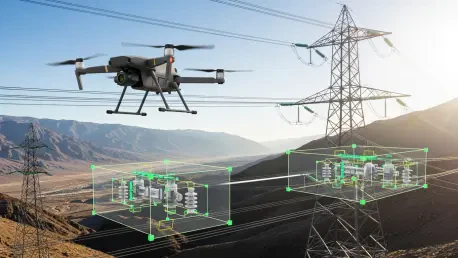
Beyond hardware sensors, the use of computer vision and autonomous drone patrols has introduced a new dimension to how utilities monitor the physical health of miles of remote transmission lines. High-resolution imagery captured by unmanned aerial vehicles is fed into image recognition algorithms that can spot rust, loose bolts, or bird nests that a human inspector might miss during a standard flyover. These AI-driven visual audits provide a comprehensive digital twin of the entire grid, allowing engineers to visualize the degradation of components over time and schedule repairs during the safest possible windows. This systematic approach reduces the reliance on run-to-failure models, which have historically been a major contributor to electrical fires in high-risk zones. By combining satellite imagery with ground-based sensor data, utility providers now possess a multi-layered view of their assets that was technologically impossible just a few years ago.
The transition toward an AI-integrated grid shifted the paradigm of fire safety from a focus on containment to one of total prevention through predictive intelligence. Utility leaders moved beyond basic vegetation management and invested heavily in automated shut-off systems that relied on real-time algorithm validation rather than manual decision-making. This evolution necessitated a workforce trained in both electrical engineering and data science to manage the complex interplay between physical assets and digital safeguards. Regulatory bodies responded by establishing new standards for data transparency and algorithmic accountability to ensure that these automated systems remained reliable under extreme stress. Moving forward, the focus centered on scaling these localized successes into a national framework for grid resilience and fire mitigation. The implementation of these advanced detection suites proved that the integration of machine learning was the most effective method for securing energy infrastructure.