
The Rise of Southeast Europe’s Strategic Energy Reserve
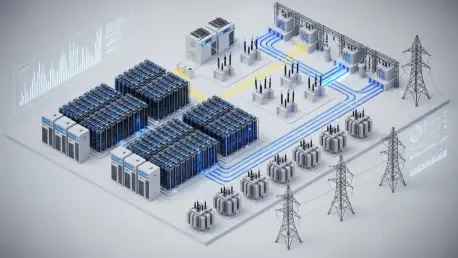
Bulgaria has successfully converted its historical role as a regional energy exporter into a sophisticated digital-age hub by deploying massive battery energy storage systems that now anchor the entire Balkan grid. This transformation signifies a fundamental shift from traditional baseload generation toward a flexible, technology-driven reserve. By integrating utility-scale lithium-ion installations with its robust existing pumped-storage hydropower, the nation has created a diverse portfolio that outpaces its neighbors in both total capacity and grid responsiveness.
The transition toward high-capacity, rapid-discharge systems allows for immediate stabilization during periods of peak demand or sudden supply drops. Bulgaria’s strategic geographic positioning serves as a critical junction for electricity flows between Greece, Romania, and the wider Balkan region. This makes domestic storage assets indispensable for facilitating cross-border energy trade. This infrastructure ensures that surplus renewable energy is not wasted but instead redirected to where it is most needed across international lines, reinforcing regional security.
Catalysts and Performance Indicators for a Storage Revolution
Market Drivers: Negative Pricing and Renewable Volatility
Economic incentives have shifted dramatically due to the frequent occurrence of negative pricing on the intraday market. During periods of excessive solar production, prices occasionally plummet into negative territory, effectively paying operators to absorb excess power. This phenomenon, coupled with the challenges of the solar duck curve, has forced a change in operator behavior toward peak-shaving strategies. The influence of previous energy crises further accelerated the push for domestic infrastructure that provides a buffer against global price shocks.
Consumer and grid operator behaviors have adapted to prioritize flexible consumption. As solar penetration continues to rise, the ability to store energy during the day for use during the evening peak has moved from a luxury to a systemic requirement. This shift has turned volatility into a profitable venture for those with the capacity to act as a massive flexible consumer. Consequently, the Bulgarian grid has become a model for how to manage a high-renewable mix without compromising stability.
Quantifying the Boom: Capacity Projections and Regional Benchmarks
Current benchmarks place Bulgaria at a significant advantage, with a milestone of 2 GW of operational storage providing approximately 8 GWh of capacity. This scale is sufficient to support national demand for several hours during critical grid stress, providing a level of energy security that few peers can match. Growth forecasts suggest a trajectory toward 3.5 GW of operational capacity by the end of the current fiscal year, reflecting a storage-per-capita ratio that remains significantly higher than that of Greece or Romania.
These statistical milestones are more than just numbers; they represent a significant reduction in renewable energy curtailment. By capturing energy that would otherwise be lost, the grid maintains a higher level of efficiency. Performance metrics indicate that this expansion has already stabilized domestic prices and improved the reliability of the regional transmission network. This data-driven success continues to attract international investment into the Bulgarian energy sector.
Navigating the Complexities of a Saturating Energy Market
As the market matures, the risk of price cannibalization looms, where increased storage capacity narrows the price spreads necessary for profitable arbitrage. When too many batteries attempt to charge and discharge at the same time, the gap between the lowest and highest daily prices naturally shrinks. To counter this, storage operators are beginning to diversify their revenue streams by offering ancillary services and frequency regulation. These secondary markets provide more stable income than simple price arbitrage alone.
Technological and logistical hurdles also persist, particularly regarding aging grid infrastructure. The physical wires and transformers must be upgraded to handle the bidirectional high-voltage flows inherent in large-scale battery operations. Furthermore, mitigating the impact of global supply chain fluctuations remains a priority for project developers. Ensuring a steady supply of battery components and managing the costs of raw materials are essential for maintaining current project timelines and meeting ambitious capacity targets.
Policy Frameworks and the European Green Transition
The European Union’s RESTORE support scheme played a pivotal role in de-risking private capital, providing the necessary financial backstop for these capital-intensive projects. National regulatory reforms have mirrored this support by streamlining the licensing and grid-connection processes for BESS projects. These efforts have removed many of the bureaucratic barriers that previously slowed down the deployment of energy technology. By aligning with EU standards, Bulgaria has solidified its export-oriented storage model.
Beyond financial support, the regulatory framework emphasizes security and environmental sustainability. New protocols govern the entire lifecycle of large-scale battery systems, from initial installation to end-of-life recycling. These standards ensure that the green transition does not create new environmental liabilities. Compliance with cross-border energy trading standards has also been crucial, allowing Bulgarian operators to participate seamlessly in the integrated European energy market.
The Future of the Balkan Grid: Innovation Beyond Arbitrage
Looking ahead, the integration of artificial intelligence and machine learning will likely redefine how these assets participate in predictive market trading. AI-driven algorithms can optimize charging cycles based on weather forecasts and real-time demand, maximizing both profit and grid health. Emerging long-duration energy storage technologies are also being explored to provide the multi-day backup needed to fully replace traditional fossil-fuel baseload power. This evolution suggests a move toward a more resilient and autonomous grid.
Potential market disruptors, such as decentralized home storage networks and the integration of electric vehicle fleets, could further transform the landscape. As more consumers become prosumers, the grid will need to manage thousands of smaller injection points. The evolution of carbon markets will also dictate the next phase of investment, as the financial benefits of carbon-free storage become even more pronounced. This innovation-led approach ensures that the energy sector remains a primary driver of economic growth.
Strengthening Regional Stability Through Energy Flexibility
The proactive stance taken by Bulgarian stakeholders secured a decisive first-mover advantage that redefined the Balkan energy landscape. Stakeholders identified that grid modernization and the diversification of storage chemistries were essential for long-term resilience as market volatility began to stabilize. This strategic framework proved that emerging economies could lead the renewable transition by prioritizing infrastructure flexibility and cross-border cooperation.
Future initiatives focused on expanding long-duration storage and integrating intelligent grid management systems to maintain this competitive edge. The economic viability of the BESS model stood firm even as initial arbitrage margins began to narrow, thanks to the adoption of diversified service models. Moving forward, the emphasis shifted toward ensuring that the technical workforce was prepared to manage these advanced systems. This comprehensive approach ensured that Bulgaria remained a blueprint for rapid and sustainable energy integration across the continent.