
The dream of sustained industrial dominance in South Asia currently rests upon a volatile foundation of depleting natural resources and a high-stakes gamble on global fuel markets. For decades, the availability of affordable natural gas acted as the silent architect of the nation’s economic rise, transforming rural landscapes into manufacturing hubs and elevating millions into the middle class. However, this historic reliance has now reached a breaking point where the very infrastructure designed to fuel progress is struggling to keep the lights on and the machines running.
The Fragile Backbone of Bangladesh’s Industrial and Energy Landscape
Historically, natural gas functioned as the lifeblood of Bangladesh, accounting for the vast majority of its power generation and industrial output. This deep-seated reliance was built during an era when domestic fields seemed inexhaustible, providing a competitive edge for labor-intensive industries. State entities like Petrobangla managed this resource under a centralized model that prioritized low-cost energy to stimulate rapid urbanization and export growth, effectively locking the national economy into a gas-centric trajectory.
The current infrastructure reflects a complex but strained network of aging domestic gas fields and relatively new liquefied natural gas (LNG) import facilities. While the country once boasted self-sufficiency, the reality in 2026 involves a precarious balancing act between dwindling local reserves and the volatile pricing of the international market. This transition has exposed significant weaknesses in the midstream and downstream sectors, where the existing pipeline network lacks the flexibility to handle the fluctuating pressures required by modern industrial zones.
Nowhere is the impact of this energy dependency more visible than in the $45 billion Ready-Made Garment (RMG) sector and the agricultural fertilizer industry. These sectors do not just consume energy; they depend on high-pressure, uninterrupted gas flow to maintain the integrity of chemical processes and manufacturing cycles. Even minor fluctuations in pressure can lead to massive production losses, highlighting how gas supply directly dictates the nation’s ability to compete in global markets and ensure food security through domestic crop yields.
Regulatory control remains concentrated within the Ministry of Power, Energy, and Mineral Resources, where policy decisions often struggle to keep pace with the evolving market. The state-led distribution model has historically focused on broad accessibility rather than efficiency or strategic conservation. This centralized approach has limited the influence of private sector innovation in energy distribution, leaving the government to bear the full burden of managing a widening supply gap that threatens the country’s macroeconomic stability.
Divergent Paths: The Widening Gap Between Demand and Supply
Identifying Critical Trends and Market Drivers
The fundamental shift from domestic abundance to import dependency represents the most significant change in the national energy profile. As local production began to plateau and eventually decline, the state turned toward the international LNG market as a quick fix for the growing energy deficit. However, this move introduced a new set of risks, as the national budget became vulnerable to global geopolitical shifts and price spikes that are entirely beyond the control of domestic policy.
The rapid expansion of the textile, ceramic, and steel industries has consistently outpaced the government’s planned energy capacity. Entrepreneurs have invested billions in state-of-the-art machinery and facilities, assuming that the energy infrastructure would expand in tandem with industrial growth. Instead, these industries now find themselves competing for a limited pool of resources, leading to a scenario where factory capacity remains underutilized despite strong global demand for Bangladeshi products.
Technological vulnerabilities have further exacerbated the situation, particularly the reliance on Floating Storage and Regasification Units (FSRUs) for the majority of LNG intake. These offshore units are susceptible to technical failures and weather-related disruptions, as seen in recent operational outages that paralyzed large portions of the national grid. Without land-based terminals or significant storage buffers, the entire energy system remains only one mechanical failure away from a localized or even national crisis.
Quantitative Reality and Growth Projections
A data-driven assessment reveals a stark 1,200 million cubic feet per day (mmcfd) deficit that currently plagues the national economy. With domestic production hovering around 1,600 mmcfd and imports struggling to fill the void, the national requirement of nearly 4,000 mmcfd remains an elusive target. This gap is not a temporary fluctuation but a structural reality that defines the limits of current economic output, forcing the state to make difficult choices about which sectors to prioritize.
Looking ahead from 2026 to 2030, energy demand is projected to climb even higher as Bangladesh pursues its ambitious GDP growth targets. If industrialization continues at its current pace without a corresponding surge in energy supply, the demand could double within the next decade. These projections suggest that the status quo is unsustainable, and without a radical overhaul of the procurement and distribution framework, the energy gap will become a permanent ceiling on the nation’s economic aspirations.
The high cost of inaction is perhaps the most alarming metric for policymakers and investors alike. Estimates suggest that persistent gas shortages could lead to a significant economic contraction, as manufacturing costs rise and export competitiveness fades. This is not merely a loss of potential growth but a risk of reversing the social and economic gains of the past two decades, as energy-starved factories are forced to shed jobs and scale back operations in an increasingly competitive global environment.
Structural Obstacles and the Threat of Industrial Paralysis
The crisis is currently evolving from a simple energy deficit into a far-reaching credit crisis for the private sector. When manufacturing plants operate at half-capacity due to low gas pressure, they become unable to generate the revenue needed to service their substantial bank debts. This creates a ripple effect throughout the financial system, as energy-related operational failures lead to an increase in non-performing loans, ultimately damaging the nation’s overall investment climate.
Decades of neglected exploration have finally caught up with the national economy, creating what experts call a bill for delayed decisions. Significant onshore and offshore drilling tenders were stalled for years, leading to a stagnation in the discovery of new reserves while existing fields were depleted at an accelerated rate. The failure to treat exploration as a continuous strategic priority has left the country in a reactive position, where it must now pay a premium for imported fuel to compensate for the absence of domestic foresight.
The strategic danger of relying on a limited number of LNG terminals without sufficient redundancy cannot be overstated. A single-point failure at an FSRU does not just affect one region; it can destabilize the entire national grid, leading to cascading power outages and industrial shutdowns. This lack of a margin of safety reflects a system that was designed for cost-minimization rather than resilience, leaving the backbone of the economy exposed to avoidable technical risks.
Mitigation strategies are now center stage, including the urgent development of the Matarbari land-based terminal and the resumption of deep-sea exploration. Upgrading the aging pipeline network is also critical to ensuring that the gas actually reaches the industrial hubs with the necessary pressure. While these projects are vital, they require multi-year timelines and massive capital investment, meaning the structural obstacles currently hindering growth will likely persist until these long-term solutions are operational.
The Regulatory Environment and the Burden of Compliance
Legislative hurdles continue to complicate the energy procurement process, particularly concerning international tenders. The legal frameworks governing these deals are often rigid, slowing down the pace of procurement at a time when the market demands agility. While government-to-government (G2G) deals have been used to bypass some of these delays, they often come with their own set of geopolitical and financial trade-offs that can affect long-term energy sovereignty.
National policy has increasingly relied on state-mandated rationing, commonly known as load shedding, to manage the supply shortfall. However, this rationing has a disparate impact, often favoring residential sectors to maintain social stability while leaving industrial zones with inadequate supply during peak production hours. This policy choice highlights the difficult trade-offs the government faces as it attempts to balance the immediate needs of the populace with the long-term survival of the manufacturing sector.
Furthermore, the regulatory environment must now contend with increasing global pressure to align energy policies with decarbonization goals. As a fossil-fuel-dependent economy, Bangladesh faces a dual challenge: it must secure enough gas to fuel its growth while simultaneously demonstrating a commitment to environmental standards to satisfy international buyers and lenders. This transition requires a delicate balance between immediate economic survival and the long-term shift toward a greener energy footprint.
Mapping the Future: Toward a Resilient Energy Mix
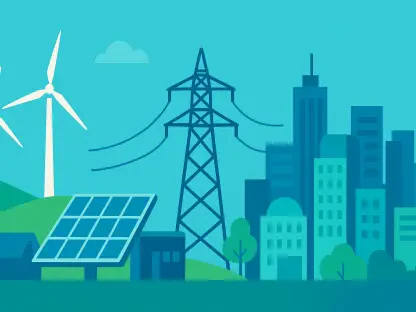
Survival in the modern global economy necessitates a move beyond gas toward a more diversified energy mix. Incorporating utility-scale solar, wind, and cross-border power imports from neighboring countries like India and Nepal offers a way to reduce the singular dependency on a volatile fuel source. By broadening the energy portfolio, the state can create a more resilient grid that is less susceptible to fluctuations in any single commodity market or technological failure.
Emerging technologies and innovation play a crucial role in this transition. Exploring the potential for green hydrogen and advanced battery storage systems could provide the necessary backup for intermittent renewable energy sources. Additionally, implementing deeper technological integration in existing gas fields could improve recovery rates, squeezing more value out of mature assets while the nation transitions to a more sustainable and varied energy infrastructure.
Strategic forecasting must become the cornerstone of national planning, decoupling energy policy from short-term political cycles to ensure twenty-year resource security. This involves creating a roadmap that accounts for shifting global economic influences, such as the volatility of LNG prices and the geopolitical shifts that dictate fuel availability. A forward-looking approach allows for the proactive development of infrastructure rather than the reactive, crisis-driven decision-making that has characterized the recent years.
The feasibility of an energy-heavy industrial model is increasingly dictated by external factors. As global energy markets become more unpredictable, the ability to forecast and adapt to these changes will distinguish successful economies from those that remain trapped in a cycle of shortages. For Bangladesh, the path forward involves transforming its energy sector from a source of vulnerability into a foundation of strength through diversification, innovation, and disciplined long-term planning.
Reforming the System to Safeguard Economic Sovereignty
The investigation into the national energy landscape revealed that structural neglect and reactive governance were the primary architects of the current impasse. Experts concluded that the reliance on a single-source energy model failed to account for the rapid pace of industrial expansion, leaving the garment and manufacturing sectors vulnerable to systemic shocks. It was observed that the absence of domestic exploration and the lack of redundant import infrastructure created an environment where localized technical failures could trigger widespread economic instability.
Stakeholders emphasized that the imperative for redundancy was the most critical lesson learned from the recent disruptions. Recommendations were made to prioritize the construction of land-based storage facilities and the immediate expansion of offshore drilling activities to rebuild a necessary margin of safety within the energy grid. The analysis suggested that these measures were essential to prevent a reoccurrence of the events that had previously forced manufacturing plants into idle states and threatened the creditworthiness of the entire private sector.
The final assessment of the economic outlook indicated that while the potential for growth remained high, foreign direct investment was increasingly contingent on energy reliability. Investors and local entrepreneurs alike sought a transition toward a more diversified and predictable energy framework to safeguard their capital and operational continuity. Ultimately, the shift from emergency management to a strategy of long-term resilience was seen as the only viable path to protecting the nation’s economic sovereignty and ensuring its status as a leading industrial power.