
The global energy sector has reached a defining moment where the optimistic projections of the last decade are finally meeting the unyielding laws of physics and the harsh realities of industrial demand. As of 2026, the transition toward a sustainable future is no longer a matter of simple technological substitution but a complex negotiation between economic survival and environmental necessity. The traditional reliance on a few concentrated energy sources is giving way to a diversified portfolio, yet this shift has introduced new vulnerabilities that were largely overlooked during the initial enthusiasm for the green revolution. Global stability now hinges on the ability of nations to maintain a reliable and affordable energy supply while navigating the most significant industrial rebalancing since the nineteenth century.
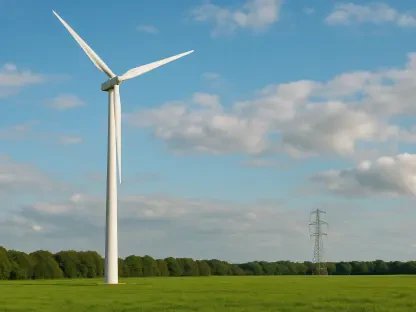
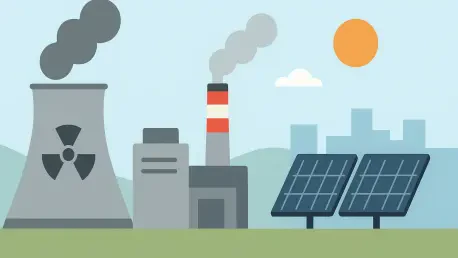
Mapping the current landscape reveals a sharp divide between the ideological goals of Western policymakers and the market-driven influence of the East. While the West has pivoted aggressively toward wind and solar, China has solidified its position as the dominant market force by controlling the vast majority of the global supply chain for refined minerals and renewable components. This structural segmenting means that any Western energy strategy is inherently dependent on external actors, creating a geopolitical friction that complicates the path to energy independence. In 2026, firm power sources like nuclear and natural gas are being reassessed as essential partners to renewables, providing the baseload stability that weather-dependent sources cannot yet guarantee.
The policy framework that guides these decisions is largely anchored in the long-term goals established by the 2015 Paris Agreement and the subsequent net zero mandates. These regulations have become the primary drivers of modern energy strategy, forcing corporations and governments to internalize the cost of carbon in every operational decision. However, as the deadline for significant reductions draws closer, the gap between legislative ambition and technical feasibility has widened. The challenge is no longer just about setting targets but about managing the transition in a way that does not trigger economic collapse or widespread energy poverty.
Beyond the Conventional Narrative: A Modern Energy Paradigm
The nexus between energy and the economy is more visible today than at any point in recent history, as the cost of electricity directly dictates the competitiveness of national industries. A diversified “green” portfolio was promised to lower costs and increase stability, yet many regions have seen the opposite as they struggle with the hidden expenses of grid integration and backup generation. Economic stability in 2026 requires a more nuanced understanding of energy density and reliability, moving beyond the simple narrative that more solar panels automatically equal a more resilient economy. The paradigm is shifting toward a model that values the “firmness” of power as much as its carbon intensity.
Market influence is currently lopsided, with the West leading in climate policy while the East leads in the physical production of the transition’s hardware. This asymmetry has created a situation where European and American energy strategies are effectively subsidized or constrained by the industrial priorities of China. As a result, the global energy industry is witnessing a trend where traditional fossil fuels are not being replaced as quickly as predicted, but rather supplemented by a massive expansion of electrical infrastructure. This leads to a multi-tiered energy system where the success of a nation is determined by its ability to secure a diverse range of power sources, from offshore wind to high-efficiency natural gas.
The regulatory environment continues to tighten, with net zero mandates shifting from aspirational goals to enforceable legal requirements. These frameworks have successfully diverted trillions of dollars into low-carbon technologies, but they have also created a rigid structure that sometimes ignores local geographic or economic constraints. In 2026, the conversation is beginning to shift from pure mitigation to a more realistic assessment of what can be achieved within the current technological envelope. Strategy is now being shaped by a need to reconcile these ambitious climate goals with the immediate necessity of keeping the lights on in a world that is more power-hungry than ever.
Analyzing the Forces Shaping Global Energy Markets
Emerging Trends and the Rise of Climate Realism
A critical trend challenging the current narrative is the failure of emissions decoupling, specifically through the phenomenon of carbon leakage. While many developed nations claim to have reduced their territorial emissions, much of this progress is an accounting mirage created by the relocation of energy-intensive manufacturing to jurisdictions with lower environmental standards. By 2026, the industry has begun to recognize that outsourcing production to coal-dependent regions does not eliminate global carbon footprints; it merely shifts them across borders. This realization is fueling the rise of climate realism, an approach that prioritizes actual atmospheric impact over regional paper gains.
The sudden surge in demand from AI and digital infrastructure has further complicated the green transition by demanding a level of reliability known as “five nines” or 99.999 percent uptime. Data centers and advanced computing facilities cannot function on intermittent power, forcing a return to firm, baseload sources that can provide constant electricity regardless of weather conditions. This digital revolution is acting as a reality check for grid operators who previously prioritized weather-dependent renewables without adequate storage solutions. Consequently, natural gas and nuclear power are seeing a resurgence in importance as the only viable options for fueling the high-tech economy of 2026.
Technological progress is also grappling with the Jevons Paradox, where increased energy efficiency is counterintuitively leading to higher total consumption. As devices and industrial processes become more efficient, the effective cost of using them falls, which encourages more frequent use and expansion into new markets. In emerging economies, this paradox is particularly visible as millions of people gain access to more efficient appliances and vehicles, leading to a massive net increase in total energy demand. This trend suggests that efficiency alone is insufficient to curb emissions and that the world must prepare for an ever-expanding energy appetite.
Market Projections and the 2050 Reality Check
Global growth arithmetic suggests that the world economy is on track to double by 2050, a reality that creates a massive expansion requirement for all energy sources. Even under the most aggressive transition scenarios, the sheer volume of power needed to support a wealthier and larger global population is staggering. From 2026 to 2050, the challenge will be to scale up renewable capacity by several orders of magnitude while simultaneously maintaining the existing fossil fuel infrastructure to prevent shortages. This dual-track requirement is the core of the 2050 reality check, as it highlights the difficulty of replacing the entire global energy foundation in just a few decades.
Data-driven forecasts continue to predict a persistent demand for fossil fuels despite the rapid growth of the renewable market share. Oil and gas remain essential not only for transportation and heating but also as feedstocks for the chemicals and materials that build the modern world, including the components of wind turbines and solar panels. While the percentage of fossil fuels in the total energy mix is declining, the absolute volume of consumption remains high due to the growth of the total energy pie. This persistence suggests that the fossil fuel industry will remain a significant, albeit evolving, part of the global market for the foreseeable future.
Critical Obstacles in the Path to Decarbonization
The intermittency gap remains the most significant technological and economic hurdle for an industrial base that requires constant power. Weather-dependent renewables like wind and solar create a volatility that the current grid was never designed to handle, leading to price spikes and stability issues. In 2026, the lack of long-duration, cost-effective battery storage means that every megawatt of renewable energy often needs to be backed up by a megawatt of firm power. This redundancy adds significant costs to the system, making the transition more expensive for consumers and businesses alike.
The transition is also revealing a mineral-intensive reality that carries its own set of environmental and ethical complexities. The mining of lithium, cobalt, and copper required for batteries and electric motors is an energy-intensive process that often takes place in regions with weak environmental protections. Furthermore, the supply chain for these minerals is highly concentrated, creating new geopolitical dependencies that could be as volatile as the oil markets of the past. As demand for these materials skyrockets from 2026 to 2030, the industry must address the environmental externalities of “clean” technology to ensure it does not simply swap one ecological crisis for another.
Economic deindustrialization is a growing risk for regions that have moved too quickly toward high-cost green energy without securing a cheap, firm alternative. Energy-intensive industries such as steel, chemicals, and aluminum are increasingly fleeing high-cost jurisdictions in favor of regions with affordable, stable power. This flight not only damages the economies of the losing nations but also often leads to higher global emissions as production moves to coal-heavy grids. Preventing this industrial exodus requires a strategy that balances decarbonization with the need to maintain an affordable energy baseline for the manufacturing sector.
Navigating the Regulatory and Compliance Landscape
Carbon accounting is evolving toward a system of border adjustments that measure consumption emissions rather than just territorial production. These new standards aim to level the playing field by taxing imports from countries that do not have equivalent carbon pricing, effectively targeting the carbon leakage problem. For businesses in 2026, this means that the entire supply chain must be scrutinized for its carbon intensity, regardless of where the manufacturing occurs. This regulatory shift is forcing a global re-evaluation of logistics and sourcing, as the true environmental cost of a product is finally being reflected in its price.
Grid security and reliability mandates are also becoming more stringent as the share of intermittent power grows. Governments are increasingly implementing regulations that prioritize “firm” power capacity to protect national security and the integrity of digital infrastructure. These mandates often require energy providers to prove they can meet peak demand without relying on favorable weather, which is driving investment back toward nuclear power and gas-fired plants equipped with carbon capture. In 2026, the focus of regulation has expanded from mere decarbonization to ensuring that the energy system is resilient enough to withstand both climatic and geopolitical shocks.
Environmental externalities are being internalized through more aggressive carbon pricing and the removal of fossil fuel subsidies. This shift is intended to change consumer behavior and industrial practices by making carbon-intensive activities more expensive. However, the implementation of these costs must be handled carefully to avoid social unrest and economic stagnation. The role of regulation in 2026 is to create a predictable price signal that encourages innovation without overwhelming the ability of households and small businesses to adapt to the new energy reality.
The Future of Energy: Innovation and Adaptation
A significant shift is occurring toward adaptation infrastructure as it becomes clear that some degree of warming is unavoidable. Future growth areas are emerging in desalination, resilient urban planning, and high-efficiency cooling systems designed to protect populations from extreme heat. This move toward adaptation acknowledges that mitigation alone is no longer enough and that the global economy must be built to survive a more volatile climate. From 2026 onward, the investment in resilient infrastructure will likely rival the investment in renewable generation as a primary focus of government spending.
Technological disruptors like small modular reactors and next-generation carbon capture are beginning to bridge the gap between realism and climate goals. These technologies offer the promise of carbon-free, firm power that can be deployed more flexibly than traditional large-scale nuclear plants. While many of these systems are still in the demonstration phase, their potential to provide stable energy for industrial processes and data centers is a major focus for investors. Carbon capture, in particular, is being viewed as a necessary tool for managing the emissions of the fossil fuel plants that will inevitably remain in operation for the next several decades.
Global economic re-balancing will favor regions that can provide stable, affordable baseload power, regardless of their specific energy mix. The winners of the next industrial revolution will be the nations that successfully integrate renewables with firm sources to create a grid that is both clean and reliable. As energy costs become the primary differentiator for manufacturing and technology hubs, the map of global economic power will be redrawn. Those who embrace climate realism and build a pragmatic, resilient energy system will have a significant advantage over those who remain wedded to idealistic but impractical energy models.
Pragmatism Over Idealism: Re-basing the Climate Strategy
The analysis of the global energy landscape demonstrated that the transition toward a green economy required more than just legislative will; it demanded a deep engagement with the physical and economic constraints of power generation. Stakeholders recognized that the conventional narrative of a seamless, low-cost shift had underestimated the complexity of intermittency and the massive mineral requirements of a new grid. The findings revealed that atmospheric carbon concentrations continued to rise despite regional reductions, proving that the outsourcing of emissions through carbon leakage remained a critical flaw in global policy. Most observers concluded that a strategy based on empirical data rather than optimistic mantras served as the only viable foundation for long-term stability.
Industry leaders and policymakers moved toward a dual-track approach that combined aggressive innovation in renewables with an honest commitment to adaptation and firm power reliability. Recommendations for the future prioritized the development of small modular reactors and carbon capture technologies to serve as essential bridges for the industrial sector. Stakeholders also focused on internalizing the full environmental costs of consumption, acknowledging that genuine decarbonization required a fundamental shift in how society valued energy and resources. The resulting strategies shifted the focus toward grid resilience and supply chain security, ensuring that the transition did not compromise national security or economic competitiveness.
The final outlook for the sector suggested that the path to a sustainable future became more realistic once the industry embraced the crude arithmetic of global growth. By acknowledging that the world economy was destined to expand, decision-makers prepared for a future where energy demand remained high and diversified. The transition matured into a pragmatic marathon rather than an idealistic sprint, with success measured by actual atmospheric impact and the robustness of the global grid. This re-basing of strategy provided a more stable environment for investment and innovation, allowing for a future that balanced environmental protection with the undeniable physical realities of a modern, power-hungry civilization.